

Kansas wildlife officials have removed more than 100,000 pounds of invasive Asian carp from the Kansas River over the past four years, a major benchmark in the state’s ongoing effort to protect one of its most important waterways.
The Kansas Department of Wildlife and Parks (KDWP) says biologists have pulled roughly 109,000 pounds of invasive carp from the river since coordinated removal operations began in 2022. The effort reached a new high in 2025, when crews removed 36,863 pounds—the largest annual total recorded so far.
The campaign focuses on three invasive carp species found in Kansas waters: silver carp, bighead carp, and black carp. Originally imported from Asia in the 1970s for aquaculture, the fish later escaped into Midwestern rivers and have spread aggressively. They grow quickly, consume large amounts of food, and compete directly with native fish for the same resources.
“These removal efforts appear to have produced positive effects in Kansas waterways and for native species,” said Liam Odell, an invasive carp biologist with KDWP. He added that biologists are starting to observe declines in carp populations in targeted areas, along with signs of native fish returning.
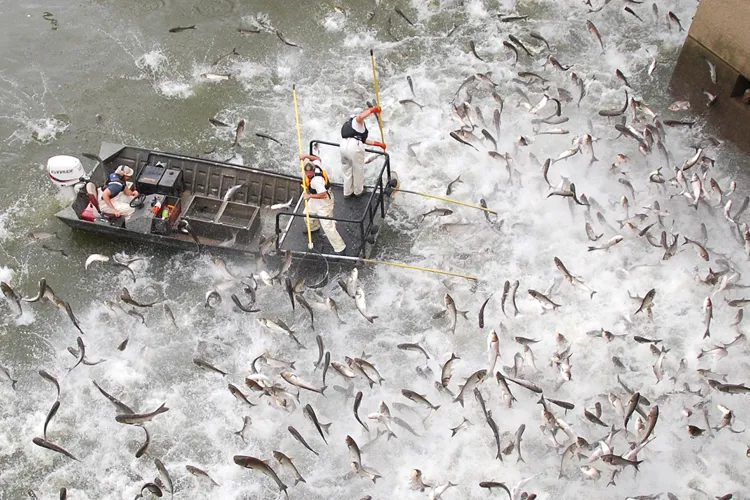
Invasive carp create both ecological and safety concerns. Silver carp are particularly notorious for launching out of the water when startled by boat motors, creating a risk for boaters. Bighead carp can reach enormous sizes, with some individuals weighing more than 100 pounds.
:max_bytes(150000):strip_icc():focal(489x0:491x2):format(webp)/transferring-012626-a053db9171684878b559e0be799a3355.jpg)
To slow the spread, KDWP uses a mix of techniques, including electrofishing, gill nets, and specialized removal gear. In recent years, the agency has added an electrified dozer trawl designed specifically for carp—equipment that stuns fish and gathers them as boats move through infested stretches.
In 2025, crews expanded operations farther downstream by an additional 15 miles of the Kansas River. The Bowersock Dam in Lawrence continues to play a key role as a barrier that helps limit further upstream movement.
:max_bytes(150000):strip_icc():focal(449x0:451x2):format(webp)/invasive-carp-removal1-012626-0dad963d5582487494ed244669020ea9.jpg)
Kansas’ work is part of a broader regional effort to manage invasive carp throughout the Mississippi River basin. In August 2025, the U.S. Fish and Wildlife Service announced nearly $19 million in funding for invasive carp management across 18 states, including Kansas, supporting removal, monitoring, and prevention programs.
KDWP officials say removal efforts will continue year-round and could expand further as research and funding allow. Odell also urged the public to help by never releasing invasive carp back into the water and by reporting sightings outside known infested waterways.


