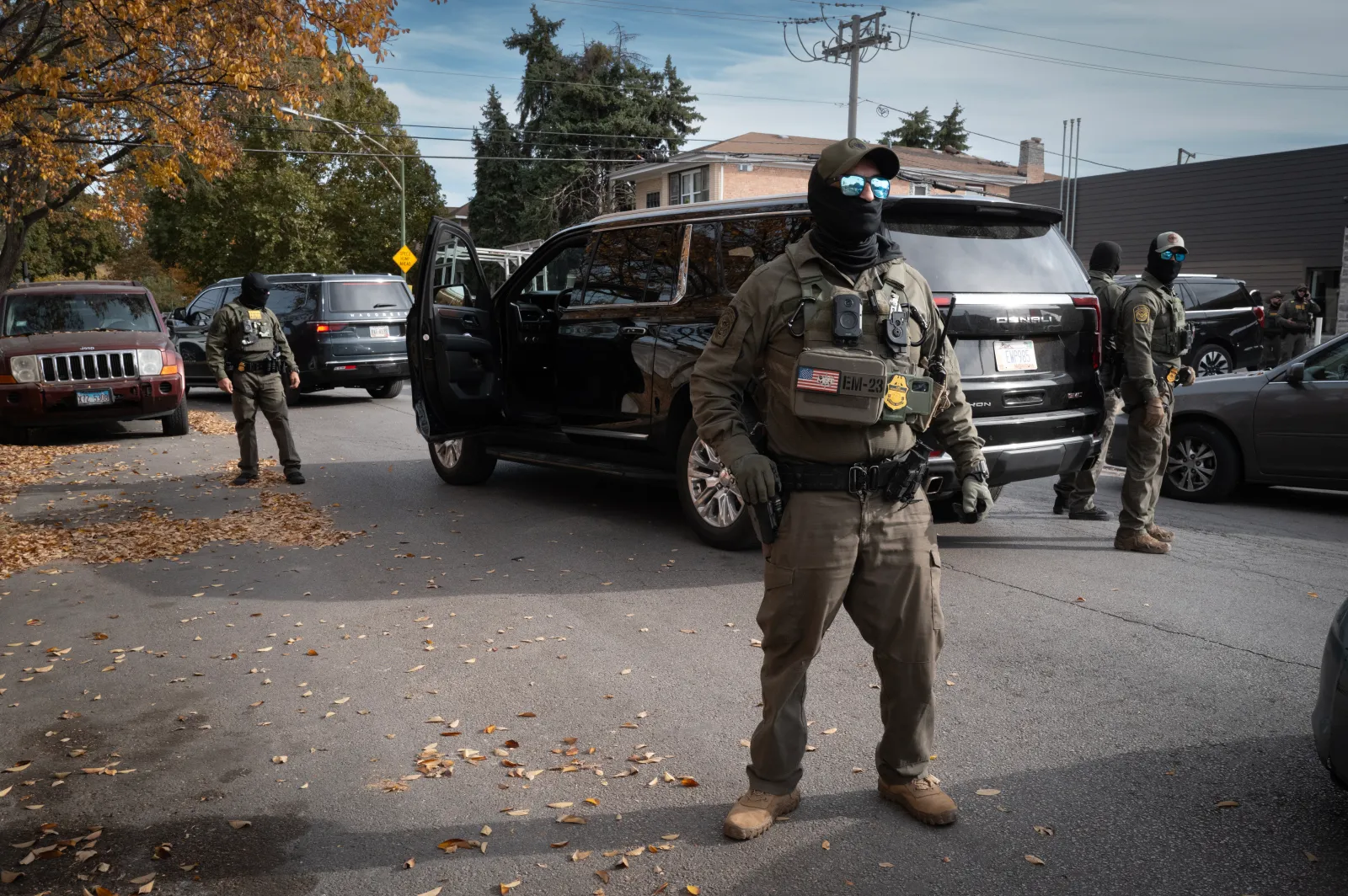

U.S. Sen. Ashley Moody of Florida is rolling out new legislation she’s calling the Halo Act, a proposal that would make it a federal crime to approach or harass immigration officers while they’re doing their jobs.
The Republican senator’s bill would bar anyone—after being instructed to keep their distance—from coming within 25 feet of a federal immigration officer or otherwise interfering with official duties. The measure also targets behavior such as physical threats or actions that impede an officer’s work. If enacted, violations could carry penalties of up to five years in prison and a fine.
Moody framed the proposal as a response to reports of federal officers being targeted during enforcement operations.
“As the wife of a law enforcement officer, former attorney general, and now United States senator, I have always supported and fought for the selfless individuals who protect and serve our nation,” Moody said in comments to Fox News Digital. “I am appalled at the news reports of people harassing and targeting federal officers while they are simply trying to do their jobs, and this must end.”
Why It Matters
Supporters argue a formal buffer zone is necessary to protect immigration agents, citing what the Department of Homeland Security describes as a rise in threats, stalking, doxing, and even bounties directed at officers. Critics counter that the bill could be used to discourage protests or restrict lawful expression near enforcement sites.
What to Know
The legislation comes amid nationwide demonstrations outside Immigration and Customs Enforcement facilities, many sparked by the federal government’s expanded deportation campaign. ICE and Customs and Border Protection have faced sharp public criticism over allegations of aggressive tactics and excessive force during operations, including the use of tear gas. Advocacy organizations and some lawmakers say rapid deportation efforts have at times led to unlawful or unsafe conduct, especially affecting vulnerable migrants and families.
At the same time, the Trump administration has filed suit against California over two state laws aimed at limiting facial coverings for officers and requiring visible identification for non-uniformed law enforcement. The Justice Department argues those laws conflict with federal authority and obstruct immigration enforcement.
DHS has also pointed to a jump in attacks on federal vehicles and personnel since January 20. According to the agency, federal law enforcement has recorded 99 vehicle attacks in that period—more than double last year’s total for the same timeframe. CBP reported 71 such incidents, while ICE logged 28, a figure DHS says represents a sharp year-over-year increase. DHS has additionally claimed assaults on ICE officers have risen dramatically, though it has not released a detailed public breakdown of those numbers.
What People Are Saying
Moody said the Halo Act is intended to add criminal penalties for those who “threaten or impede these federal officers while they are faithfully executing their duties.”
Setareh Ghandehari, advocacy director at Detention Watch Network, criticized the broader enforcement push, arguing that detention conditions have worsened during the current expansion and describing 2025 as the deadliest year in ICE custody in decades.
What Happens Next
The bill now heads to Congress for consideration in both chambers. With Republicans holding the House, Senate, and White House, the proposal is expected to receive a supportive hearing from GOP leadership and could move quickly through the legislative process.