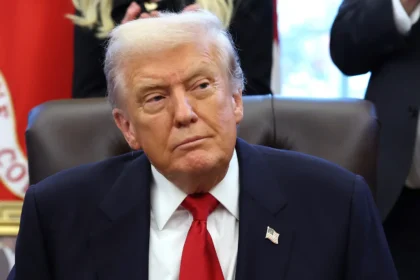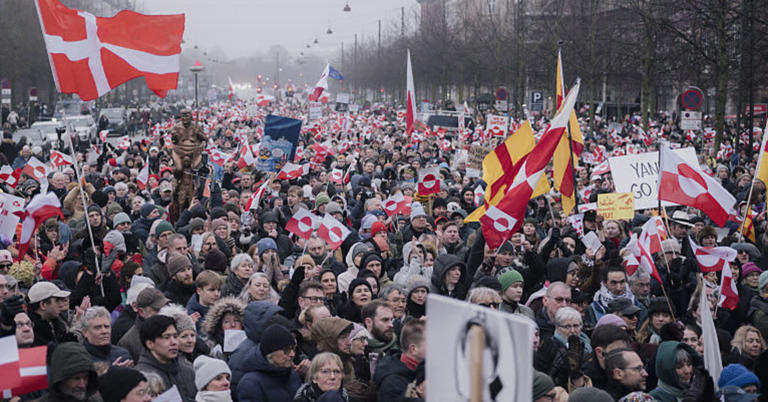

A Danish pension operator says it is pulling out of U.S. government bonds, pointing to concerns about America’s fiscal outlook as Denmark’s relationship with President Donald Trump grows more strained over Greenland.
AkademikerPension’s chief investment officer, Anders Schelde, said the fund’s decision to sell its U.S. Treasury holdings was driven primarily by what it views as “poor [U.S.] government finances” amid a broader debt and deficit problem.
While Schelde said the move was not directly tied to the political friction between the U.S. and Europe, he acknowledged the backdrop did little to complicate the call.
“It is not directly related to the ongoing rift between the [U.S.] and Europe, but of course that didn’t make it more difficult to take the decision,” Schelde said in a statement to CNBC.
AkademikerPension currently holds about $100 million in U.S. Treasurys, according to a spokesperson, and expects to be fully out of the position by the end of the month.
Debt worries and a credit-rating downgrade
Schelde pointed to what he described as decades of overspending that have left the U.S. facing a growing debt burden. The U.S. posted a $1.78 trillion budget shortfall last year, down a little more than 2% from fiscal 2024, as broad tariffs took effect.
In May, Moody’s Ratings lowered the United States’ sovereign credit rating to Aa1 from Aaa, citing the persistent budget deficit and the higher costs of refinancing debt at elevated interest rates.
The deteriorating fiscal picture, Schelde said, pushed the fund to look for alternatives in how it manages liquidity and risk.
“The U.S.’ finances made us think that we need to make an effort to find an alternative way of conducting our liquidity and risk management,” Schelde said. “Now we have found such a way and we [are] executing on that.”
Greenland tensions and market jitters
The decision comes as Denmark has grown increasingly outspoken in response to Trump’s renewed push for U.S. control of Greenland, an Arctic territory within the Kingdom of Denmark.
Over the weekend, Trump said he would impose tariffs on several European nations beginning Feb. 1 if the U.S. did not take control of Greenland, and warned duties could rise to 25% on June 1.
European leaders have reportedly weighed counter-tariffs and other punitive economic steps. Some investors have also raised concerns that a broader tariff conflict could lead European holders to reduce exposure to U.S. assets.
Greenland Prime Minister Jens-Frederik Nielsen said Monday that Greenland would “not be pressured” and would “stand firm on dialogue, on respect and on international law.”
Markets showed signs of strain Tuesday. Treasury yields in the U.S. and abroad climbed, while the U.S. dollar and stocks fell and gold pushed to new all-time highs—moves consistent with a risk-off “sell America” tone tied to rising geopolitical uncertainty.
Bridgewater Associates founder Ray Dalio said Tuesday that sovereign funds could eventually start trimming U.S. investments if they no longer view the U.S. as a reliable trading partner.
“On the other side of trade, deficits, and trade wars, there are capital and capital wars,” Dalio told CNBC’s “Squawk Box” at the World Economic Forum in Davos, Switzerland. “If you take the conflicts, you can’t ignore the possibility of the capital wars. In other words, maybe there’s not the same inclination to buy … U.S. debt and so on.”