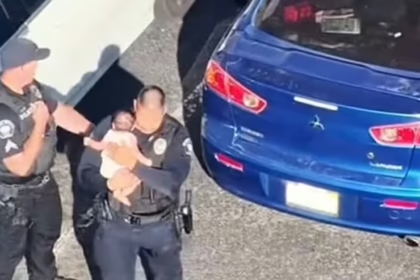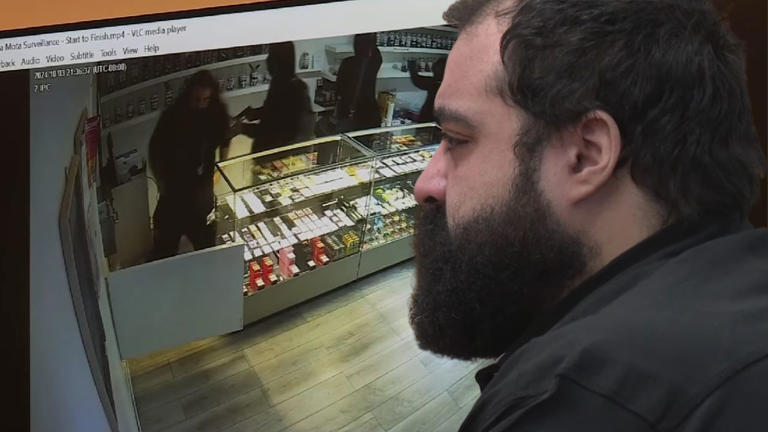

A Portland cannabis store employee who exchanged gunfire with masked robbers during an armed holdup has been found not guilty of all charges after standing trial for murder.
According to reporter John Adams of KGW News, 35-year-old Jason Steiner was acquitted in connection with an October 3, 2024 shooting at the La Mota cannabis shop in North Portland.
Gun-rights commentator Colion Noir argues the case shows how, in some places, “you can do EVERYTHING right… and still become the criminal.”
What happened at the La Mota shop
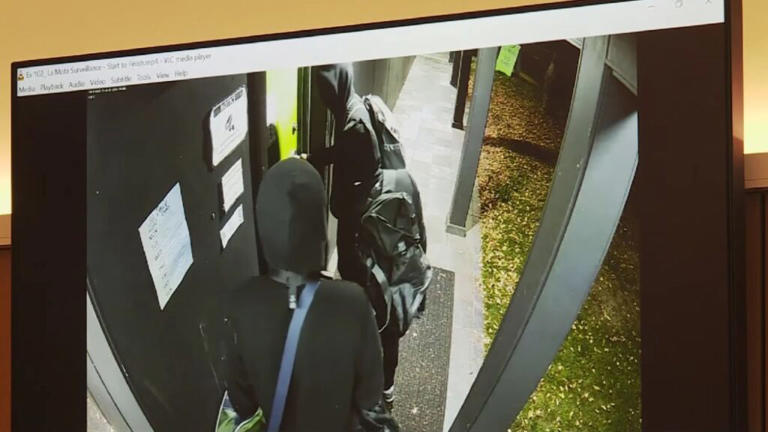
Adams reports that Steiner was the only employee working that night. Surveillance video, as described by Adams and referenced in Noir’s commentary, shows three masked men enter the store and hold Steiner at gunpoint.
Noir frames the moment from Steiner’s viewpoint: you’re at work when armed robbers rush in, point a gun at you, and force you out of the store.
Adams says the suspects pushed Steiner out the front door while they appeared to take products from inside. Prosecutors later argued that once Steiner was outside, he could have left the scene.
Thirteen shots, two killed, one suspect escaped
Adams reports that after being forced outside, video shows Steiner moving around the corner and retrieving a semi-automatic handgun from his bag. He then returned toward the storefront and fired 13 shots through a window.
Two of the alleged robbers — identified by Adams as 20-year-old Tahir Burley and 18-year-old King Lawrence — died at the scene. A third suspect escaped.
Noir describes the incident more broadly as Steiner fighting for his life and then being treated like the criminal. (In his telling, he says Steiner “kills all three,” though Adams’ reporting states two died and a third got away.)
Adams adds that interior video and court documents became central to the case: at the moment Steiner fired, none of the suspects were shown holding guns in their hands, and none appeared to shoot back. Adams also reports that Burley drew his gun only after he’d already been hit and before he stopped moving.
That left jurors weighing a difficult sequence: Steiner had just been held at gunpoint — but he fired into a store at a moment when no one was visibly aiming a weapon at him.
The 911 call and the prosecution’s theory
After the shots, Adams reports that Steiner ran across the street and called 911.
“I’m at the La Mota across the street; I had three people try to rob me. I shot 3 of them,” Steiner told the dispatcher, according to Adams’ article.
Adams reports that Steiner later told police he fired because he feared the suspects would “hunt him down.” He said he couldn’t outrun three people if they came after him, and that his car keys were still inside — making him worry they could take his vehicle and track him later.
Prosecutors argued the shooting wasn’t justified, contending Steiner could have left once he was outside and no longer in immediate danger.
Noir attacks that logic, saying it amounted to expecting Steiner to walk away from his job and leave armed robbers behind after they’d already threatened his life.

Charged with murder, argued as self-defense
Adams reports Steiner was arrested days after the incident, after turning himself in, and faced:
- Two counts of first-degree murder
- One count of attempted murder
- Three counts of unlawful use of a weapon
He pleaded not guilty.
Steiner’s attorney, Ted Occhialino, argued Steiner acted in lawful self-defense after being held at gunpoint and fearing retaliation.
Noir calls the prosecution a “legal nightmare,” arguing Steiner didn’t start the confrontation. He also concedes some might question the decision to move back toward danger — but insists charging Steiner with murder was unjustified.

The verdict: not guilty on all counts
After a week-and-a-half trial, Adams reports the jury acquitted Steiner across the board, including the murder charges related to Burley and Lawrence, plus the attempted murder and unlawful weapon use counts.
Noir celebrated the outcome — “Not guilty. And damn right,” he said — while arguing the larger problem remains: Steiner still had to endure a murder trial after surviving an armed robbery.
A broader warning about where you live
Noir’s larger message is that geography can shape outcomes in self-defense cases. In his view, a different jurisdiction might not have brought charges at all — and he warns that political climate and prosecutorial approach can heavily influence what happens after a defensive shooting.
Steiner walked free. But the case, as framed by Adams’ reporting and Noir’s commentary, underscores a reality many people find unsettling: even if a jury ultimately agrees it was self-defense, the legal battle can come after the physical one.