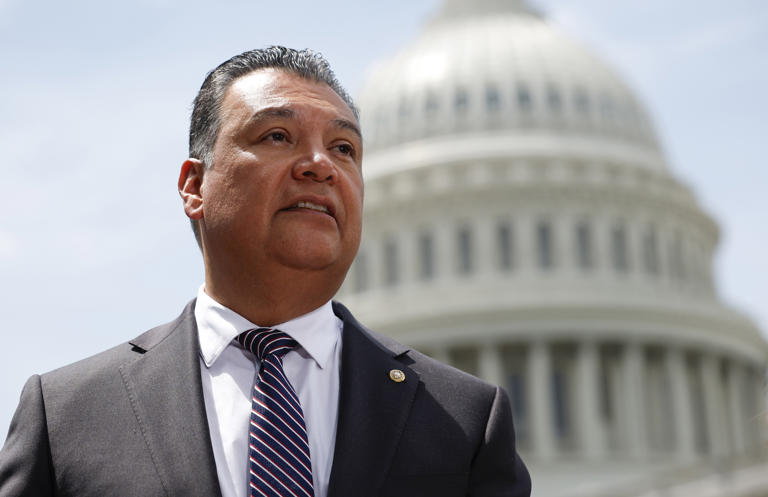

Senator Alex Padilla (D-Calif.) has introduced new legislation aimed at providing a path to permanent residency for an estimated 8 million immigrants — a move that could significantly reshape U.S. immigration policy if it becomes law.
The proposal, called the Renewing Immigration Provisions of the Immigration Act of 1929, would update the longstanding “Registry” provision in immigration law, which currently allows only those who have lived in the U.S. continuously since before January 1, 1972, to apply for a green card. Padilla’s bill would modernize the cutoff by creating a rolling eligibility window, allowing undocumented immigrants who have lived in the U.S. for at least seven years, have no criminal record, and meet other legal criteria to apply for permanent residency.
Why It Matters
Immigration has long been a flashpoint in American politics, and Padilla’s bill arrives at a time when tensions are especially high. President Donald Trump’s administration has intensified deportations and expanded immigration enforcement, prompting fierce debate over the future of undocumented immigrants living in the U.S., including Dreamers, TPS holders, and long-term visa recipients.
Padilla says his bill offers a compassionate, commonsense solution. “Americans know there’s a better path forward than the Trump Administration’s cruel scapegoating of hardworking immigrants and fearmongering of California communities,” Padilla said in a press release. “If you’ve lived here for over seven years, paid taxes, contributed to your community, and don’t have a criminal record, then you deserve a pathway to legalization.”
Who Would Benefit?
According to Padilla’s office, the legislation would affect up to 8 million immigrants, including:
- Dreamers (DACA recipients)
- Individuals with Temporary Protected Status (TPS)
- Children of long-term visa holders
- Essential workers
- Highly skilled professionals
In addition to granting legal status, Padilla’s office estimates the bill could inject $121 billion into the U.S. economy and generate $35 billion in tax revenue.
Political Hurdles
Despite its potential impact, the bill faces an uphill battle in a Republican-controlled Congress. The House and Senate majorities have shown little interest in advancing broad immigration reform and have largely backed stricter enforcement measures.
Padilla’s proposal would need to pass both chambers and survive a potential veto from President Trump, who has repeatedly emphasized a hardline stance on immigration. Unless Democrats gain a veto-proof majority in the 2026 midterms, the bill’s prospects appear uncertain.
Still, Padilla has earned support from within his party. Senator Dick Durbin (D-Ill.), chair of the Senate Judiciary Committee, called the legislation “long overdue,” adding, “It’s common sense that immigrants who pose no safety threat and contribute to our country should be able to call America home.”
Expert Reaction
Kathleen Arnold, director of DePaul University’s Refugee and Forced Migration Studies program, told Newsweek the bill would “rectify a longstanding problem” in U.S. immigration law.
“This gives long-resident migrants a chance to step out of the shadows and continue building their lives without fear of deportation,” she said. “It could also help restore trust in government institutions among immigrant communities.”
Arnold expressed cautious optimism about bipartisan support but warned that political tribalism could derail the bill: “Some lawmakers are more focused on party-line loyalty than on the practical needs of our communities.”
Opposition Voices
Conservative groups have denounced the proposal as a thinly veiled attempt to expand the Democratic voting base. Elon Musk’s America PAC wrote on X (formerly Twitter): “Democrat Senator Alex Padilla introduces legislation to grant amnesty to illegals and give them citizenship if they live in the US for over 7 years. They are now trying to codify what has been their plan all along — importing new Democrat voters.”
What’s Next?
Padilla plans to formally introduce the bill in the Senate, where it may receive hearings and floor debate. But without significant Republican backing, the legislation’s path forward remains highly uncertain — and likely dependent on the outcome of the 2026 midterm elections.