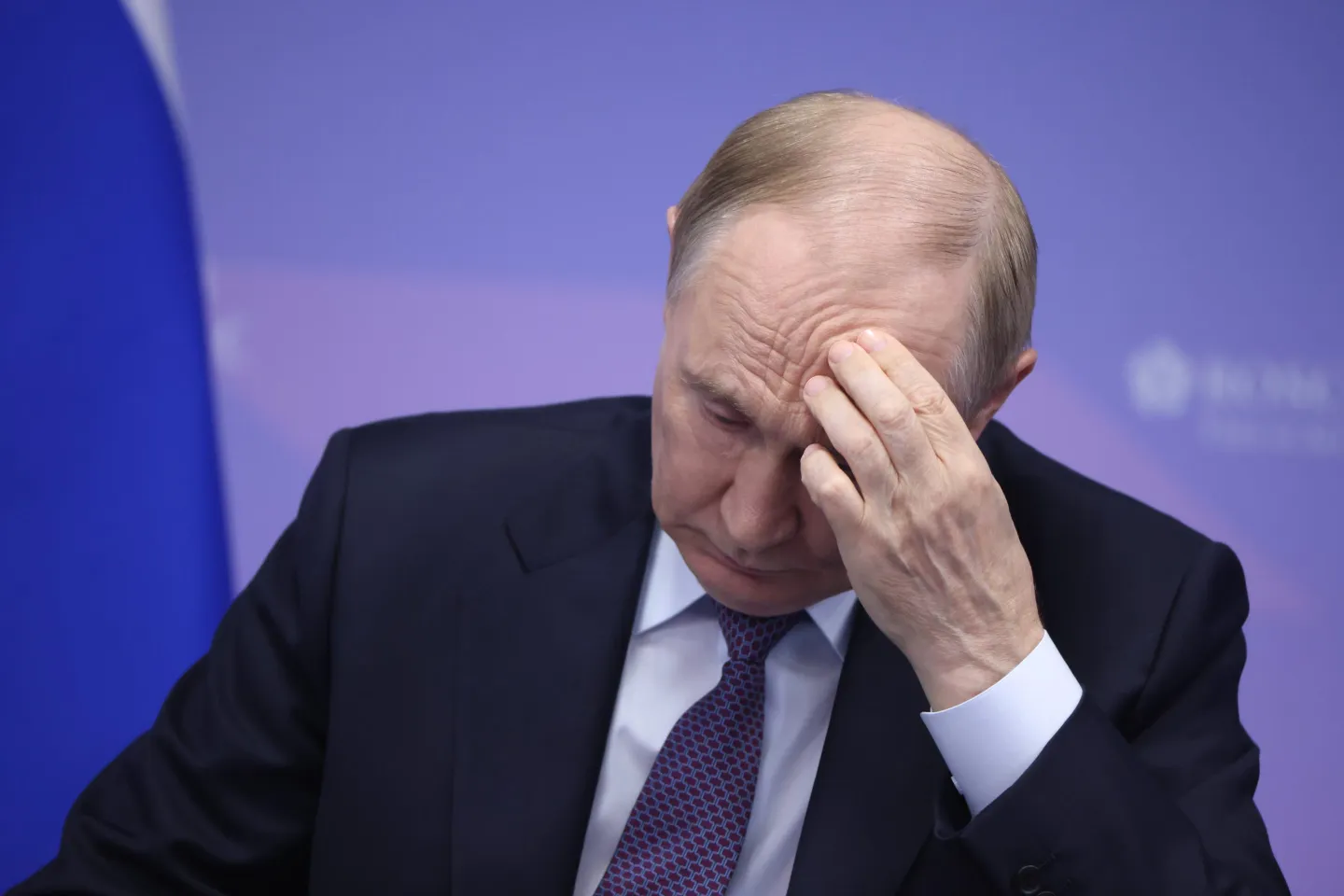

Russian President Vladimir Putin weighed in on the renewed debate around Greenland by reaching back to a familiar historical benchmark: Russia’s 1867 sale of Alaska to the United States. His message was part math, part history lesson—and capped with a clear disclaimer that Russia has no role in whatever happens next.
Speaking during a public appearance, Putin recalled the Alaska deal, when the Russian Empire transferred the territory to the United States for $7.2 million. He noted that Alaska’s land area is roughly 1.17 million square kilometers and said the sale price, adjusted for inflation, would come out to around $158 million today—though he added he would want to verify the precise figure.
From there, Putin shifted to Greenland. He described Greenland as larger than Alaska, estimating its land area at about 2.166 million square kilometers and putting the difference between the two at roughly 450,000 to 500,000 square kilometers.
Using that size comparison, Putin suggested that if Greenland were priced proportionally using the Alaska purchase as a model, it would land somewhere between $200 million and $250 million. But he argued that another method—valuing the original 19th-century payment using gold—would push the number higher, “probably closer to a billion dollars.” Even then, he said, the price would still be within reach for the United States.
Putin also pointed to another example of U.S. territorial history, noting that Denmark and the United States have engaged in transactions before—specifically referencing the 1917 sale of the Danish Virgin Islands.
Despite walking through the numbers, Putin stressed that Greenland is not Russia’s concern. He said any outcome is for Denmark and the United States to settle between themselves.
He briefly mentioned Denmark’s historical rule over Greenland, characterizing it as colonial and harsh, but brushed it aside as a separate issue—one he suggested has little bearing on today’s discussions.