
As a Democrat who has worked on both winning and losing campaigns against Donald Trump, one thing has always been clear to me: the Republican Party’s biggest competitive strength in recent years has been its anti-establishment, populist pitch. I say “pitch” deliberately, because actions ultimately matter more than rhetoric — especially when those actions flatly contradict the promises. That’s exactly what we’re seeing now. Trump and JD Vance are abandoning their pledges to fight for ordinary Americans against entrenched elites.
The everyday costs Trump and Vance promised to “immediately” bring down — groceries, healthcare, electricity — are rising, while economic growth is weakening. We’re facing job losses consistent with a recession and watching a historic wave of benefits flow to the wealthiest Americans.
In the process, Trump and Vance are undermining Republicans’ signature political asset and creating new fractures inside their party and across the country. Those cracks are major openings for Democrats on voters’ top concern: their financial security. And if I were one of the Republicans already maneuvering for the 2028 presidential race, I’d see a growing opportunity to outflank Vance from within his own party.
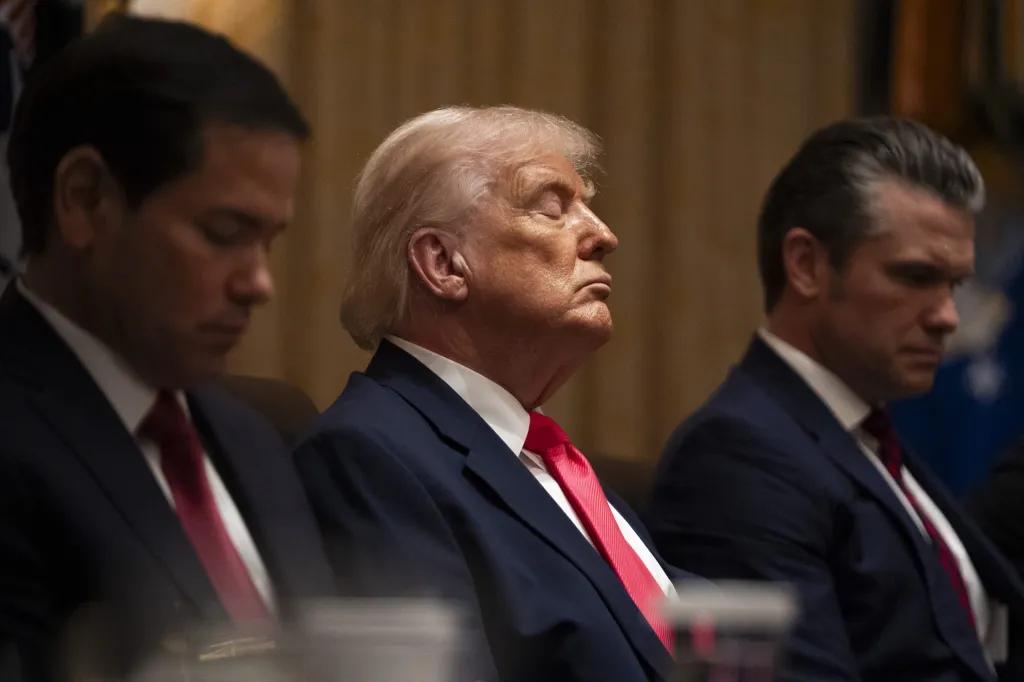
The Constitution bars Trump from seeking another term. Even if it didn’t, his declining energy and questionable judgment already make him a lame duck. Consider this: the president is focused on building what amounts to an assisted-living theme park on the White House grounds while brushing off Americans’ anxieties about the cost of living. That kind of anti-populist record is becoming a major liability for Vance, inviting attacks not just from Democrats but from Republican rivals as well.
It’s hard to imagine anything less populist — or less in line with Christian values — than hobnobbing with billionaires while cutting food assistance for working families. Or forcing middle-class Americans to subsidize energy-hungry AI datacenters bankrolled by some of the richest corporations in history.
In the Biden White House, we saw up close how toxic it is for the party in power when a majority of Americans think the economy is bad. Voters’ sense of their own economic well-being defines the political climate.
In the most recent elections, the party running Washington lost contests around the country. Democrats, from New Jersey Gov.-elect Abigail Spanberger to New York City Mayor-elect Zohran Mamdani, ran disciplined campaigns centered on the cost of living. That issue unites Democrats with newly persuadable independents and Republicans — and it continues to do so. We just saw Republicans barely hold onto a deep-red congressional district in Tennessee, another sign that economic pain is reshaping traditional political maps.
For those of us who can’t buy our way into the good graces of the Trump–Vance administration by snapping up Trump’s meme coin or writing checks to Donald Trump Jr.’s “Executive Branch” club, the reality is grim: their agenda is laying the groundwork for an even weaker economy.
Start with healthcare. After passing the largest cuts to Medicaid in history, Washington Republicans are now pushing to eliminate Democratic health care tax credits that help working people afford coverage. That would send premiums soaring for millions and strip health insurance from many more.
Then there’s the rapid rise of artificial intelligence. Tens of thousands of Americans are already losing their jobs to AI, and that trend is accelerating. It is absolutely in our national interest to lead on AI, but the Trump–Vance administration — whose AI czar is himself a scandal-plagued billionaire — is treating the livelihoods of millions of workers as disposable. They are failing to invest in the training and protections people need to thrive in a changing economy. By contrast, Democrats like Sen. Bernie Sanders and Rep. Jake Auchincloss are working to ensure the U.S. wins the AI race while defending both blue- and white-collar workers.
Energy policy tells a similar story. After driving up electricity costs through the deepest clean energy cuts on record, Republican majorities are now helping the ultra-wealthy pass their datacenters’ power bills onto ordinary families. Their record of greenlighting monopolistic megamergers will come back to haunt them too, as consolidation often means higher prices and fewer choices.
All of this leaves Vance in an impossible political bind. Trump demands absolute loyalty from his inner circle, including Vance, but other would-be 2028 candidates enjoy more freedom to break ranks. Georgia Rep. Marjorie Taylor Greene, for instance, has criticized the White House over high prices, putting distance between herself and Trump’s economic decisions.
She’s not alone. When Nick Fuentes, a Holocaust-denying neo-Nazi, claimed “organized Jewry” is the greatest threat to America, Trump and Vance responded with a strikingly weak and belated rebuke. Texas Sen. Ted Cruz, another potential 2028 contender, reacted far more forcefully, condemning Fuentes directly and drawing a clear line that Trump and Vance would not.
There is also growing bipartisan unease over the administration’s saber-rattling toward Venezuela. Americans do not want U.S. servicemembers’ lives put at risk to distract from a billionaire president’s sinking approval ratings.
What has been Vance’s greatest asset within Republican circles — his closeness to Trump — could quickly become the wedge his rivals use against him. Democrats are already doing this. In Pennsylvania, Gov. Josh Shapiro, a popular Democrat from a crucial swing state, slammed Vance for cutting food assistance for families while backing tax breaks for billionaires. Shapiro then signed into law a new tax credit for working families, delivering $193 million in relief to 940,000 Pennsylvanians — a tangible contrast to the administration’s priorities.
Republicans’ much-touted “Golden Age” is starting to look more like a second Gilded Age, where generous tax benefits for the wealthy are paid for with higher costs and fewer supports for everyone else.
Across party lines, Americans want leaders who will genuinely hear them and act on their concerns — not politicians who talk like populists while governing like servants of the ultra-rich.