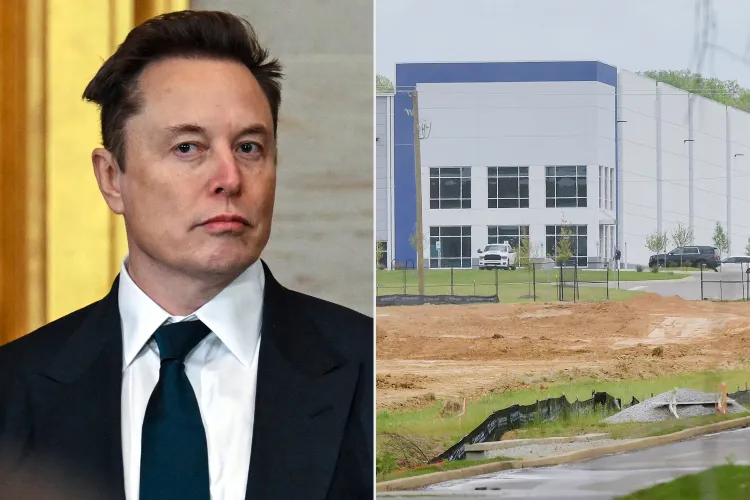

Some Memphis residents say they’re already struggling for clean air after Elon Musk’s AI company began releasing plumes of pollution to power a massive data center.
“It’s God’s given air, and man shouldn’t take it away from us,” Easter Knox, a 76-year-old woman who lives in Boxtown—about three miles from the xAI data center—told Time earlier this year. “I don’t care how much money you got.”
Knox, who was diagnosed with Chronic Obstructive Pulmonary Disease in 2024 and has lost three loved ones to cancer, said she began noticing the smell of gas in the air last year. Now, she keeps her windows shut because of what she described as a “rotten cabbage” odor.
Boxtown is a majority-Black neighborhood with a median household income of about $36,000, Time and Politico have previously reported. For generations, residents have said they’ve dealt with health problems linked to pollution.
The community sits near 17 industrial facilities, and local air quality was already deemed unhealthy due to smog before construction began on the billionaire’s supercomputer, according to Politico. Residents and advocates say the new facility has only worsened an already dangerous situation.
“Imagine the outcry if these facilities had been placed next to St. Jude Children’s Research Hospital—no one would allow it,” Austin Dalgo, an academic primary care physician in South Memphis, told TIME. “Instead, they were placed in the backyard of a historically Black, underserved neighborhood, reinforcing a long legacy of environmental racism in Memphis—and our country.”
Musk and xAI did not immediately respond to requests for comment.
:max_bytes(150000):strip_icc():focal(999x0:1001x2):format(webp)/elon-musk-protest-121525-b9523cfc2ba74511945c8812c5ce8852.jpg)
Powering “Colossus,” and the Pollution Concerns It Brings
On xAI’s website, the company describes its supercomputer—dubbed Colossus—as the “world’s biggest.” The AI training system, with an output of 200,000 GPUs (Graphics Processing Units), helps power the company’s chatbot, Grok, according to the site.
“We were told it would take 24 months to build,” a message on the website reads. “So we took the project into our own hands, questioned everything, removed whatever was unnecessary, and accomplished our goal in four months.”
To power the system, reports say the company has relied on gas turbines.
According to the Memphis Commercial Appeal, those turbines were initially framed as a temporary measure while proper infrastructure was developed. But residents have said they fear the move is setting a precedent—one that could make it easier for other AI data centers to start operating first and deal with permits later.
In June, the NAACP filed an intent-to-sue notice to xAI, alleging violations of the Clean Air Act, according to the outlet. A lawsuit has not yet been filed.
Politico previously reported that the turbines operated without pollution controls typically required under federal law and without a permit until this summer—by which time they had already been running for about six months.
After months of public debate, the Shelby County Health Department approved an air permit in July.
In a statement shared with the Memphis Commercial Appeal that same month, xAI said it followed federal, state, and local laws. The company also said all temporary turbines were decommissioned, leaving 15 permitted turbines in use, according to the report. The outlets also reported the company is building a second Colossus campus at 5420 Tulane Road, with plans for an even larger data center in nearby Whitehaven.
A Revocation Appeal Is Dismissed After a Marathon Hearing
On Monday, Dec. 15, an appeal seeking to revoke xAI’s air permit was dismissed after a seven-hour hearing that included testimony and participation from community members, according to the Memphis Commercial Appeal.
A key argument in the appeal, the outlet reported, was that the original permit decision was “unlawful,” and that the situation effectively allows companies to install gas turbines without permits, without meaningful community input, and without preliminary environmental reporting.
Even as advocacy groups and watchdog organizations raise alarms, city officials have argued that xAI’s presence will boost the local economy through new jobs and property tax revenue directed toward public projects, according to Time.
That argument hasn’t eased residents’ fears. In April, hundreds of people attended a public hearing about xAI’s permit for permanent turbines and spoke about what they say they’re experiencing.
“Why can’t we breathe at home?” asked 28-year-old Alexis Humphrey, who said she suffered her first major asthma attack in 15 years not long after the supercomputer was built, according to Time.
A Bigger National Debate Around Data Centers
Concerns have also grown as data centers owned by major companies race to expand—especially after the Trump administration shut down the Environmental Protection Agency’s scientific research arm. Residents in some areas have raised fears about rising electricity costs, while others have worried about impacts on drinking water quality.
In South Memphis, as questions about long-term health effects continue, more residents are speaking out.
At a protest earlier this year, according to Politico, state representative Justin Pearson said, “They put our lungs and our air on the auction block and sold us to the richest man in the world.”