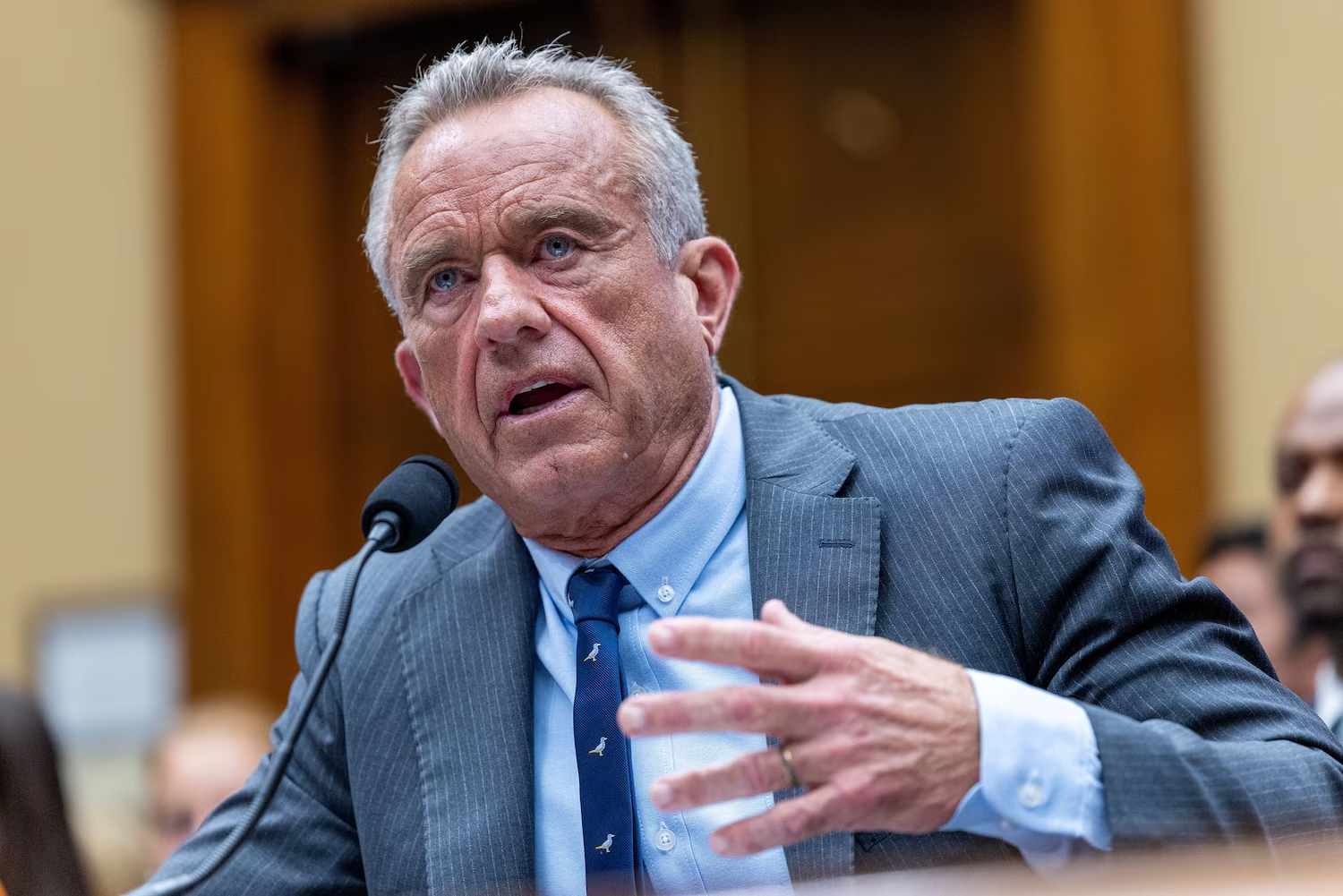

Robert F. Kennedy Jr., Secretary of Health and Human Services, has indefinitely postponed a pivotal meeting of the United States Preventive Services Task Force (USPSTF) — the panel responsible for setting national guidelines on key health screenings like mammograms and colonoscopies. The move has raised alarm across the medical community, especially amid reports that the entire panel may be dismissed, according to the Wall Street Journal.
The USPSTF plays a vital role in the U.S. healthcare system, developing evidence-based recommendations for preventive care screenings, including for diabetes, depression, and various cancers. These recommendations directly influence what insurance companies are required to cover under the Affordable Care Act.
This latest postponement follows Kennedy’s controversial decision to delay a meeting of the Advisory Committee on Immunization Practices (ACIP), later replacing its members with individuals known for promoting vaccine misinformation, as reported by HuffPost.
Healthcare professionals are voicing serious concerns over the USPSTF’s future and the potential ripple effects on public health.
Why This Matters for You
Delays or changes in the USPSTF’s work could directly impact the availability of no-cost preventive care services for millions. The panel, formed in 1984, is made up of independent, non-partisan experts in primary care and preventive medicine. Members are vetted for conflicts of interest and selected through public nomination before being appointed by the HHS Secretary.
“The cancellation of this task force, if followed by the removal of its 16 independent medical experts, would affect every American,” said Dr. Anita Patel, a pediatric critical care physician in Washington, D.C., speaking to HuffPost. “These experts thoroughly review medical evidence to guide what screenings should be covered by insurance.”
In response to the rumored overhaul, the American Medical Association issued a letter to Kennedy emphasizing the task force’s importance in promoting access to “evidence-based clinical preventive services.”
Senators Elizabeth Warren (D-Mass.) and Angus King (I-Maine) have also supported the USPSTF, introducing a resolution affirming its value, according to NPR.
“If the task force cannot continue its work, this could have devastating effects on access to preventive services,” said Dr. Oni Blackstock, a primary care physician and executive director of Health Justice. “We already know millions are at risk of losing Medicaid coverage, and now those with insurance could lose no-cost access to essential preventive care.”
What Happens Now?
As of now, the USPSTF meeting has only been postponed — no rescheduled date or replacement panel members have been announced. The panel’s existing recommendations remain in effect.
“Canceling the USPSTF meeting without a clear plan to reschedule puts critical, evidence-based health guidance at risk,” said Dr. David Higgins, a pediatrician and preventive medicine specialist at the University of Colorado. “These disruptions can delay diagnoses, prevent early treatment, and ultimately worsen health outcomes.”
Higgins noted that preventive screenings such as those for cancer and diabetes are especially vulnerable, and the impact could be significant: “This affects whether someone catches their cancer early or gets the right treatment for chronic heart disease.”
Political Pressures and Accusations of Ideological Bias
Some critics have recently accused the USPSTF of being politically biased or “woke.” Days after the meeting’s postponement, The American Conservative published an essay urging Kennedy to dismantle the task force, claiming it aligns with “left-wing ideological orthodoxy.”
Higgins pushed back: “That claim is a political talking point — not an accurate reflection of the task force’s work. Its recommendations are based on rigorous scientific review.”
He added that the panel’s attention to disparities in health outcomes is part of delivering high-quality care, not partisan ideology.
Addressing Health Equity
Research shows persistent disparities in health outcomes across racial and socioeconomic groups. Black women experience significantly higher maternal mortality rates; Latinx individuals face elevated diabetes risks; and Black Americans are 30% more likely than white Americans to suffer from asthma.
“The task force has not always addressed these inequities,” Blackstock noted, “but that has changed in recent years.” She pointed to the adoption of inclusive language, the identification of data gaps in underserved populations, and the introduction of an “equity checklist” to inform its recommendations.
These shifts, she believes, may be driving the political scrutiny.
“I think that’s why the task force is under attack — because it’s finally acknowledging health inequities and racism’s effects on health outcomes,” she said.
Dr. Patel echoed that sentiment. “The task force isn’t taking care away from anyone. It’s trying to ensure everyone gets the same level of care,” she said.
But the backlash against the task force’s equity-focused language, Patel added, has been weaponized. “They see terms like ‘diversity’ and ‘equity’ and use that to discredit the entire panel — calling them ‘woke’ to stoke outrage.”
What’s at Stake
Ultimately, experts argue the USPSTF’s work is about expanding access, not limiting it. “They are trying to dismantle long-standing systemic bias in medicine,” Patel said.
While racism remains a real issue in healthcare, she added, progress toward equity helps ensure patients receive quality care regardless of race or socioeconomic status.
“To undo all of that progress just to pander to a political base is unconscionable,” Patel said.