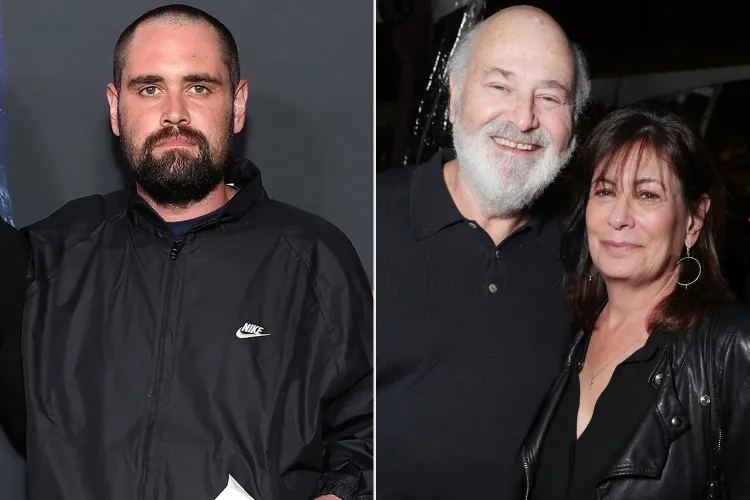

After the deaths of Rob Reiner and Michele Singer Reiner on Sunday, Dec. 14, attention has turned to the estate the couple built over decades in Hollywood — and to how California law could affect who ultimately inherits.
Rob, 78, and Michele, 70, are survived by their three children: Jake, 34; Nick, 32; and Romy, 28. Rob was also father to daughter Tracy, 61, from his first marriage to the late Penny Marshall.
Romy found her parents dead in their Brentwood, Los Angeles, home, sources said. Hours later, police arrested Nick in connection with the killings near the University of Southern California campus. Los Angeles County District Attorney Nathan Hochman said at a press conference on Tuesday, Dec. 16, that Nick will be charged with two counts of first-degree murder, with a special allegation that a knife was used.
Nick’s attorney, Alan Jackson, confirmed to reporters that he represents Nick, and said outside Los Angeles Superior Court that Nick would not attend his first scheduled court appearance on Tuesday because he had not been medically cleared.
:max_bytes(150000):strip_icc():focal(734x182:736x184):format(webp)/rob-reiner-michele-singer-romy-nick-spinal-tap-ii-premiere-los-angeles-121525-edb5160f9a5b44db84eabc783dcbde4a.jpg)
Estate and trusts attorney Sean Weissbart, a partner at Blank Rome LLP who is not connected to the case, said that if Nick is ultimately convicted, he would likely be blocked from inheriting from his parents under a specific California law.
“California has what’s called a slayer statute, which says if you kill someone that you’re going to inherit from, you lose your inheritance and any right to serve as a fiduciary of their estate,” Weissbart explained. “So assuming he’s convicted of this murder, he’s out as beneficiary, along with any fiduciary appointments he may have.”
Weissbart added that “fiduciary” roles can include an executor or trustee — or, if someone dies without a will, an administrator.
As for how the Reiners structured their planning, Weissbart noted that in California it is “most common” to have both a will and a revocable trust, and that because California is a community property state, married couples often set up a joint revocable trust.
No matter the exact structure, he said, a conviction would likely mean Nick does not receive any inheritance he otherwise would have received. If the estate were divided equally among the children, Weissbart said, Nick would be disqualified and the shares would likely be redistributed among the remaining children.
:max_bytes(150000):strip_icc():focal(749x0:751x2):format(webp)/Michele-Singer-Reiner-Rob-Reiner-121425-2fdfbd0e92104c1d81ed723668a6a31e.jpg)
He also noted that the statute may still apply even without a criminal conviction.
“I was looking at the statute, and it doesn’t require an actual conviction. It requires a person who feloniously and intentionally killed the decedent,” Weissbart said, adding that because the slayer statute is civil, it could potentially apply if a court made that determination even without a felony conviction. A felony conviction, he said, would make application of the law far more straightforward.
Before any felony conviction and/or a civil determination, Weissbart said Nick should still be able to view a possible trust instrument — the legal document that lays out the estate plan.
“I don’t think that just because someone is suspected of a crime that that would necessarily preclude them from seeing a will or finding out what they might have otherwise received,” he added. “It’s not his obligation to bring the slayer statute. That’s the obligation of other people or the court.”