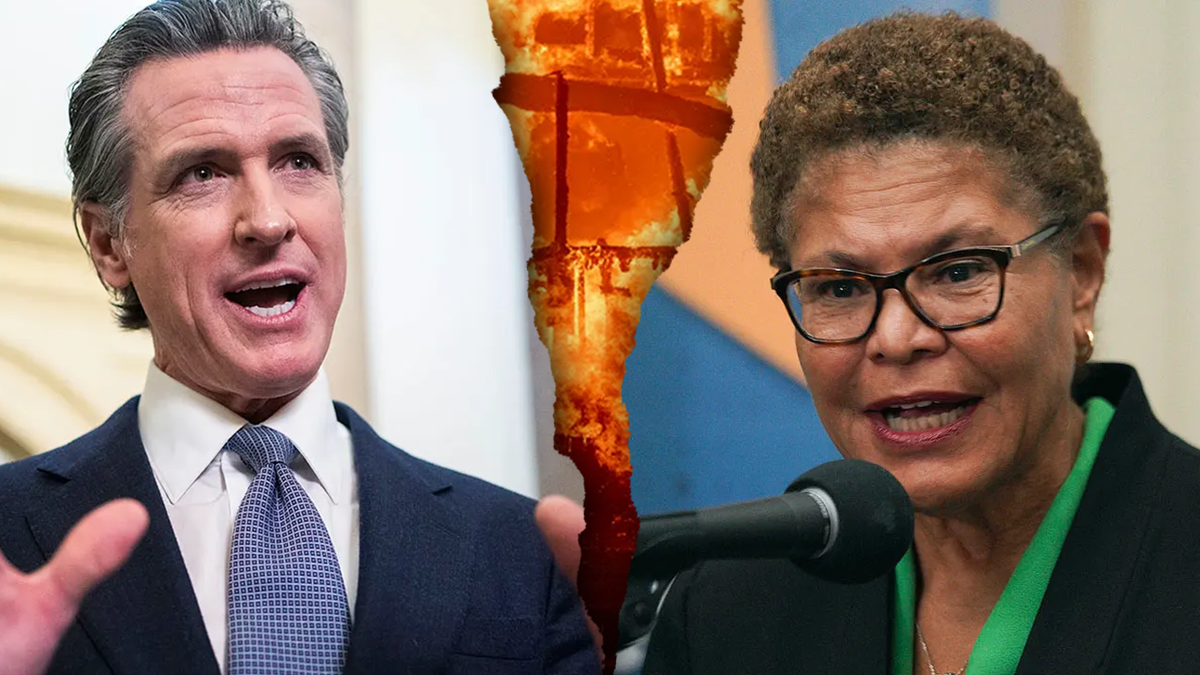

Joe Rogan and comedian Adam Carolla took aim at California Gov. Gavin Newsom on Friday, arguing that the state’s leadership should focus on wildfire preparation rather than pointing to climate change as the primary culprit behind the Palisades wildfires.
Nearly a year after the fires drew global attention, critics continue to accuse state and local officials of failing to manage wildfire risks or respond effectively when disaster struck.
Carolla, speaking on The Joe Rogan Experience podcast, said that Newsom “blame[s] everything on climate change,” calling that argument “insane.”
Rogan, who frequently criticizes California’s political leadership, agreed.
Carolla argued that cities like New Orleans and Las Vegas prove communities can overcome the challenges of their environments. He pointed out that California has strong seismic building standards and said similar proactive measures should be applied to wildfire prevention.
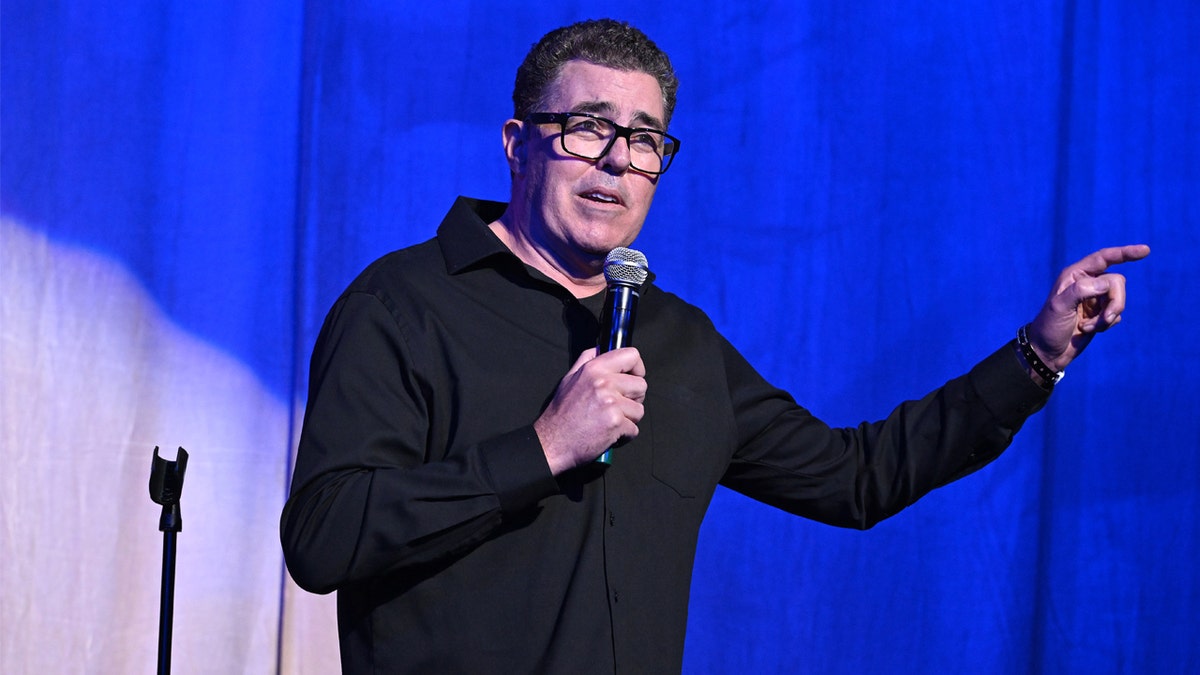
According to Carolla, the state “did not prepare for the fires,” failing to properly clear brush or manage reservoirs. Instead, he said, Newsom attributed the devastation to climate change.
Rogan echoed this view, saying that Los Angeles has always faced wildfire threats due to its dry climate.
“It doesn’t rain there ever… It’s been like that forever,” he said. “It’s not climate change… It’s a lack of preparation.”
Carolla also questioned claims of rapidly rising sea levels, suggesting that if they were as severe as some reports indicate, long-standing oceanfront homes along Pacific Coast Highway would already be underwater. He noted that those properties continue to sell for a premium, while homes farther inland remain less expensive.
Newsom’s office pushed back, calling Rogan and Carolla’s statements “factually inaccurate.” A spokesperson said that wildfire resources were prepositioned based on alerts from the National Weather Service and pointed to the administration’s emergency response actions, including efforts to streamline rebuilding.
The spokesperson also cited extreme wind conditions and historically dry terrain as major contributors to the fire’s spread.