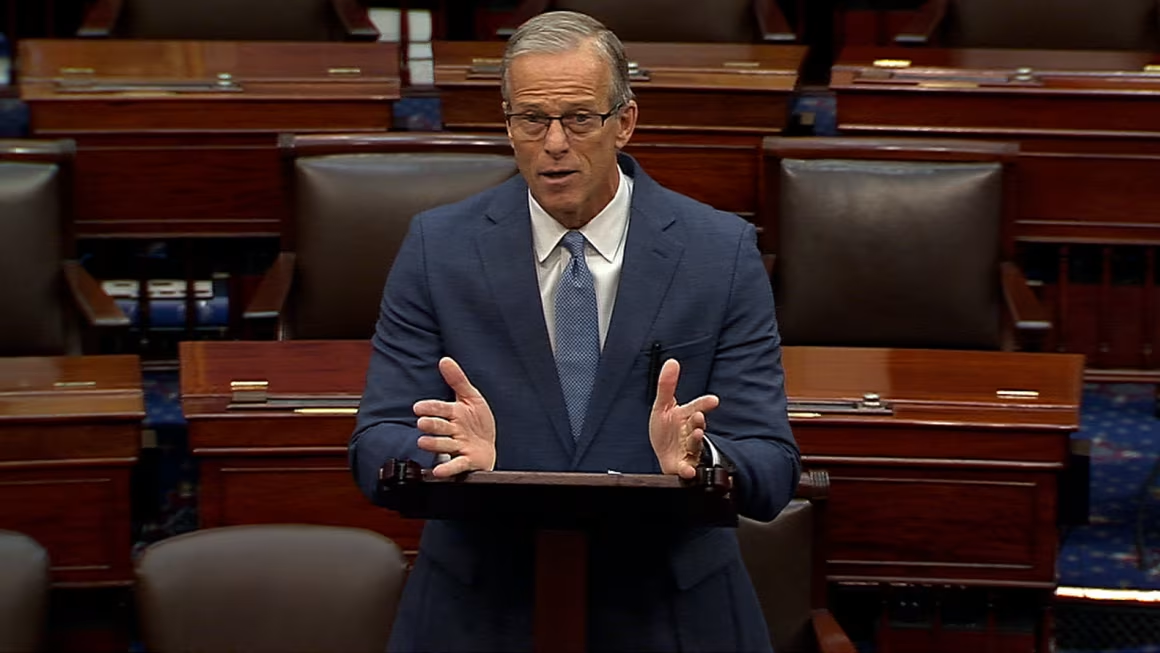

After a weekend of delays and tense negotiations, the Senate’s marathon session to vote on President Donald Trump’s massive domestic policy proposal stretched through the night into Tuesday morning.
The extended session, known as a “vote-a-rama,” began around 9:35 a.m. ET Monday and remained underway more than 21 hours later. Senators have been voting on a wide range of amendments—some symbolic, others with serious policy implications—as they inch closer to final passage of the multitrillion-dollar package.
“We’re close,” said Senate Majority Leader John Thune around 4:30 a.m. ET, noting that “a few amendment votes” remained but offering no clear timeline for a final vote.
What’s in Trump’s ‘Big, Beautiful Bill’?
The sweeping legislation would deliver historic tax cuts, increase military and border security funding, and drastically slash safety-net programs such as Medicaid and food assistance. The package, one of Trump’s top second-term priorities, also includes a host of regulatory changes and is a political lightning rod ahead of the 2026 midterms.
Democrats have used the open amendment process to hammer Republicans on the bill’s more controversial elements—particularly deep cuts to Medicaid and changes to the Affordable Care Act. The final Senate version, according to the Congressional Budget Office, would leave nearly 12 million more Americans uninsured by 2034.
“This bill is about giveaways to the wealthy and takeaways from working families,” said Sen. Ron Wyden, the top Democrat on the Senate Finance Committee.
Trump has demanded the bill be delivered to his desk by July 4, but even if it passes the Senate, it will have to return to the House for final approval—where Speaker Mike Johnson is facing internal dissent from GOP lawmakers uneasy about some of the bill’s provisions.
Key Amendments and Late-Night Drama
As the clock passed 3:30 a.m. Tuesday, the Senate adopted its first substantive amendment: a proposal from Sen. Joni Ernst (R-Iowa) barring unemployment benefits for individuals earning $1 million or more.
Shortly after, senators overwhelmingly voted 99-1 to strike a controversial section that would have blocked states and localities from enacting their own artificial intelligence regulations for 10 years. The amendment, led by Sen. Marsha Blackburn (R-Tenn.), came after pushback from House conservatives including Rep. Marjorie Taylor Greene, who had threatened to vote against the bill if the AI moratorium remained.
Other notable votes included:
- Sen. John Kennedy (R-La.) successfully advancing a change that would require Medicaid to verify eligibility one year earlier, citing concerns about payments being made to deceased individuals.
- Sen. Susan Collins (R-Maine) offered an amendment to raise funds for rural hospitals by increasing taxes on ultra-wealthy individuals—though it failed to advance.
Collins later said she was “surprised at the hypocrisy of the Democrats” for not backing her proposal but insisted the result wouldn’t affect her final vote.
Historic Cuts to Medicaid
Both the House and Senate versions of the bill propose sweeping changes to Medicaid. But the Senate’s proposal goes even further, with nearly $930 billion in cuts over the next decade, according to the CBO. The House version proposes around $800 billion.
For the first time in Medicaid’s 60-year history, both versions would impose work requirements for able-bodied adults ages 19–64. The Senate’s version applies the requirement even to parents of children 14 and older, while the House offers a broader exemption for parents with dependents.
The Senate bill would also lower state provider tax caps, a key funding mechanism for expanded Medicaid programs. Some moderate Republicans, including Sens. Lisa Murkowski (R-Alaska) and Collins, broke ranks to support Democratic amendments that aimed to blunt the impact of these cuts—though most ultimately failed.
Tax Cut Tensions and Budget Tricks
One of the first votes Monday addressed how the bill’s cost should be calculated. Republicans opted for the “current policy baseline,” which assumes Trump’s 2017 tax cuts will be extended—effectively minimizing the bill’s projected deficit impact.
Using traditional scoring, the CBO estimated the Senate bill would add $3.3 trillion to the deficit over 10 years, more than the House’s version. However, using the GOP’s preferred method, the bill appears to cost only about $508 billion.
Critics say the math masks the true price tag.
“They expand the giveaways and shrink the takeaways,” said Marc Goldwein of the Committee for a Responsible Federal Budget.
Bleary-Eyed Legislating
As the night dragged on, senators bundled up in blankets and hoodies to cope with the chilly chamber air.
- Sen. Elizabeth Warren (D-Mass.) wore a hoodie.
- Sen. Cindy Hyde-Smith (R-Miss.) wrapped herself in a pashmina.
- Murkowski brought a fuzzy blanket, later shared with Collins.
Sen. John Cornyn (R-Texas) passed the time reading a biography of William F. Buckley Jr. on his Kindle.
“We’ll see what the final bill looks like,” Collins said cautiously as she withheld commitment on her final vote.
Amid grueling floor debates and tense negotiations, the Senate remains on track—though barely—to meet Trump’s holiday deadline. The final hours promise more political fireworks as lawmakers push the bill toward a high-stakes finish.