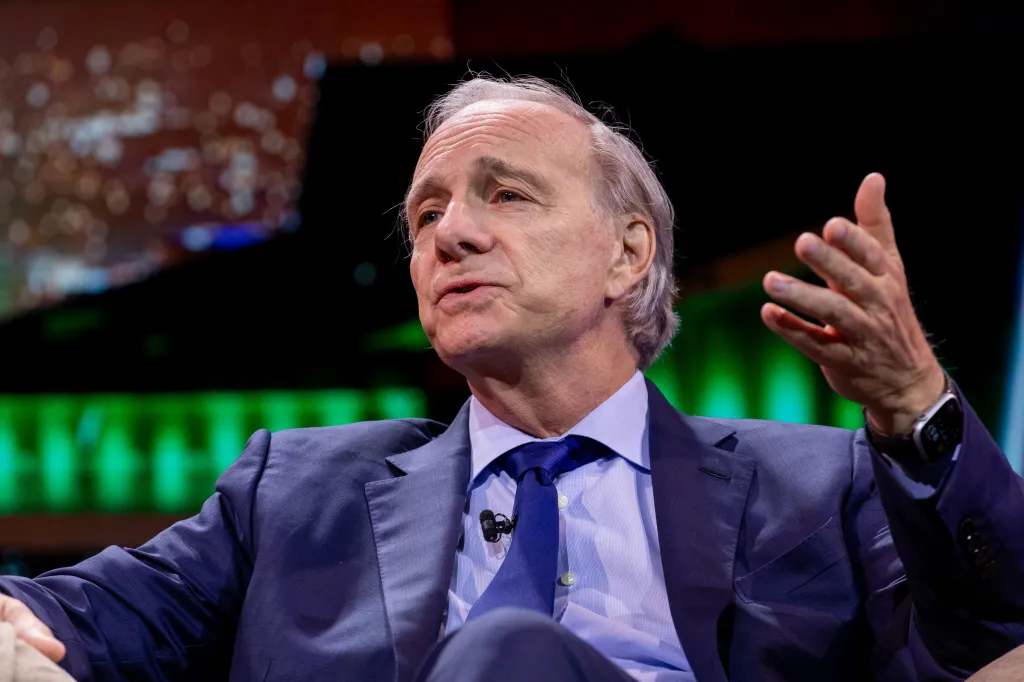

The global order is currently transitioning through a high-risk phase of “great disorder” that mirrors the lead-up to World War II, according to a searing analysis by veteran macro investor Ray Dalio. Following five decades of tracking market and historical patterns, Dalio warns that the convergence of soaring debt, internal political polarization, and shifting international alliances indicates the world has entered “Stage 5″—the final step before a systemic breakdown.
While current global volatility has shocked the public, Dalio contends these events are part of a predictable 75-year “Big Cycle” that governs the rise and fall of empires.
The Mechanics of the ‘Big Cycle’
Dalio’s research into the last 500 years of economic history suggests that monetary and political orders are not permanent. Instead, they evolve through a six-stage progression. Stage 5 is defined by extreme tensions that test the resilience of democratic institutions and the stability of reserve currencies.
“Watching what is happening now is like watching a movie that I have seen many times before,” Dalio noted, citing the 1929–1945 period as the most recent historical parallel. “The times ahead will be radically different from what most people have gotten used to.”
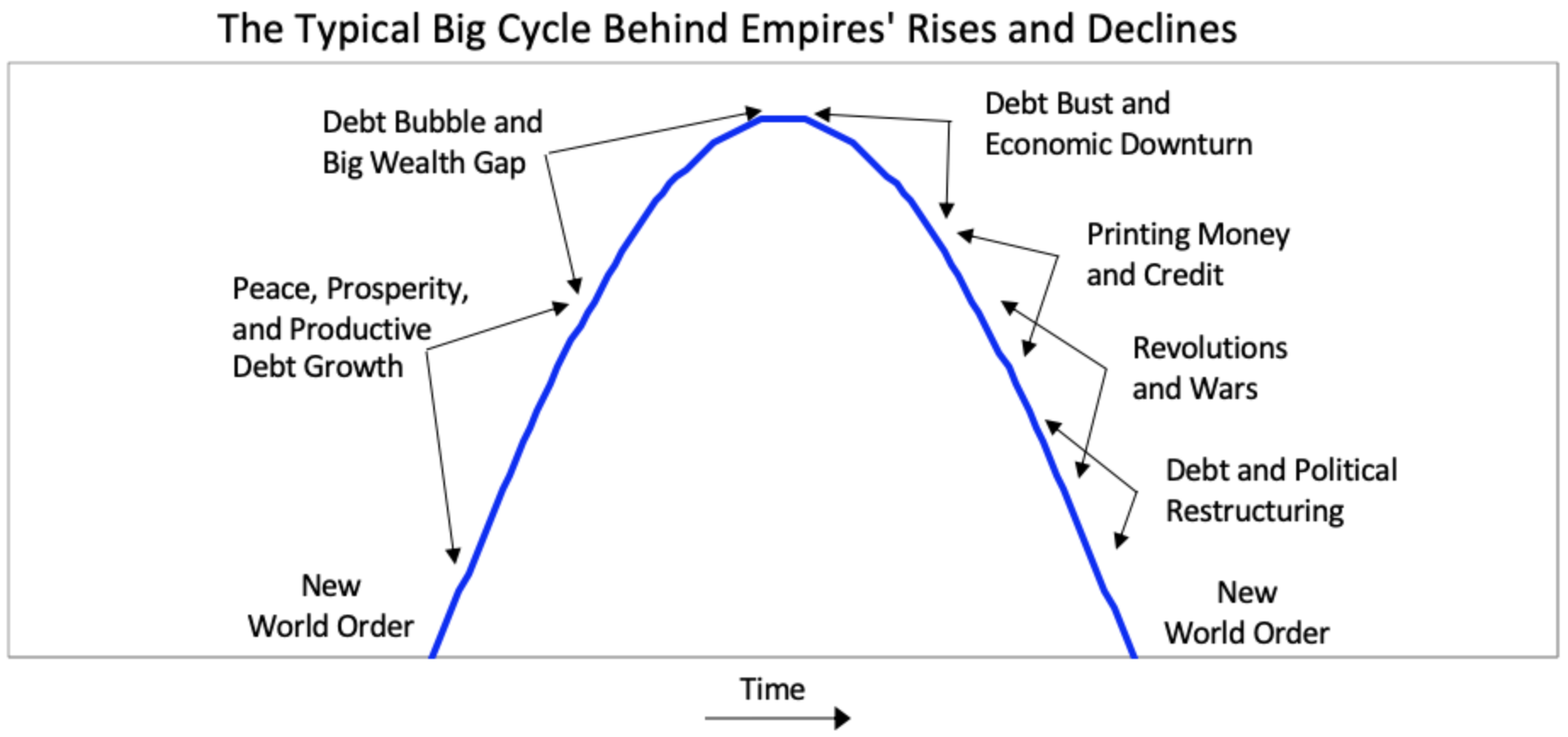
| Stage | Characteristics | Current Status |
| Stage 1-4 | New order, peace, prosperity, and growing debt levels. | Completed (1945–early 2000s) |
| Stage 5 | Large debts, wealth gaps, populism, and great power conflict. | CURRENT PHASE |
| Stage 6 | Breakdown, civil/international war, and systemic collapse. | At the Threshold |
A Triple Threat to Stability
The transition to Stage 5 is marked by three primary catalysts that Dalio identifies as “markers of breakdown.”
- The Debt and Money Cycle: Massive government deficits and the debasement of fiat currencies—led by the U.S. Dollar—are driving investors toward “hard assets” like gold. This shift reflects a growing fear that debts will either be defaulted on or paid back in depreciated currency.
- Internal Social Conflict: Widening wealth and value gaps have birthed “irreconcilable differences” within nations. In the U.S., this is manifest in the rise of populism on both the right and left. Dalio points to the questioning of electoral integrity and the deployment of troops to domestic cities as “pre-civil war type developments.”
- The Geopolitical Shift: The post-1945 multilateral, rules-based order is fracturing. Alliances like NATO are under strain as the world moves toward a “great powers conflict” reminiscent of “gunboat diplomacy,” involving major players like China, Russia, and Iran.
The Vulnerability of Democracies
History shows that Stage 5 is particularly perilous for democratic systems. Because democracies rely on compromise and the rule of law, they often struggle to function when internal disagreements become absolute.
Dalio points to the 1930s, where four major democracies—Germany, Japan, Italy, and Spain—collapsed into autocracies under the weight of economic hardship and social fragmentation. He warns that when rule-following breaks down, “autocratic leaders gain power.”
Is the Outcome Predestined?
Despite the grim historical precedents, Dalio maintains that a total collapse is not inevitable. However, he remains skeptical of a peaceful resolution, citing human nature and the current trajectory of global leadership.
“There is some chance our leaders individually and collectively will not fight and will draw people together to do the difficult, smart things necessary,” Dalio said. “Human nature being what it is, I’m not optimistic.”
As the “Big Cycle” nears its conclusion, the emphasis for investors and citizens alike is shifting from growth to preservation. The “movie” is reaching its climax, and the script—written centuries ago—suggests a period of profound transformation is now unavoidable.