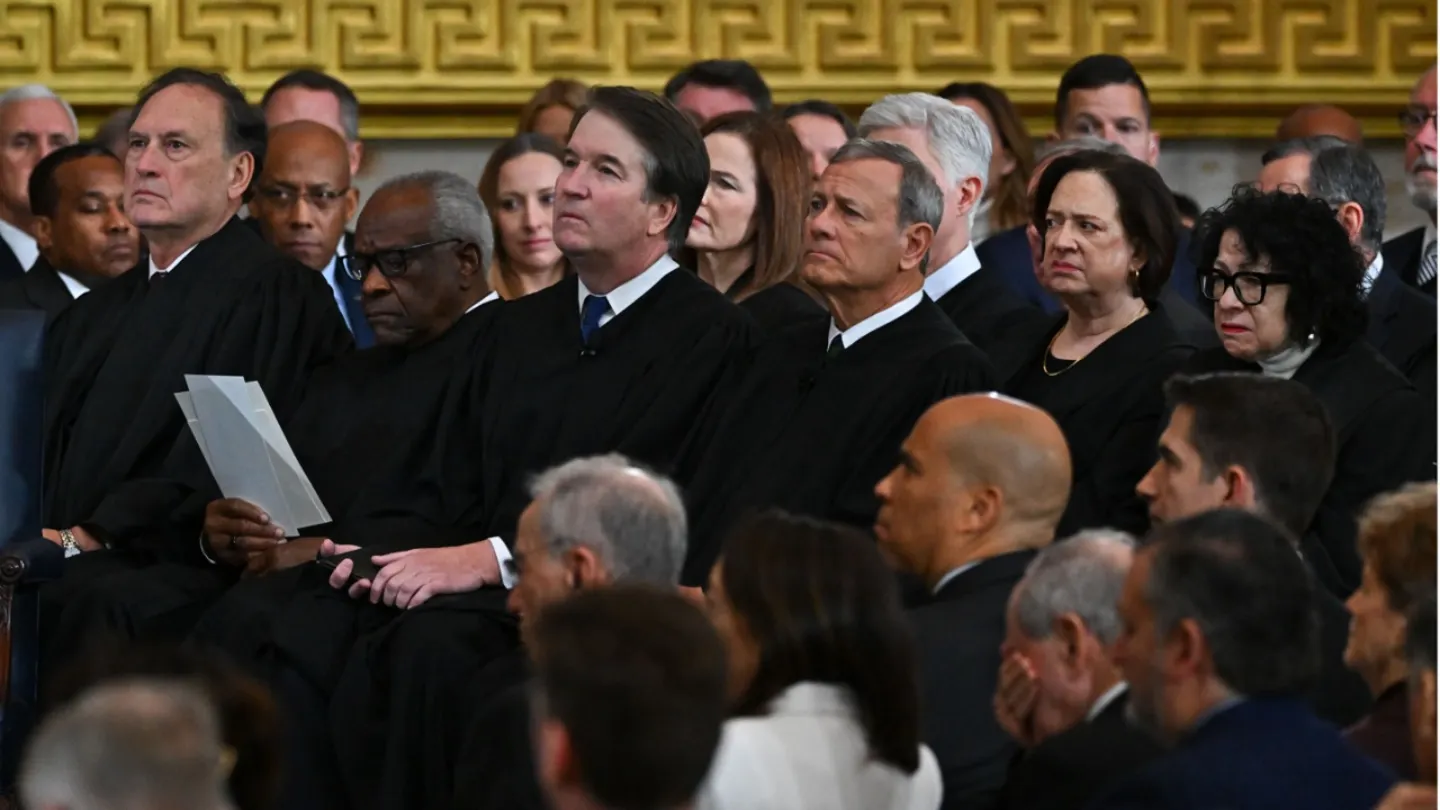

The U.S. Supreme Court ruled Wednesday that President Donald Trump can move forward with firing three Democratic members of the Consumer Product Safety Commission (CPSC), overturning a lower court decision that had reinstated them. The 6-3 decision marks a major legal victory for Trump and underscores the broader fight over presidential control of independent federal agencies.
Justices Sonia Sotomayor, Elena Kagan, and Ketanji Brown Jackson dissented.
The dispute stems from Trump’s decision earlier this year to remove CPSC board members Mary Boyle, Alexander Hoehn-Saric, and Richard Trumka Jr.—all initially appointed by Democrats. A federal judge in Maryland, U.S. District Judge Matthew Maddox (a Biden appointee), ruled the firings were illegal and ordered the trio reinstated.
But the Trump administration challenged that ruling, first at the Fourth Circuit Court of Appeals—which denied the request—and then at the Supreme Court, which ultimately sided with Trump in an emergency ruling.
White House Cites Similar Precedent
U.S. Solicitor General D. John Sauer pointed to a similar Supreme Court case earlier this year involving the National Labor Relations Board (NLRB) and the Merit Systems Protection Board (MSPB), in which the court temporarily blocked the reinstatement of dismissed board members. Sauer argued that the precedent “squarely controls” the CPSC case, and the court agreed.
The majority ruling allows Trump to proceed with cleaning house at the CPSC, a move the White House says is necessary to restore accountability.
CPSC Members Push Back
In their appeal, the fired CPSC members argued their sudden removal would “disrupt the status quo” at an agency critical to consumer protection. They also noted that the Trump administration waited four months before acting to remove them, which they said undermines the claim that emergency court intervention was needed.
Despite their objections, the justices ruled in favor of executive authority.
Judge Maddox’s Earlier Ruling
In his initial ruling, Judge Maddox said that the CPSC’s structure—with staggered, fixed-term appointments—doesn’t violate the Constitution’s Article II, which outlines the president’s executive powers. He maintained that the board’s design does not obstruct Trump’s authority.
Maddox had also granted permanent injunctive relief to the three board members, citing the “disruption” caused when other board appointees—like those in the NLRB and MSPB cases—were repeatedly removed and reinstated while cases remained unresolved.
Legal Precedent Under Scrutiny
The case centers around the 1935 Supreme Court decision Humphrey’s Executor, which held that presidents cannot remove members of independent federal boards without cause. That precedent has long defined the limits of executive authority over independent agencies—but Trump’s legal team continues to challenge its application.
Wednesday’s decision adds to a growing list of cases where the Court has sided with broader presidential powers over agencies once seen as politically insulated.
What’s Next
This ruling clears the way for Trump to reshape the leadership of key regulatory agencies. It also sets the stage for future legal battles over the reach of presidential authority—and whether long-standing protections for independent boards can still withstand constitutional scrutiny in a shifting political landscape.