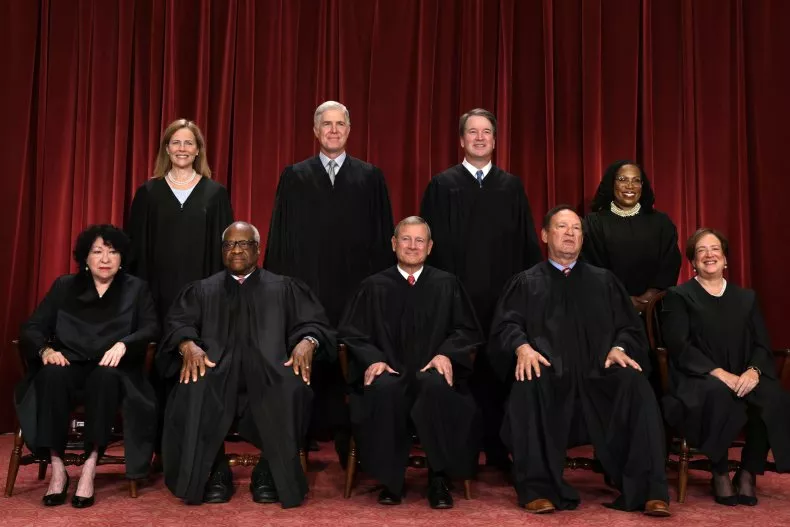

The U.S. Supreme Court is deciding whether to hear a case from former Kentucky clerk Kim Davis, who wants the Court to overturn its 2015 ruling in Obergefell v. Hodges. That ruling made same-sex marriage legal across the country.
Davis, who was jailed for six days in 2015 for refusing to give marriage licenses to same-sex couples because of her religious beliefs, says the Obergefell decision is unconstitutional. Her lawyer, Matthew Staver, hopes the Court will take the case. But William Powell, who represents the couple that sued Davis, believes the justices will reject it.
Law experts say it’s unlikely the Court will overturn same-sex marriage. Northeastern University professor Daniel Urman said while Justices Clarence Thomas and Samuel Alito might support the idea, most of the conservative justices are unlikely to go that far. Instead, the Court could focus on smaller issues, such as whether people with religious objections should be excused from certain duties.
Why This Matters
If the Court overturned Obergefell, each state would decide whether to allow same-sex marriage. Many states still have laws banning it. This could remove federal protections for same-sex couples, ten years after the ruling made marriage equality the law nationwide.
The Arguments
In a petition to the Court, Staver wrote that Obergefell was “egregiously wrong” and has harmed religious liberty. He said the ruling forces people like Davis to choose between their faith and following the law. The petition also says that if the Court reverses the decision, current same-sex marriages would remain valid.
Lower courts have rejected Davis’s arguments. A federal appeals court ruled that because she was acting as a government official, the First Amendment does not protect her actions. The Supreme Court also turned down one of her appeals in 2020.
Public Opinion
Support for same-sex marriage remains high but has dipped slightly. A May 2024 Gallup poll found 69% of Americans support it, compared to 71% in 2023. Support is stronger among Democrats (83%) and independents (74%) than Republicans (46%).
What’s Next
The Supreme Court could decide in the coming months whether to hear Davis’s case. If it refuses, the lower court ruling against her will stand. If it accepts, the case could become another major test of the balance between religious freedom and LGBTQ+ rights in the U.S.