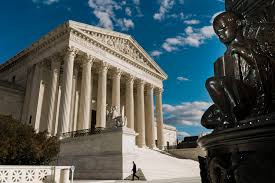

Efforts by Arkansas, Louisiana, and Texas to mandate the display of the Ten Commandments in public school classrooms have ignited a wave of lawsuits and constitutional debate—raising the possibility that the U.S. Supreme Court may ultimately be forced to weigh in.
Why It Matters
At the heart of the issue is whether laws requiring the Ten Commandments to be posted in public schools violate the First Amendment’s Establishment Clause, which bars government endorsement of religion. Critics argue these measures cross the line between church and state, while supporters claim they reflect America’s historical values.
The controversy has already sparked court challenges in all three states, with decisions diverging and tensions mounting over the role of religion in public education.
Three States, Three Legal Battles
- Arkansas: In June, seven families sued the state over a law signed by Republican Governor Sarah Huckabee Sanders. The measure mandates Ten Commandments displays in classrooms and libraries. Plaintiffs argue it infringes on their constitutional rights and promotes a single religious viewpoint in public institutions.
- Louisiana: A three-judge panel from the 5th U.S. Circuit Court of Appeals struck down a similar law, calling it “plainly unconstitutional.” Louisiana Attorney General Liz Murrill said she plans to appeal, potentially all the way to the Supreme Court.
- Texas: Days after the Louisiana ruling, Dallas-based families and faith leaders filed a federal lawsuit to block Texas’s version of the law. They argue students would be “forcibly subjected to scriptural dictates,” violating both religious freedom and long-standing legal precedent.
According to Stateline, as of February 2025, at least 15 Republican-led states have introduced similar legislation.
The Bigger Picture: Christian Nationalism and Project 2025
Critics say the wave of Ten Commandments laws is part of a broader push by Christian nationalist movements tied to Project 2025—a conservative agenda aiming to reshape American government along religious lines.
“These laws are part of a coordinated effort to impose a narrow set of religious beliefs on public schoolchildren,” said Rachel Laser, president of Americans United for Separation of Church and State. “Our Founders promised religious freedom—and that includes freedom from government-endorsed religion.”
Americans United is among the advocacy groups challenging the laws in court. They point to the 1980 Supreme Court ruling Stone v. Graham, which struck down a similar Kentucky law as unconstitutional.
“The Court has long recognized that public school students are a captive and impressionable audience,” Laser said. “Allowing government-imposed religious displays betrays both our Constitution and our values.”
Will the Supreme Court Step In?
So far, no Ten Commandments case has been added to the Supreme Court’s docket. But if disagreements among lower courts persist, legal experts believe the issue could land before the justices.
Mikey Weinstein, president of the Military Religious Freedom Foundation, said he expects the conservative-leaning Court may allow such laws to stand—despite decades of precedent.
“The 6-3 majority will decide what they want and then rationalize it,” Weinstein said. “This is about weaponizing religion to push a Christian nationalist agenda.”
Weinstein, whose group represents nearly 100,000 clients in the U.S. military and government (most of them Christian), warned that allowing these laws to move forward would undermine centuries of religious liberty protections.
“This is not just a small symbolic act. It’s an assault on the wall of separation between church and state.”
Supporters Defend the Laws
Texas Governor Greg Abbott defended his state’s new law, saying,
“I will always defend the historical connection between the Ten Commandments and their influence on the history of Texas.”
State Representative Brent Money said in May,
“Our kids in public schools need prayer and Bible reading now more than ever.”
Representative Candy Noble, a co-sponsor of the Texas bill, emphasized its educational intent:
“This is about acknowledging what’s historically important to our nation judicially and culturally.”
Legal Experts Warn of Broader Implications
Patrick Elliott of the Freedom From Religion Foundation warned that even if these specific laws fail in court, the broader push to introduce religious doctrine into public schools remains a long-term threat.
“This isn’t just about the Ten Commandments. It’s about using public institutions to promote a religious message,” he said. “And that undermines the First Amendment.”
Kevin Bolling, head of the Secular Student Alliance, said recent moves reflect a coordinated effort to blur the line between religion and government.
“The government should not be endorsing any religion—especially not in schools. This is about protecting everyone’s right to believe, or not believe, as they choose.”
What Happens Next?
There is no active case on the Ten Commandments laws before the Supreme Court. But as legal battles continue in Arkansas, Louisiana, and Texas, observers say it’s only a matter of time before the justices are asked to weigh in—potentially overturning or reaffirming 45 years of precedent on religious displays in public education.
“Public schools are not Sunday schools,” said Heather Weaver of the ACLU after the Louisiana decision. “They must remain inclusive spaces for students of all faiths—and none.”
Until then, the debate over God, government, and the classroom is far from over.