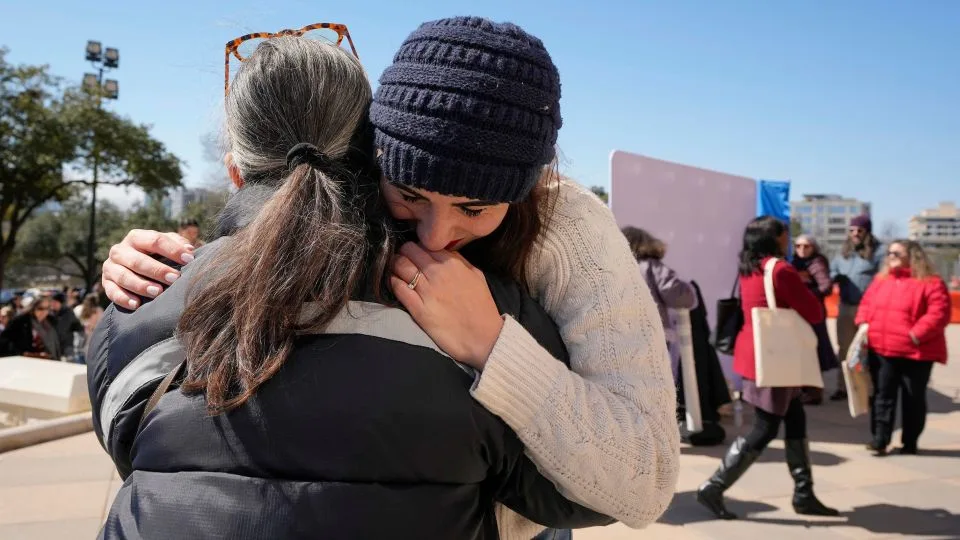

On a cold February morning in Austin, Texas, Summer Willis dropped to her hands and knees at 4 a.m. and began crawling the length of the city’s marathon. Her body was bloodied and bruised after 22 agonizing hours, but she refused to stop. The mother of two was on a mission — not just to complete a grueling physical feat, but to push lawmakers to fix a dangerous flaw in Texas law that had once denied her justice.
After making it 13 miles in searing pain, Willis stood up and looked across the street — directly at the site where, a decade earlier, she says she was raped at a University of Texas fraternity party. She had accepted a drink that she believes was drugged. But because the law didn’t clearly define lack of consent for voluntarily intoxicated victims, her case was never prosecuted.

“I finally gave myself permission to stand up,” Willis recalled. “I stood up and said, I’m not going to finish this how I anticipated it, but I am going to finish it.”
She ran the rest of the race — and just months later, helped change the law.
On June 20, Texas Gov. Greg Abbott signed the Summer Willis Act, a bill that closes a long-standing legal loophole by clearly stating that someone cannot consent if they are intoxicated or impaired by any substance — whether voluntarily or not.
“I’ll never get justice from this bill — it’s not retroactive,” Willis said. “But now, no victim will be told it doesn’t count.”

From Healing to Advocacy
Two years before her marathon crawl, Willis had started running — sometimes with a mattress strapped to her back — not for attention, but to heal. After living in the shadow of trauma for years, she wanted to reclaim her strength and set an example for her two sons.
“I looked at their faces and thought, ‘I want to be the woman I used to believe I could be — strong, confident, whole.’”
Her initiative, Strength Through Strides, has since raised tens of thousands of dollars for sexual assault survivors.
From Silence to the Texas Capitol
Following her dramatic crawl, state lawmakers reached out. Rep. Ann Johnson, who had spent years fighting to close the intoxication loophole, asked Willis to testify and offered to name the bill after her. Willis agreed.
But getting it passed wasn’t guaranteed.
Three months later, while sick with a fever and caring for her young children at home in Houston, Willis waited nervously as Texas lawmakers moved through dozens of end-of-session votes.
“We were realizing they might not get to ours,” she recalled. “And then they called our bill — when all hope was lost.”
The Summer Willis Act passed unanimously that night.

A National Fight
Texas isn’t alone. In more than 20 states, laws still don’t recognize voluntary intoxication as a form of incapacitation in sexual assault cases. A 2022 review found nearly half of U.S. jurisdictions require a victim to be involuntarily intoxicated to qualify as impaired under the law.
“That’s enshrining victim blaming,” said Mollie Montague of RAINN, the nation’s largest anti-sexual violence group. “People fear changing the status quo — and right now, the status quo protects predators.”
In New York, a similar bill failed to get called for a vote — despite bipartisan support. Outraged but undeterred, Willis flew to New York City just weeks after her victory in Texas and spoke at a rally in Bryant Park.
“It takes so much,” Willis said. “Everyone can think of the worst thing that ever happened to them — but would they crawl for 22 hours? Stand on the Capitol steps? Tell the ‘Today’ show?”
Still, she wonders: “Do we care enough about sexual assault survivors if they’re not crawling or bleeding or doing something extreme? I don’t know — because this is how I had to do it.”
A New Chapter
Back in Houston, Willis is finally taking a break. She’s planning a trip with her husband, Andrew, who has stood by her through every step — from Peace Corps memories to marathon runs and lawmaker meetings.
He remembers the first time she told other women her story — years ago, comforting a fellow volunteer after a training on sexual assault.
“She didn’t do it for headlines,” he said. “She did it because she cares.”
Now, with one state’s law changed and many more still in need of reform, Willis reflects on what it all means.
“Is it enough just to share your story?” she asks. “Sometimes… it turns out, it is.”