
WASHINGTON — A former lead instructor for U.S. Immigration and Customs Enforcement (ICE) testified before Congress on Monday, warning that the agency is deploying “defective” and “broken” training protocols for thousands of new recruits. The whistleblower alleges that truncated programs are sending officers into the field without a fundamental understanding of constitutional law or use-of-force limits.
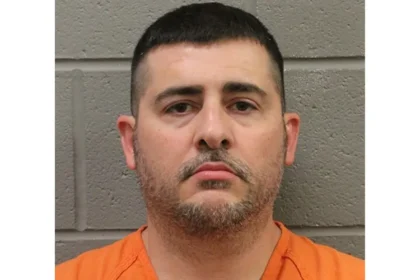
Ryan Schwank, a career attorney and former ICE instructor who resigned in protest on Feb. 13, told a congressional hearing that the push to rapidly scale up the agency’s ranks has compromised public safety. Under the current administration’s mandate to execute the largest deportation operation in U.S. history, Schwank warned that cadets are graduating despite being unable to demonstrate a “solid grasp of the tactics or the law required to perform their jobs.”
Drastic Cuts to Training Duration and Curriculum
Internal agency documents obtained by investigators and reviewed by the media reveal a significant reduction in the rigor of the ICE Basic Immigration Enforcement Training Program.
A comparison between a July 2025 syllabus and an updated February 2026 version shows a 40% decrease in training duration, falling from 72 days to just 42 days. Key findings from the disclosure include:
Firearms Proficiency: Approximately 16 hours of firearms training have been eliminated.
Constitutional Rights: Lessons on the rights of protesters and the legal definition of “seizure” were reportedly cut from two-hour sessions to 10-minute briefings.
Removed Evaluations: Cadets are no longer graded on critical topics such as “Judgment Pistol Shooting” and “Encounters to Detention.”
“Without reform, ICE will graduate thousands of new officers who do not know their constitutional duty,” Schwank testified. “That should scare everyone.”
DHS Denies Reductions, Cites ‘Streamlining’
The Department of Homeland Security (DHS) has pushed back against the allegations, maintaining that no core subject matter has been sacrificed. In an official statement, the department claimed it has “streamlined training to cut redundancy and incorporate technology advancements.”
Acting ICE Director Todd Lyons previously defended the shortened timelines, noting that many recruits with prior federal law enforcement experience receive abbreviated instruction to focus specifically on the Immigration Nationality Act. However, Schwank countered this during his testimony, accusing the department of “lying” about the removal of specific use-of-force and constitutional law classes.
Policy Shifts and Legal Controversies
The whistleblower’s testimony arrives amid intensifying scrutiny of ICE’s field tactics. Schwank previously disclosed a directive signed by Lyons that allows officers to enter private homes without judicial warrants—a reversal of longstanding agency policy.
DHS General Counsel Jimmy Percival defended the use of “administrative warrants” signed by ICE officials, arguing that individuals in the U.S. illegally do not afford the same constitutional protections as citizens. This stance was immediately challenged by Stevan Bunnell, former DHS general counsel, who noted that the Supreme Court has historically found such administrative warrants unconstitutional for home entries.
“The police can’t sign their own warrants,” Bunnell stated in his prepared remarks.
The Path Ahead: Funding and Oversight
The training controversy is expected to become a central flashpoint in upcoming budget negotiations. Sen. Richard Blumenthal (D-CT) and Rep. Robert Garcia (D-CA) indicated that the testimony will fuel a Democratic refusal to fund DHS until specific reforms are met, including:
- A prohibition on agents wearing masks during operations.
- Restoration of full-length training programs.
- Strict adherence to judicial warrant requirements.
As the administration aims to hire 10,000 new officers through the “One Big Beautiful Bill Act,” the agency expects to graduate 3,000 enforcement officers by June. With ICE under pressure to meet a White House target of 3,000 arrests per day, the quality of officer preparation remains a matter of urgent national debate.