

The Nobel Prize medal has always signified far more than the value of its gold. In recent years, though, it’s also come to reflect something else: political unease, debates over presidential legacy, and eye-watering sums of money.
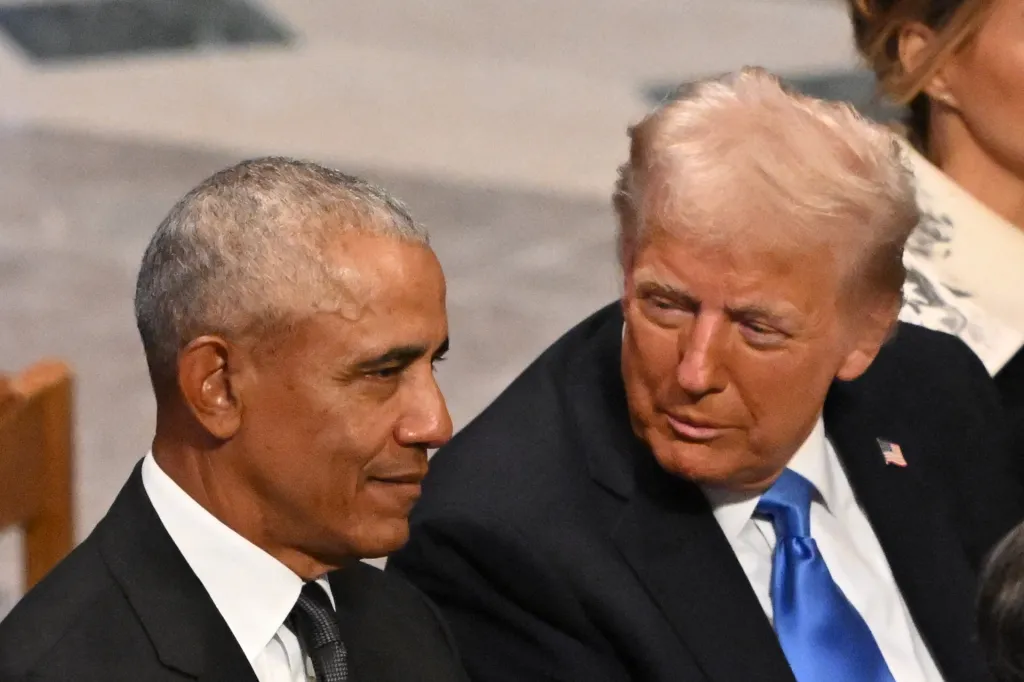
Critics still argue that the Nobel Committee put Barack Obama in an awkward position by honoring him too early in his presidency. At the same time, the Norway-based committee appears intent on keeping Donald Trump out of contention.
And while the Peace Prize remains tightly controlled by the Nobel process, the physical medals themselves have sold for as much as $103.5 million at auction—fueling a different kind of controversy. The committee may insist the Nobel is about ideals, but the collectibles market has shown that, in practice, the medal can become a trophy with a price tag.
The Prize That Came Too Soon
When Obama accepted the Nobel Peace Prize in 2009—less than a year into his first term—he acknowledged he felt humbled and undeserving. The committee praised his “extraordinary efforts to strengthen international diplomacy.” But the optimism surrounding the award dimmed as his presidency unfolded, including decisions to send more troops to Afghanistan and expand drone warfare.
Even Geir Lundestad, a former Nobel secretary, later expressed regret in his memoir, Secretary of Peace: “Even many of Obama’s supporters believed that the prize was a mistake. In that sense the committee didn’t achieve what it had hoped for.”
Trump, Nobel Ambitions, and Global Flashpoints
Obama’s successor has long been portrayed as eager for the same recognition. Reports suggest that his pursuit of Nobel stature has shaped policy choices—including, according to accounts referenced in this piece, a dramatic 50% tariff imposed on India after Prime Minister Narendra Modi disputed Trump’s claim that he deserved the Nobel for stopping a war between India and Pakistan.
That same desire is also framed here as influencing the situation in Venezuela.
Opposition leader Maria Corina Machado—described in this article as having recently been in hiding and fearing for her life under the Maduro regime—won the Nobel Prize in 2025. On Thursday, while meeting Trump at the White House, she said she gave him her prize.
Despite that moment, the article says Trump offered no indication that he would push for elections in Venezuela. The White House reiterated Trump’s view that Machado lacks enough support to lead the country, and instead Trump favors Delcy Rodriguez, who was sworn in as interim president.
The Nobel Committee later stepped in to clarify that Machado cannot transfer her prize to Trump. Machado, however, told reporters she did it anyway.
These episodes highlight a key feature of Nobel protocol: the title itself can’t be reassigned—but what happens to the physical prize and the money attached to it is largely up to the laureate.
Nobel for Sale
Obama tried to ease criticism around his award by giving away the entire $1.4 million cash portion to a range of charities, including organizations supporting veterans and students—essentially “regifting” the money rather than keeping it. Tax experts noted that the donations were treated as charitable contributions under U.S. tax rules.
But Nobel rules don’t allow the prestige to be passed along. The committee alone decides winners, and awards cannot be transferred, re-awarded, or retroactively reassigned for political reasons. After decades of backlash over premature or politically charged selections, the institution has become more cautious—determined to avoid any impression that the Peace Prize could be used to clean up reputations already set in the public mind.
Still, while the committee guards the symbolism, the marketplace plays by different rules.
Over the last decade, Nobel medals have become blockbuster auction items. The turning point came in 2022, when Russian journalist Dmitry Muratov’s Nobel Peace Prize medal was sold to support Ukrainian child refugees, raising an astonishing $103.5 million—shattering expectations and setting a new benchmark for what these prizes can fetch.
Other sales have been far less glamorous, and arguably more revealing. Physicist Leon Lederman sold his medal to help pay for medical care, prompting criticism of the American healthcare system. “Only in America,” wrote Sarah Kliff of the Physicians for a National Health Program.
What the Committee Can’t Control
The Nobel Committee can’t undo its past decisions, including the controversy surrounding Obama’s early-term Peace Prize. It also can’t manipulate future choices simply to control how history interprets a U.S. president.
And it has no power to stop winners from turning their medals into cash—whether for charity, survival, or something else entirely—even when the price climbs into nine figures.


