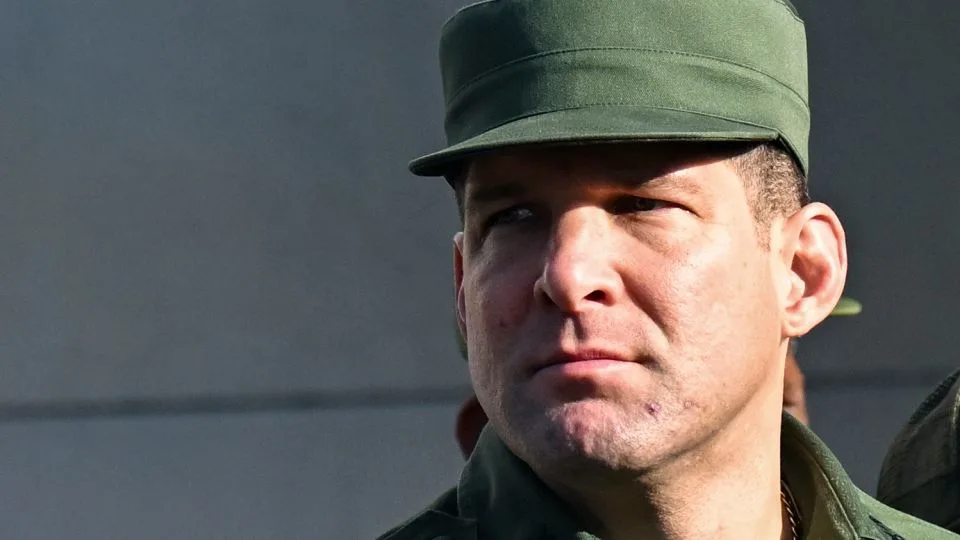

Amidst a spiraling humanitarian crisis and unprecedented diplomatic pressure from Washington, a familiar but long-shadowed figure has emerged at the center of Cuba’s political stage. Raúl Guillermo Rodríguez Castro, the 41-year-old grandson of former leader Raúl Castro, made high-profile appearances alongside President Miguel Díaz-Canel this week, fueling intense speculation that he is the designated interlocutor for back-channel negotiations with the United States.
Known by the moniker “El Cangrejo” (The Crab), Rodríguez Castro attended a high-level meeting of the Communist Party of Cuba and the Council of Ministers on Friday. His presence at a subsequent press conference, where Díaz-Canel addressed the island’s collapsing economy and confirmed direct communications with Washington, signals a significant shift in the internal power dynamics of the revolutionary guard.
Back-Channel Diplomacy in a Vacuum
The sudden visibility of “El Cangrejo” follows reports of clandestine discussions between the Castro scion and U.S. Secretary of State Marco Rubio. These talks, first reported by Axios, allegedly bypassed official Cuban diplomatic channels, suggesting a fractured or desperate leadership in Havana looking for a lifeline.
While the U.S. State Department has not officially confirmed these meetings, the timing aligns with a shift in American strategy. Following the January 3 U.S. operation that ousted Venezuelan leader Nicolás Maduro—Cuba’s primary benefactor—Washington has effectively severed the oil umbilical cord that kept the island’s grid functioning.
“The United States would love to see dramatic reforms that open the space for both economic and eventually political freedom,” Secretary Rubio stated during a recent Caribbean summit, notably adding that change “doesn’t have to happen all at once.”
A Legacy of Security and Shadow Power
Rodríguez Castro is not a career politician but a product of the island’s military-industrial elite.
- Lineage: He is the son of Débora Castro Espín and the late General Luis Alberto Rodríguez López-Calleja, who controlled GAESA, the sprawling military conglomerate that dominates the Cuban economy.
- The Protector: For a decade, he served as the head of Raúl Castro’s personal security detail, effectively acting as the “eyes and ears” of the family patriarch.
- The Nickname: He earned the name “El Cangrejo” due to a congenital malformation (ectrodactyly) on one of his hands, but in political circles, it has come to represent his tenacity and proximity to the seat of power.
The Venezuelan Domino Effect
The crisis in Havana reached a breaking point following the removal of Maduro. The U.S. blockade on Venezuelan oil shipments since mid-December has left Cuba in literal darkness. Hospitals are reportedly suspending surgeries, and food shortages have reached levels unseen since the “Special Period” of the 1990s.
The U.S. raid to capture Maduro also served as a demonstration of force that rattled Havana. Dozens of Cuban security personnel—stationed in Caracas to protect Maduro—were killed in the operation. Analysts suggest that the decision by the U.S. to allow certain Maduro allies, such as Delcy Rodríguez, to remain in power in Venezuela signals a “realist” approach: Washington may be willing to deal with “reformist” factions of the old guard to avoid a total state collapse.
Succession or Survival?
Experts remain divided on whether Rodríguez Castro’s emergence indicates a planned succession or a desperate attempt by the Castro family to manage a transition on their own terms. Unlike his uncle, Alejandro Castro Espín, “Raulito” has no formal standing within the Communist Party, yet his proximity to the military apparatus makes him a formidable player.
“What we are seeing is the public face of a private desperation,” says Sebastián Arcos of the Cuban Research Institute at Florida International University. “He is the only person Raúl Castro trusts implicitly to negotiate the family’s survival.”
As the island edges toward a humanitarian emergency, the presence of “The Crab” at the President’s side suggests that the future of Cuba may not be decided in the halls of the National Assembly, but in the quiet, high-stakes dialogue between a grandson of the revolution and its oldest adversary.