U.S. and Israeli forces have significantly degraded Iran’s offensive capabilities under Operation Epic Fury, according to a new assessment by the Institute for the Study of War (ISW). Despite this military “overwhelmingly positive” trend, the conflict continues to exert severe pressure on global energy markets and domestic political stability.
The Collapse of Iranian Firepower
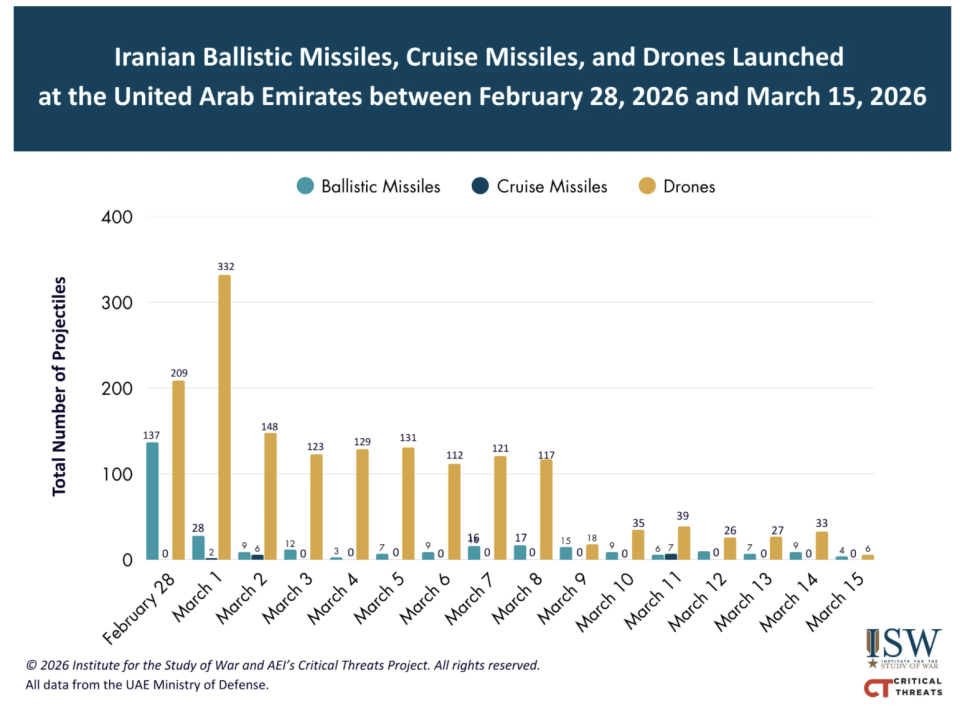
The ISW report highlights a dramatic plunge in Tehran’s ability to project power. On the second day of the conflict, the United Arab Emirates faced 332 drone strikes; by Sunday, that number dropped to six. Similarly, ballistic missile launches have cratered from a peak of 137 on day one to just four yesterday.
Military analysts attribute this decline to the systematic destruction of hundreds of Iranian launchers by U.S.-Israeli bombardments. Reports from the ground suggest a breakdown in the Islamic Revolutionary Guard Corps (IRGC) command structure, with missile force troops reportedly demoralized and deserting their posts.
A Strategy of Economic Attrition
While the military trajectory favors the coalition, the broader strategic outcome remains uncertain. Iran’s primary objective is not a conventional victory but the infliction of “political and economic pain.”
- Shipping Disruption: While the last attack on merchant shipping occurred on March 11, the Strait of Hormuz remains a volatile “kill box.”
- Energy Prices: Surging crude oil prices have already translated to higher costs at American pumps, threatening a spike in inflation.
- Political Pressure: With the U.S. midterm elections approaching, the Biden administration faces mounting pressure to resolve the conflict before economic damage erodes public support.
The NATO Standoff
President Trump has intensified calls for NATO allies to deploy warships to escort tankers through the Gulf, warning that a failure to provide maritime support would be “very bad for the future” of the alliance. To date, no member states have committed additional naval assets to the operation.
The Path Ahead
The ISW maintains that “Operation Epic Fury” is achieving its tactical goals by stripping Iran of its most essential tools: drones and missiles. However, the report warns that the military campaign is separate from the market’s risk tolerance.
The burden now rests on Washington to ensure that tactical battlefield successes are not neutralized by Iran’s five-pronged strategy of maritime disruption, proxy activation, terrorism, and cyber warfare. For now, the military campaign is degrading Iran’s capabilities, but the “strategic success” of the war remains tied to the stability of the global economy.
“The Trend is Overwhelmingly Positive”: Analysts Say Iran’s Military Capabilities are Collapsing as Missile Attacks Plunge Amid ‘Operation Epic Fury’