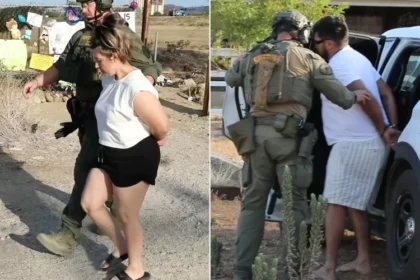
Thousands of protesters filled the streets near downtown Chicago on Monday, chanting, singing, and waving signs against U.S. President Donald Trump’s plan to send National Guard troops and federal immigration agents into the city.
The march was one of about 1,000 “Workers over Billionaires” demonstrations across the country on Labor Day. But Chicago’s event carried a sharper message as residents pushed back against Trump’s promise to make Chicago his next target, following deployments already happening in Los Angeles and Washington D.C..
Mayor Brandon Johnson told the crowd that Chicago would resist any federal interference.
“This is the city that will defend the country,” Johnson said, drawing loud cheers from people waving Chicago’s blue-striped flags.
As the march wound through the city, some protesters brought children or walked dogs. Diners at outdoor cafes pumped their fists in support, and drivers honked their horns. Organizers estimated the turnout at 5,000 to 10,000 people, though city officials have not confirmed those numbers.
Many protesters said they were worried about what could happen if National Guard troops or more ICE agents were sent into the city.
Filiberto Ramirez, 72, said he feared violence. “Do we feel there’s gonna be trouble? Yes,” he said. “I hope nobody gets hurt.”
Trump has often criticized Chicago in recent weeks, describing it as “a mess,” “a hellhole,” and a “killing field.” But on Monday, residents at the march said they don’t believe bringing in the National Guard would help with crime.
“There is a crime problem,” said Yvonne Spears, 67, “but the National Guard is supposed to fight for us, not against us.”
According to city crime data, homicide rates in Chicago have dropped in recent years. A 2025 University of Chicago survey found that about half of residents said they feel unsafe in their neighborhoods at night, but many of Monday’s protesters said they generally feel secure.
City and state leaders are preparing legal challenges if federal troops are deployed, with experts saying such actions would likely violate the U.S. Constitution and a 19th-century law that forbids the military from enforcing domestic laws.
Mayor Johnson also signed an executive order on Saturday stating that Chicago police will not cooperate with federal agents or the National Guard. He directed officers to wear official uniforms and banned the use of masks. Meanwhile, immigrant rights groups are strengthening their support networks by hiring more lawyers, running hotlines, and holding “know your rights” workshops.
“The people here are proud that we’re a sanctuary city,” said Andrea Reyes, 42, referring to Chicago’s policy of refusing to help with federal immigration enforcement.
“I don’t think it’ll go well if the National Guard comes here.”