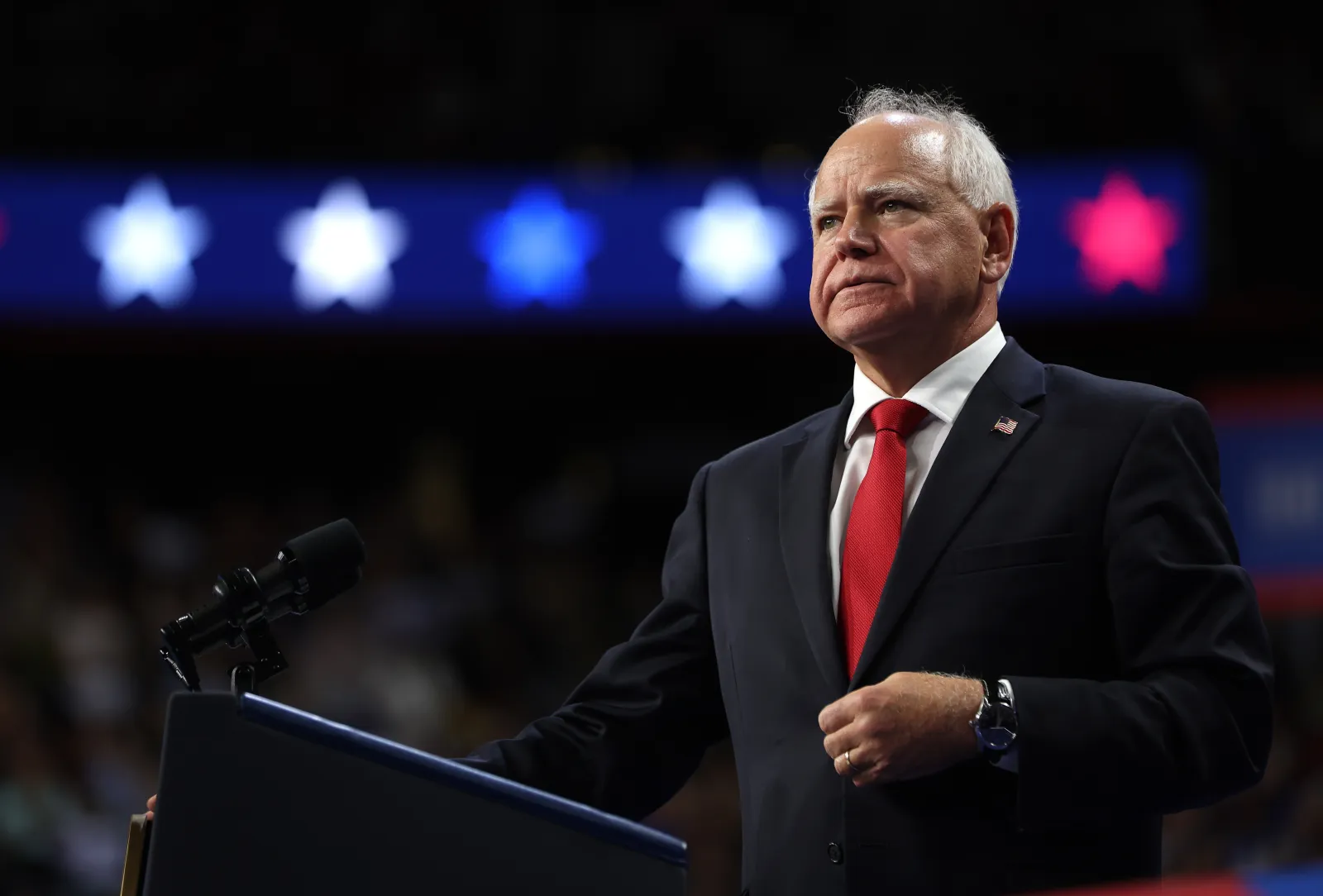

Minnesota Governor Tim Walz, a Democrat seeking another term next November, is heading into the election season under mounting scrutiny as allegations of widespread fraud in federal programs continue to dominate political debate in the state.
Republicans say the controversy will play a decisive role with voters. A spokesperson for the Minnesota Republican Party told Newsweek the issue is certain to influence the race.
“On whether this will push voters toward Republicans: absolutely. Fraud isn’t an abstract issue — it’s about schools, public safety, and services that Minnesotans expect their tax dollars to support. Voters are increasingly open to Republican leadership because they want accountability, transparency, and a government that actually works for them,” Minnesota GOP Director of Communications Noah Rouen said.
Why It Matters
The allegations gained renewed attention after a viral video posted by influencer Nick Shirley highlighted suspected fraud at several Minneapolis-area daycares, drawing sharp reactions from Minnesota Republicans.
Federal prosecutors have said more than 60 people in the state have already been convicted in fraud cases, with over 90 charged. Estimates of the cost to taxpayers range from $250 million to as much as $1 billion. Investigations by state and federal authorities remain ongoing, and officials have warned the total amount could be higher.
Earlier in December, a federal prosecutor said that $9 billion or more in federal funds allocated to 14 state-run programs since 2018 may have been stolen. Walz and other state officials have disputed that figure but acknowledged the seriousness of the problem and pledged to address it. Many of those charged are of East African descent and are believed to be part of Minnesota’s Somali immigrant community, the largest in the United States.
What to Know
Republicans are pressing the fraud allegations as a central campaign issue, arguing that the Walz administration failed to prevent abuses. Walz’s office has countered that he has “worked for years to crack down on fraud and asked the state legislature for more authority to take aggressive action.”
Only one poll of the race was conducted before the scandal became a major issue. That KSTP-TV/SurveyUSA poll showed Walz leading several potential Republican challengers, including state Senator Scott Jensen and former gubernatorial candidate Kendall Qualls. The survey of 568 voters was conducted September 15–18, 2025, with a credibility interval of plus or minus 4.8 percentage points.
Political scientist David Schultz of Hamline University said Walz was already facing a difficult path by seeking a third term, something governors rarely achieve. Schultz described Walz as a former “clear star” of the Democratic Party after the 2022–2023 legislative session, but said that perception has shifted dramatically as fraud allegations have moved to the center of the debate.
“At this point, Walz is clearly the underdog and faces significant obstacles to reelection. It is possible that 2026 could bring a national blue wave, but Minnesota itself could still turn red. Some Democrats privately worry that openly criticizing Walz would only strengthen Republican attacks,” Schultz said.
Schultz added that Walz may be relying on a weak Republican opponent and dissatisfaction with President Donald Trump to generate a “blue wave” that carries him through.
Larry Jacobs, director of the Center for the Study of Politics and Governance at the University of Minnesota, said that if the election were held now, Walz would be in “serious trouble,” though he cautioned that the race is still a year away.
“It’s an issue, but it’s unclear how prominent it is,” Jacobs said, noting that midterm elections often focus on the president. Walz has increasingly emphasized Trump, betting that national issues could overshadow state-level controversies by fall 2026.
Even so, Jacobs said many members of the Minnesota Democratic–Farmer–Labor Party appear “panicked” and want stronger action against fraud.
“One question I would pose is, what are we talking about in fall of 2026? Are we talking about Trump? Are we talking about fraud in Minnesota? I think if you know the answer, you’re going to have a very strong sense of how this election is going to turn out,” he said.
A more recent KSTP-TV/SurveyUSA poll showed Walz’s approval rating evenly split, with 48 percent approving and 48 percent disapproving of his performance. The same survey found that 69 percent of respondents believe Walz needs to do more to stop fraud in Minnesota. The poll surveyed 650 adults from December 9–12, 2025.
Betting markets still favor Democrats. Polymarket gave Democrats an 80 percent chance of winning next November, down slightly from the previous day, while Kalshi put the odds at 77 percent. Both the Cook Political Report and Sabato’s Crystal Ball currently rate the race as Likely Democratic.
What People Are Saying
Walz’s office has said: “The Governor has worked for years to crack down on fraud and asked the state legislature for more authority to take aggressive action. He has strengthened oversight – including launching investigations into these specific facilities, one of which was already closed. He has hired an outside firm to audit payments to high-risk programs, shut down the Housing Stabilization Services program entirely, announced a new statewide program integrity director, and supported criminal prosecutions.”
Minnesota Republicans responded: “Minnesotans are watching billions of taxpayer dollars lost to fraud, no senior officials being held accountable, and a governor who keeps responding with press conferences and new layers of bureaucracy instead of real consequences. Voters know the difference between leadership and excuses.”
Schultz added that Walz’s political standing had been weakening even before the fraud controversy.
“In each of his three statewide campaigns—his first and second gubernatorial races and his vice-presidential run—he received a smaller share of the popular vote and won fewer counties. His electoral base was already shrinking,” he said, noting that independents, environmental groups, and public-sector unions have all shown signs of dissatisfaction.
What Happens Next
FBI Director Kash Patel said the agency had already “surged personnel and investigative resources to Minnesota to dismantle large-scale fraud schemes exploiting federal programs” before the viral video emerged.
“We will continue to follow the money and protect children, and this investigation very much remains ongoing,” Patel wrote on X.