
Congress has long been known for focusing more on making money than solving the toughest problems facing Americans.
One of the clearest examples of this is that members of Congress can buy and sell stocks in companies that could be affected by the laws or budgets they vote on.
Many people think elected officials should not be allowed to trade stocks. Others try to use public information about these trades to guide their own investments.
Nancy Pelosi is one of the most well-known investors in Washington, but she is far from the only one buying and selling individual stocks. This happens across both political parties.
This week, Treasury Secretary Scott Bessent sent a strong message about members of Congress owning individual stocks. He specifically called out Representative and former House Speaker Pelosi and Senator Ron Wyden (D-Oregon).
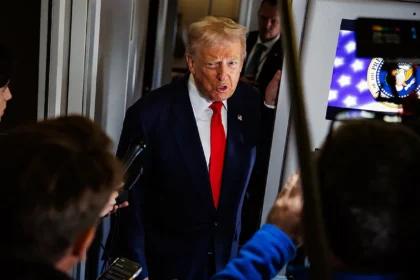
Treasury Secretary Bessent offered a hard-nosed take on Congress trading individual stocks. Image source: Bloomberg/Getty Images
Congress’s Stock Trading Problem
This is not the first time owning stocks has caused concern among voters.
A 2021 study of the 117th Congress found that 53% of members owned individual stocks, while only 7% didn’t own any stocks or common investment funds like mutual funds, according to the Campaign Legal Center.
Only 2% used a “qualified blind trust,” which separates investments from members of Congress so they don’t know what they own.
Stock ownership is common in both parties, with 54% of Republicans and 46% of Democrats owning stocks in 2021.
These numbers include trades by members, their spouses, and dependent children. This includes trades made by Pelosi’s husband, who she says manages their investments.
Although Pelosi’s trades get a lot of attention—partly because her husband has made successful bets on tech stocks—her portfolio was not the best-performing in Congress last year.
Unusual Whales tracks stock buys and sells by Congress members through reports that must be filed within 45 days for investments over $1,000.
In 2024, the S&P 500 returned about 25%, including dividends. But according to Unusual Whales estimates, Democrats averaged 31%, mainly from tech stocks, while Republicans averaged 26%, mostly from financials and commodities.
Since these reports aren’t real-time, Unusual Whales has to make assumptions, so the numbers could be off.
Still, their estimates for the top 10 members of Congress in 2024 are impressive:
- Rep. David Rouzer, Republican, North Carolina: 149%
- Rep. Debbie Wasserman Schultz, Democrat, Florida: 142.3%
- Sen. Ron Wyden, Democrat, Oregon: 123.8%
- Rep. Roger Williams, Republican, Texas: 111.2%
- Rep. Morgan McGarvey, Democrat, Kentucky: 105.8%
- Rep. Larry Bucshon, Republican, Indiana: 98.6%
- Rep. Pete Sessions, Republican, Texas: 95.2%
- Sen. Susan Collins, Republican, Maine: 77.5%
- Rep. David Kustoff, Republican, Tennessee: 71.5%
- Rep. Nancy Pelosi, Democrat, California: 70.9%
Secretary Bessent’s Criticism of Congress
On August 13, the Office of Government Ethics reported that Treasury Secretary Bessent, a Wall Street veteran trained under legendary hedge fund manager Stanley Druckenmiller, had not fully sold off all holdings as promised in a January ethics agreement.
Bessent said he had already sold more than 90% of the $1 billion in holdings. The remaining assets are hard-to-sell farmland that he plans to sell by the end of the year.
This renewed the debate about what politicians and executive-branch members should be allowed to own.
Bessent was very direct about the issue.
“I am pushing for a ban on single-stock trading in Congress,” he wrote on X.
He specifically mentioned Democrats Pelosi and Wyden:
“The American people deserve better than politicians like @RonWyden and @SpeakerPelosi with hedge-fund level returns. Public service should be about serving the people, not getting rich.”
Bessent also said, “If any private citizen traded this way, the SEC would be knocking on their door.”
It is still unclear whether Bessent’s push for a ban will lead to actual laws, as past proposals have received mixed support and none have become law.