
Donald Trump has publicly contradicted his spokeswoman, Karoline Leavitt, by offering explanations for his health issues that differ from her repeated reassurances and deflections.
Since Trump, 79, returned to office last January, speculation has swirled around visible bruising on his hands and questions about his cognitive health—especially after he underwent an unexplained scan in the fall. Reporting has highlighted a range of concerns, including swelling in his lower legs.
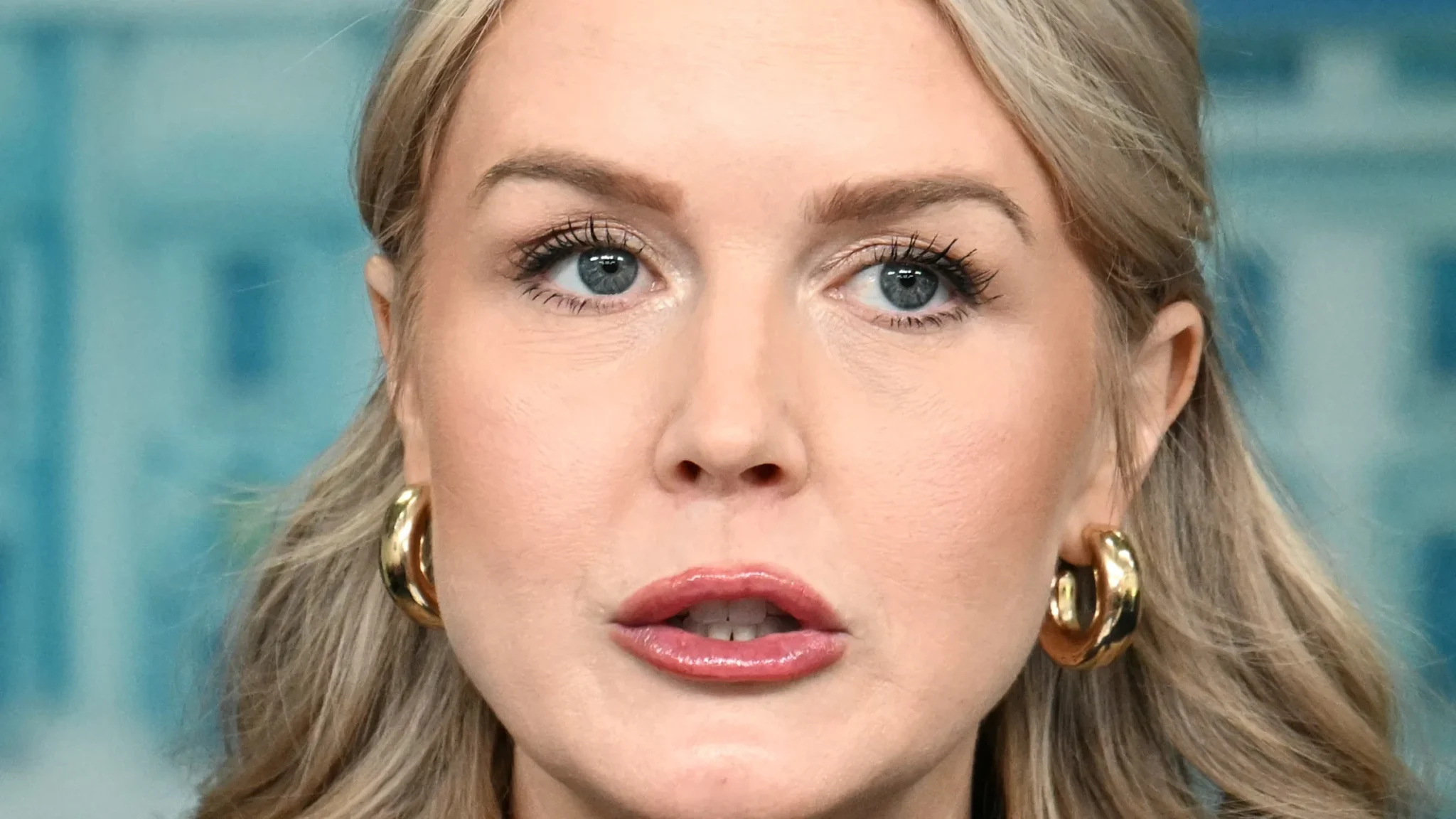
Leavitt, 28, has consistently insisted that the discoloration on the back of Trump’s right hand—often concealed with bandages, band-aids, or heavy makeup—was the result of frequent handshaking. She has described the president as “a man of the people” who greets more Americans each day than any predecessor. At times, she has also pointed to Trump’s routine aspirin use as a contributing factor, though she has frequently emphasized the handshaking explanation, including in recent exchanges with reporters.
Days after bruising appeared on Trump’s left hand—one he does not typically use to greet people—the president offered a different account in an interview with The Wall Street Journal.
Trump said the bruising stems from thinning skin and his long-standing aspirin regimen. He told the paper he takes 325 milligrams of aspirin daily—four times the commonly used 81-milligram low dose—despite acknowledging that his doctors have urged him to cut back. He said he has refused to do so because he has followed the same routine for decades and is “a little superstitious.”
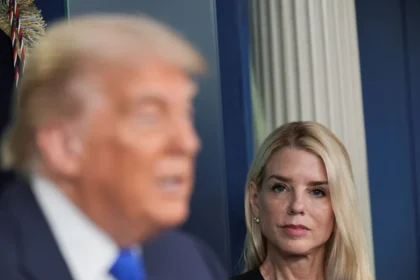
He also acknowledged using makeup on his hands, saying his skin bruises easily when it gets “whacked.” Recounting a moment when Attorney General Pam Bondi accidentally struck his hand during a high-five, Trump said a ring caused a small cut. He added that he applies makeup whenever his hand is hit again, noting it takes only seconds to cover.
The interview also shed new light on the October scan that Leavitt had repeatedly declined to identify while fielding questions from the White House podium. Initially, she avoided naming the test, relying instead on general assurances about Trump’s condition. On October 23, she refused to specify the procedure. On November 4, after Trump himself referred to it as an MRI, she said she would “check back,” while maintaining that he was in “optimal physical health” and describing the Walter Reed visit as routine.
When pressed again on November 12, Leavitt reiterated language from a doctor’s memo, saying Trump had undergone “advanced imaging” as part of a routine exam and was in “exceptional” condition—without explaining why imaging was ordered in the first place.
That position held until December 1, when Trump’s physician, Navy Capt. Sean Barbabella, released a memo describing cardiovascular imaging. Leavitt told reporters the screening was normal and framed the disclosure as an example of transparency. Even then, the administration continued to use the vague phrase “advanced imaging,” rather than clearly identifying the test.
In his interview, Trump said he initially told people the procedure was an MRI, then corrected himself. “It wasn’t an MRI… It was less than that. It was a scan,” he said, complaining that the test gave critics “ammunition” by fueling speculation that something was wrong.
According to the Journal, Trump and Barbabella ultimately described the procedure as a CT scan conducted to rule out cardiovascular issues, with no abnormalities found. Leavitt is quoted in the article saying the White House had “often referred to the procedure as ‘advanced imaging,’” without addressing why Trump did not clarify the MRI-versus-CT confusion sooner.
Trump also used the interview to discuss his so-called “cankles” and to address questions about why he appears to struggle to stay awake during public meetings.
The White House and Leavitt were contacted for comment.