
President Donald Trump’s administration is rapidly expanding its immigration detention infrastructure — and now, with a boost in congressional funding, it’s preparing to hold more migrants than ever before.
According to Bloomberg, since Trump returned to office, the Department of Homeland Security (DHS) and Immigration and Customs Enforcement (ICE) have added dozens of new detention sites to keep pace with a sweeping immigration enforcement agenda. These facilities span local, state, and federal prisons — both public and privately run — and include new high-profile centers like Florida’s controversial “Alligator Alcatraz,” a detention complex that has become emblematic of Trump’s hardline stance.
The expansion follows a May directive from senior adviser Stephen Miller, who instructed ICE to aim for 3,000 arrests per day as part of a broader strategy to flood the system. As of late June, the administration was detaining roughly 59,000 people — far surpassing the 41,500-bed capacity previously authorized by Congress.
DHS Secretary Kristi Noem announced the agency’s target is now 100,000 beds, a figure that appears increasingly attainable with fresh funding secured in the latest Republican-backed federal budget. Critics warn the move will only escalate what they see as a campaign of fear and racial profiling, with more aggressive workplace raids, expanded surveillance, and rising numbers of immigrants — including many without criminal records — swept into ICE custody.
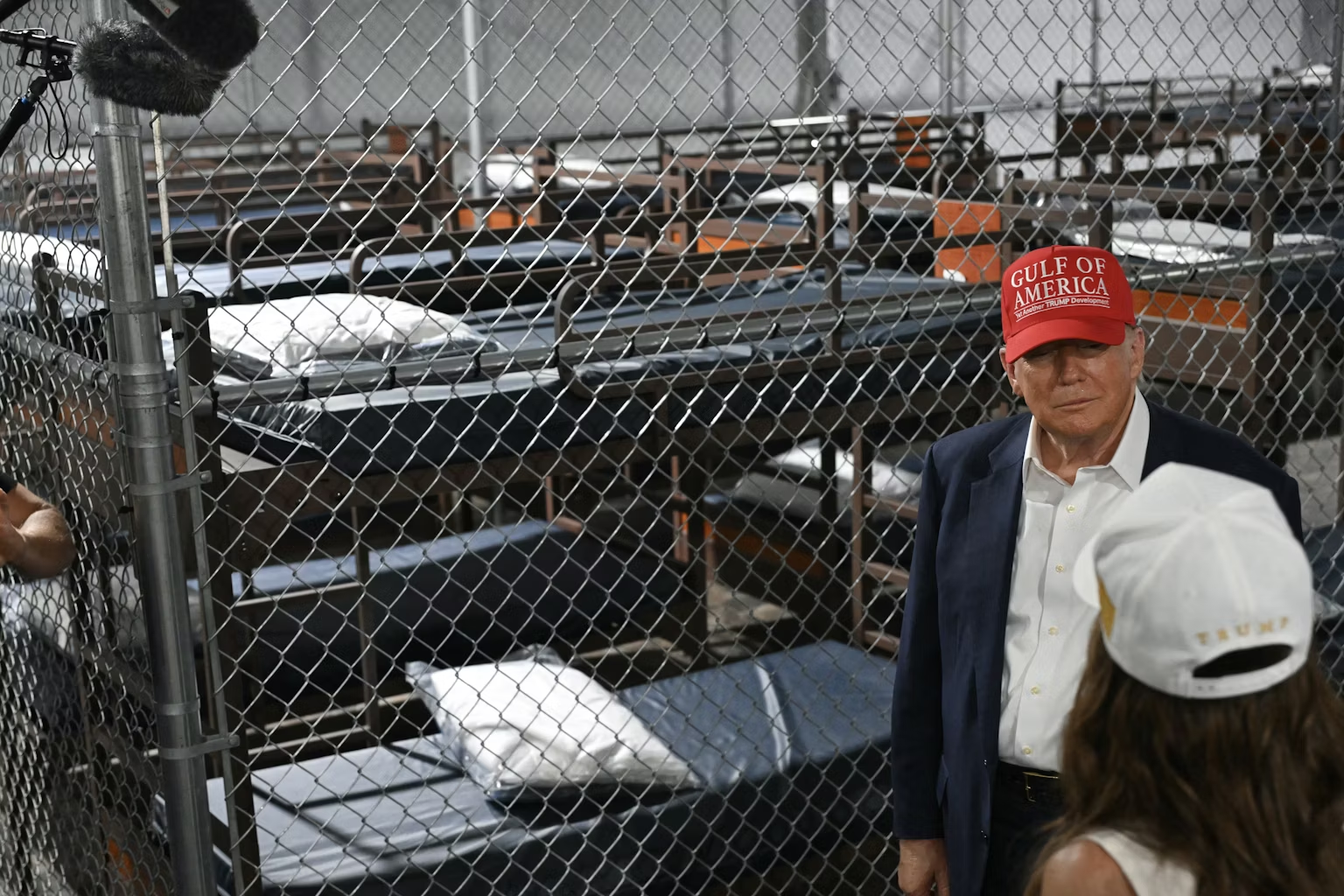
The “Alligator Alcatraz” facility in particular has drawn criticism for its symbolic spectacle, with Trump and Noem photographed in front of one of its holding cages during a recent visit. The facility, hastily built after Trump’s inauguration, has become a rallying point for supporters of the administration’s border policies — and a flashpoint for civil rights advocates who accuse the administration of dehumanizing migrants for political gain.
While Trump’s allies hail the growing ICE network as a needed show of force, immigration advocates warn it signals a further erosion of due process and compassion in the U.S. immigration system.