
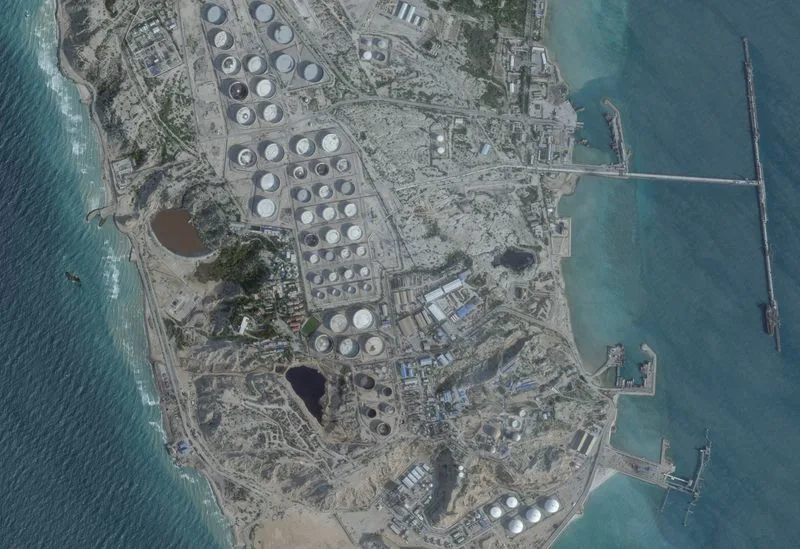

President Donald Trump issued a high-stakes call for a global naval coalition on Saturday, demanding that international powers deploy warships to the Strait of Hormuz. The directive follows Tehran’s threats of “total escalation” across the Middle East in retaliation for U.S. airstrikes that decimated military infrastructure on Iran’s primary energy hub, Kharg Island.
The President’s appeal marks a critical inflection point in a three-week conflict that has already claimed over 2,000 lives and triggered the most significant disruption to global oil supplies in history.
A Call for Global Burden-Sharing
Writing from his Mar-a-Lago club, President Trump signaled a shift toward internationalizing the security of the world’s most vital maritime chokepoint. Through a series of social media posts, he identified China, France, Japan, South Korea, and Britain as nations that must take primary responsibility for protecting the 20% of global oil flow that transits the Strait.
“The Countries of the World that receive Oil through the Hormuz Strait must take care of that passage, and we will help — A LOT!” Trump stated. He warned that while the U.S. would coordinate logistics, the American military focus would remain offensive. “The United States will be bombing the hell out of the shoreline, and continually shooting Iranian Boats and Ships out of the water,” he added.
Escalation on the “Oil Coast”
The tension follows a massive U.S. Central Command (CENTCOM) operation on Kharg Island, which handles 90% of Iranian crude exports. While the President claimed the strikes “totally obliterated” military targets rather than energy assets, CENTCOM confirmed hitting over 90 sites, including naval mine storage and missile bunkers.
Iran’s response has been swift and multi-pronged:
- Targeting the UAE: Debris from intercepted drones caused fires in the Fujairah oil industry zone on Saturday. Tehran has warned UAE residents to evacuate ports and “American hideouts,” claiming the Kharg Island strikes were launched from Emirati territory.
- Maritime Blockade: Iranian Supreme Leader Mojtaba Khamenei—who recently succeeded his father—has ordered the Strait of Hormuz closed, a move that would paralyze global energy markets.
- Civilian Toll: A strike in Isfahan reportedly killed 15 people at a manufacturing plant, though the Israeli military has not confirmed involvement.
Diplomatic Frictions and Regional Fatigue
The call for a coalition has met with a mixed international response. While British and French officials confirmed they are discussing “range of options” to secure shipping, traditional neutrals are pushing back. Switzerland reportedly rejected U.S. requests for reconnaissance flights through its airspace, citing its neutrality.
In the Persian Gulf, frustration is boiling over. Anwar Gargash, diplomatic adviser to the UAE president, condemned Tehran’s strategy of targeting Arab neighbors instead of confronting the U.S. directly, labeling the move as “military impotence” and “moral bankruptcy.”
As the U.S. Embassy in Baghdad urges citizens to evacuate Iraq and Iran threatens to target U.S. financial interests across the Gulf, the region stands on the precipice of a broader conflagration. The White House maintains that the onus of maritime security now rests with the nations whose economies depend on the flow of Iranian and Gulf crude.


