
For 20 years, Erika Swanton has worked retail on the Las Vegas Strip. But this summer, she says, business has collapsed like never before.
“The number of customers has been cut in half,” Swanton said, noting that not even the 2008 financial crisis felt this dire. “People used to come to Las Vegas ready to spend. Now, they’re scared.”
Sin City has long thrived on indulgence—gambling, drinking, and spending. But visitor numbers are plunging. Tourism fell 11.3% year-on-year in June, and overall visits were down 7.3% in the first half of 2025. That’s the same percentage decline Las Vegas experienced across the entire global recession more than a decade ago.
The ripple effects are being felt everywhere: hotel revenues are shrinking, restaurant workers are losing shifts, and tattoo artists say their income has collapsed. Las Vegas, the beating heart of U.S. consumerism, has become a warning sign for the national economy.
‘I’ve Never Seen It This Empty’
On a recent weekday, the Strip felt eerily quiet. Only a third of the blackjack tables at the Flamingo were occupied. Streets that once teemed with traffic now look deserted.
Heather Harter, a longtime Vegas visitor staying at the Excalibur, said: “There were so many machines open in the casino last night. I’ve never seen it this empty.”
Others, like Tom Connolly at New York-New York Hotel and Casino, admitted they were lured back only by steep incentives: free nights, dining credits, and casino cash. “That tells me the hotels really need business,” he said.
According to the Las Vegas Convention and Visitors Authority (LVCVA), hotel occupancy dropped nearly 10% in June, while revenue per room fell even harder—down 13.8%. Major players aren’t immune. Caesars Entertainment saw an 8% decline in Strip earnings, while MGM Resorts reported a 9% drop.
MGM’s chief executive, Bill Hornbuckle, partly blamed room remodels but admitted bookings are weaker, especially at lower-cost properties like Excalibur and Luxor.
International tourism is also slipping. Canadian visitors, for example, are pulling back amid President Trump’s tariffs and his provocative suggestion that Canada should become “America’s 51st state.” But officials note that the real problem lies at home.
“The decline is largely domestic,” said Steve Hill, CEO of LVCVA. “At its core, consumers are worried about the economy, their financial situation, and their jobs.”
Canary in the Coal Mine
Las Vegas’s downturn is offering an early look at America’s broader economic troubles.
“Vegas has long been a canary in the coal mine for discretionary spending,” said Mike PeQueen of Hightower Las Vegas, a wealth management firm.
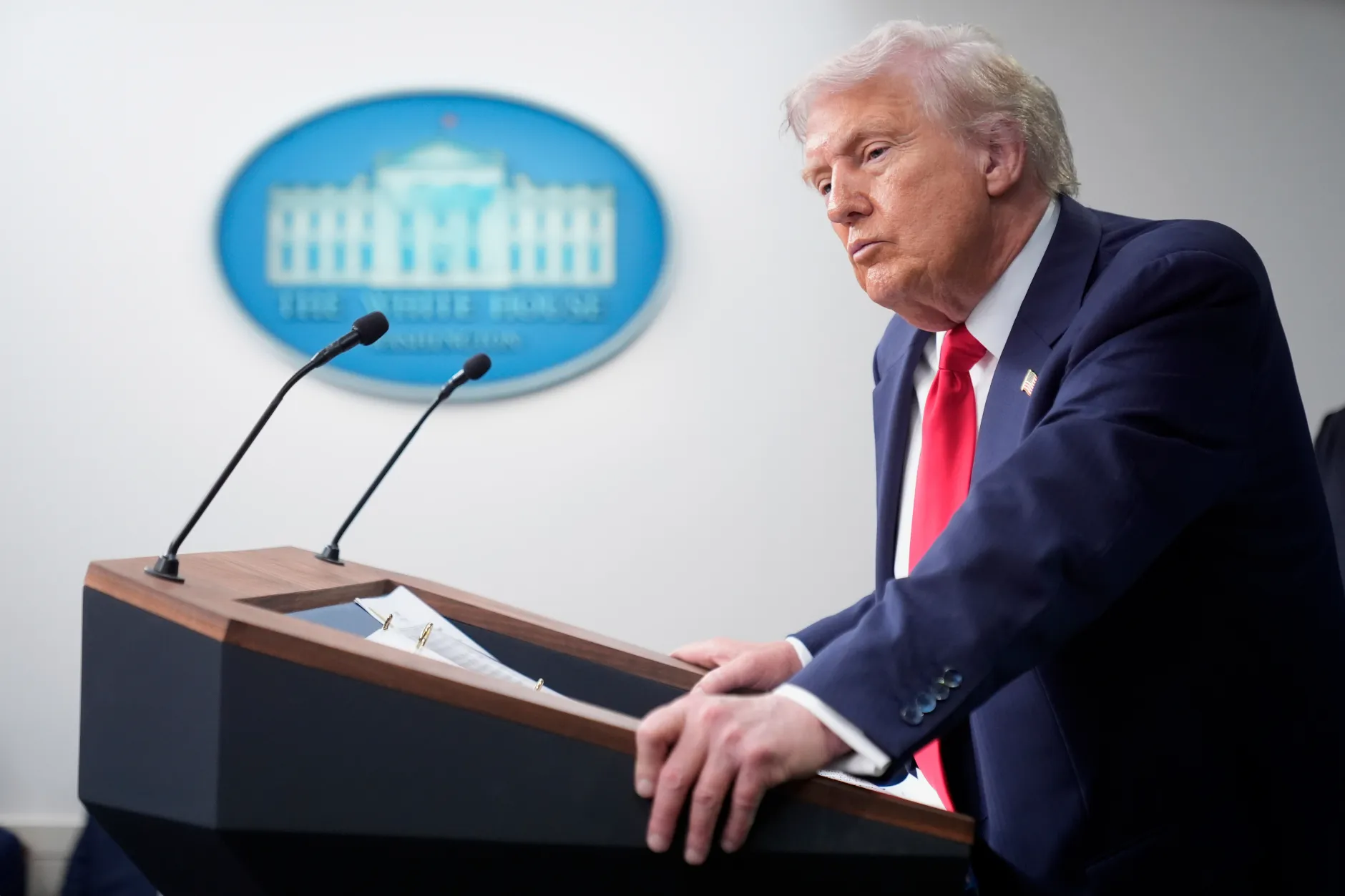
President Trump’s aggressive trade policies and mass deportation efforts have rattled consumers. Tariffs are now at their highest since the 1930s, growth forecasts are falling, and consumer confidence has plummeted.
Shoppers like Yssa Dror, who works alongside Swanton, are already seeing the change. “People are afraid to spend because they don’t know what’s going to happen next.”
In the first half of this year alone, Las Vegas welcomed 1.5 million fewer visitors compared to 2024.
Historically, such sharp declines only occurred during national crises: the 2008 crash, the 2009 recession, and the 2020 pandemic. Now, under Trump, Vegas faces its first slump without an external catastrophe driving it.
Jeremy Aguero of Applied Analysis put it bluntly: “Almost every conversation we have with clients now circles back to the economic slowdown.”
Visitors Cutting Back
Budget-conscious tourists are scaling down their trips. More visitors are staying with friends and family instead of hotels, and even when dining out, frugality is on display.
Gloria Valdez, a hostess at The D downtown, said restaurant reservations have dropped by two-thirds. “People used to order appetisers, drinks, extras. Now a couple shares one meal.”
Her hours have already been cut. “I’m a single mom with two kids. I’m worried about losing my job.”
Some potential visitors are staying away entirely, fearful of Trump’s immigration crackdown. ICE raids in neighboring California are discouraging Latino travelers, according to Hill. “They’re worried about raids,” he said. Valdez agrees: “They’re scared to get on planes.”
Even industries outside tourism are hurting. Tattoo artist Wayne Fields at Vegas Ink said his income has fallen 70% since spring. Normally making up to $15,000 a month, he pulled in just $4,000 in July. “I might need a second job,” said Fields, who ironically voted for Trump.
Trump’s Stake in Vegas
For Trump, the downturn hits close to home. His family owns the golden Trump International Hotel Las Vegas, and politically, Nevada is critical. After voting for Joe Biden in 2020, the state flipped red in 2024 by a slim margin.
During that campaign, Trump often cited a Nevada waitress who inspired his push to eliminate taxes on tips. Within days of his second-term inauguration, he held a rally in Vegas promising to deliver. By July, he signed it into law as part of his “One Big Beautiful Bill.”
But with tourism shrinking and tips drying up, some say the promise no longer matters.
“If your tips are reduced, then the tax credit doesn’t help,” said Ted Pappageorge, head of Las Vegas’s 60,000-member Culinary Workers Union. “Unless there’s a course correction, layoffs are coming. The Trump slump is here in Vegas.”