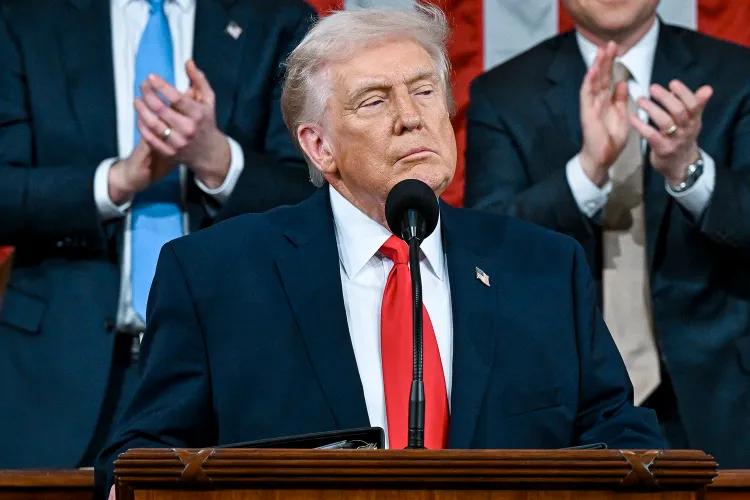

President Donald Trump gave the first State of the Union address of his second term on Tuesday, Feb. 24. During the speech, which lasted more than 100 minutes, he did not mention the Epstein files, a topic that has drawn significant political attention.
Some Democratic lawmakers attending the address wore pins that read, “Stand With Survivors: Release the Files.” Trump has continued to distance himself from the documents. Reports have noted that his name appears many times across thousands of pages released by the government. Trump has denied any wrongdoing connected to his past association with Jeffrey Epstein, who died in prison in 2019 while awaiting trial on federal trafficking charges. Trump has said he was “totally exonerated” by the release of evidence.
Several Democratic members of Congress chose not to attend the speech. Instead, they participated in a livestreamed “People’s State of the Union” held elsewhere in Washington, D.C. Other lawmakers brought individuals described as alleged victims of Epstein as part of ongoing protests regarding how the Trump administration handled the release of related evidence.
:max_bytes(150000):strip_icc():focal(749x0:751x2):format(webp)/donald-trump-jeffrey-epstein-1-071725-ccd7fc2be6ef4cc1a3016f54ef4dae20.jpg)
Congress passed the Epstein Files Transparency Act in November 2025, requiring the release of the full set of files. However, the documents were released gradually, and many pages contained redactions to protect identities.
Earlier this month, Representative Jamie Raskin commented on the scale of the release. He said millions of documents had been made public, while millions of others were still withheld. Raskin argued that the materials could have been released earlier and suggested that delays may have been intended to shield prominent individuals named in the records.
Hours before the State of the Union address, NPR reported that some documents may not have been included in earlier releases, despite prior statements from the Department of Justice. According to the report, the withheld materials allegedly included FBI interview notes connected to accusations involving Trump.
In response, the Department of Justice stated that no documents were deleted. A spokesperson said certain information had been temporarily removed to apply victim-related redactions but was later restored. The DOJ explained that documents not released fell into categories such as duplicates, privileged material, or records tied to ongoing investigations.
Trump’s address lasted approximately 1 hour and 47 minutes, surpassing the previous State of the Union length record set by President Bill Clinton in 2000.