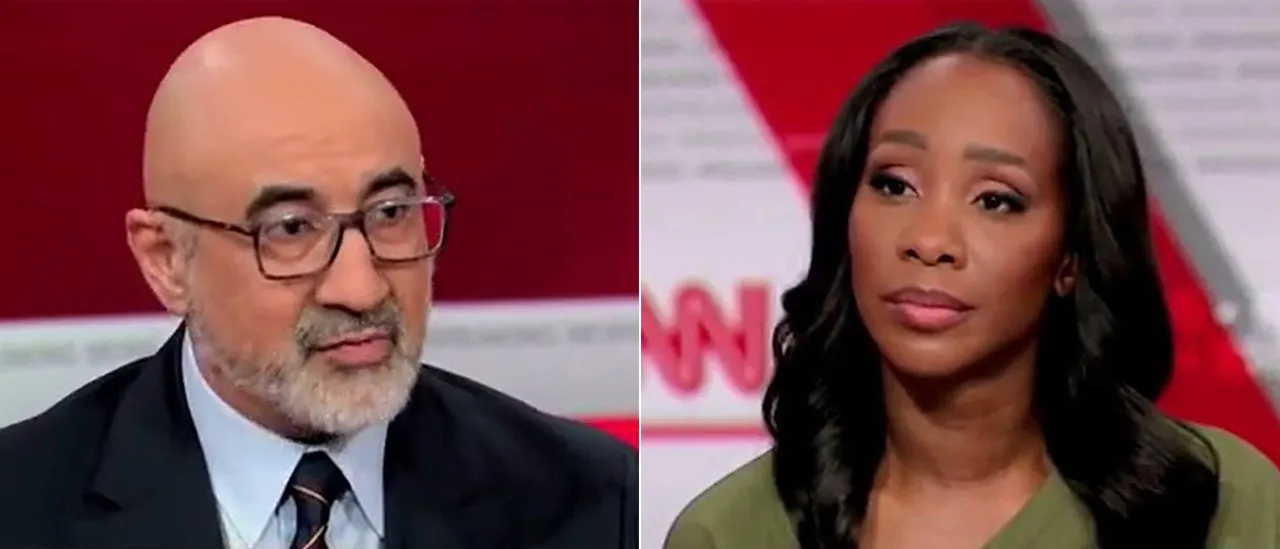

WASHINGTON — A high-stakes debate on CNN’s “NewsNight” took an unexpected turn Thursday when Kian Tajbakhsh, a scholar and former Iranian political prisoner, challenged the prevailing media narrative regarding the recent escalation between Washington and Tehran. Tajbakhsh argued that the current military actions under the Trump administration are not the start of a new war, but rather the potential conclusion of a conflict initiated by the Islamic Republic in 1979.
The exchange occurred as the United States and the Israeli Defense Forces (IDF) transitioned into a more aggressive posture following the announcement of Operation Epic Fury. The military campaign, confirmed by President Donald Trump via social media early Saturday, follows a series of targeted strikes against Iranian leadership.
A Forty-Year War: The 1979 Perspective
Tajbakhsh, who was detained during the 2009 Green Revolution, provided a sobering look at the internal ideology of the Iranian regime. Drawing from his experience working with high-level officials in Tehran during the early 2000s, he recounted a chilling directive from a senior Foreign Ministry official.
“I don’t think it’s right to say that President Trump has started a war with Iran,” Tajbakhsh stated. “I think President Trump wants to finish a war that Iran started in 1979, 47 years ago.”
He detailed a meeting in 2004 where a senior regime representative looked him in the eye and explicitly stated: “We believe we are at war with the United States.” According to Tajbakhsh, the regime has viewed the relationship as a “cold war” for decades, regardless of the diplomatic posture of various U.S. administrations.
Panel Erupts Over Strategic Objectives
The assertion that Iran has been the long-term aggressor sparked immediate pushback from the CNN panel. Former Global Affairs Correspondent Elise Labott and Foreign Policy Editor-in-Chief Ravi Agrawal clashed over the inevitability of the current kinetic conflict.
- Elise Labott: Suggested that a military confrontation was “inevitable” given the trajectory of regional tensions, though she expressed significant discomfort with the current administration’s “messaging.”
- Ravi Agrawal: Interjected to question the strategic framing, leading to a heated back-and-forth that briefly stalled the broadcast.
The debate highlights a deep divide in Washington’s foreign policy circle: whether the U.S. is reacting to Iranian provocations or proactively seeking “regime collapse” through military pressure.
The Path to ‘Operation Epic Fury’
The current escalation follows years of deteriorating relations and specific “red lines” established by the White House.
| Key Event | Date | Outcome |
| Soleimani Strike | Jan 2020 | Removal of IRGC commander linked to IED attacks on U.S. troops. |
| Protest Crackdown | Late 2025 | Nearly 6,900 Iranian protesters killed by the regime (BBC/HRG data). |
| Operation Epic Fury | March 2026 | U.S. and IDF launch coordinated strikes against leadership. |
President Trump recently warned the theocratic regime on Air Force One that they had crossed a “red line” regarding the violent suppression of their own citizens. Human rights groups estimate that nearly 6,900 protesters have been killed by the regime in recent months, fueling the administration’s justification for “decapitating” Iranian leadership during recent operations.
Looking Ahead: A Region on the Brink
As Operation Epic Fury continues, the international community remains divided on the endgame. While proponents of the administration’s policy, like Tajbakhsh, view this as a necessary conclusion to a 47-year-old conflict, critics warn of the unpredictable vacuum that could follow a total collapse of the Iranian IRGC.
The Pentagon has yet to release a full list of targets neutralized during the “breakfast” strikes, but the shift from “strategic patience” to active engagement marks the most significant shift in Middle Eastern policy in nearly half a century.