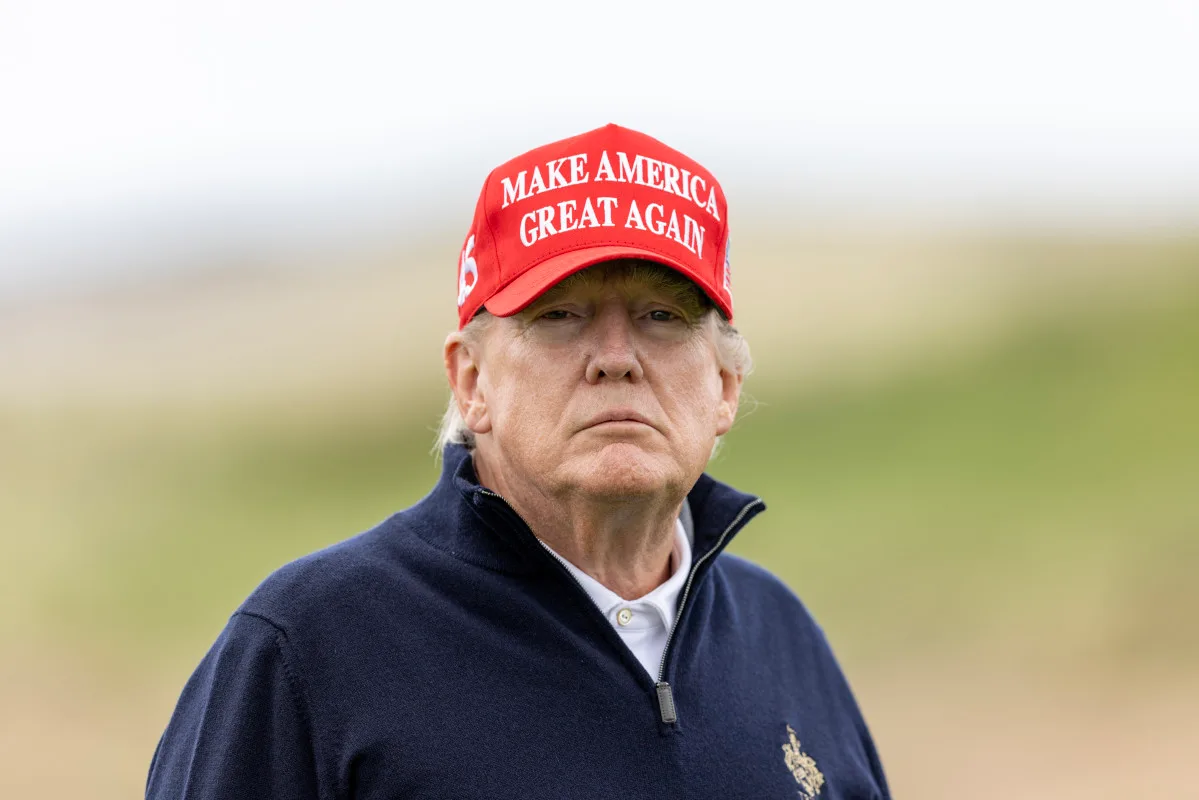

At a press conference during the NATO Summit in The Hague on June 25, 2025, President Donald Trump launched a scathing attack on Iran’s Supreme Leader, Ayatollah Ali Khamenei, after the Iranian cleric claimed victory over Israel and threatened future strikes on U.S. military bases.
Responding directly to Khamenei, Trump said:
“Look, you’re a man of great faith. A man respected in your country. But you have to tell the truth — you got beat to hell.”
Asked whether the U.S. would strike Iran again if intelligence showed renewed uranium enrichment, Trump replied without hesitation:
“Sure, without question. Absolutely.”
Trump’s Social Media Salvo
Later that day, Trump escalated his remarks on Truth Social, doubling down with an aggressive message accusing Khamenei of spreading “lies” about defeating Israel and overstating Iran’s resilience. He insisted the U.S. airstrikes “obliterated” Iran’s three primary nuclear facilities on June 21.
He also hinted at a missed opportunity to eliminate Khamenei directly, stating:
“I knew exactly where he was sheltered… I saved him from a very ugly and ignominious death,” while noting that neither Khamenei nor Iran showed any gratitude.
Trump revealed he had been considering lifting sanctions before Khamenei’s threats derailed talks:
“I immediately dropped all work on sanction relief.”
The U.S. maintains some of the world’s most extensive sanctions on Iran — blocking nearly all trade, freezing assets, and banning arms sales and foreign aid.
Khamenei Breaks Silence, Threatens More Strikes
Khamenei, in a pre-recorded address and posts across social media, claimed that Iran had struck the U.S. military’s Al Udeid Air Base in Qatar in retaliation for the U.S. and Israeli attacks, declaring it a “slap in the face” to Washington.
“The Islamic Republic slapped America in the face,” he said, claiming “total victory” over Israel.
The June conflict began with Israeli strikes on Iranian nuclear and military sites on June 13, and intensified when the U.S. joined on June 21. While a ceasefire is now in place, mistrust between the two sides remains high.
Iranian military chief Gen. Abdolrahim Mousavi stated that Iran was ready to strike back again if provoked, doubting Israel would respect the ceasefire terms.
Disputed Damage and Growing Doubts
While Trump maintains that Iran’s nuclear sites were “completely destroyed,” leaked Pentagon assessments and international experts, including CIA Director John Ratcliffe, have said the facilities were severely damaged — but not obliterated — and that it could take years to rebuild.
Others, including some congressional Democrats, are skeptical of Trump’s claims.
“There’s no doubt there was damage, but the suggestion that Iran’s program was obliterated doesn’t stand up to reason,” said Sen. Chris Murphy (D-CT). “It looks like we only set them back by a few months.”
When pressed on whether he was concerned about undisclosed nuclear sites in Iran, Trump waved off the notion:
“They’re exhausted. The last thing they’re thinking about is nuclear,” he said. “The place was bombed to hell.”
Iranian Response and Regional Tensions
Iran’s Foreign Minister Abbas Araghchi rebuked Trump’s tone and remarks, calling them “disrespectful” and a barrier to diplomacy.
“If Trump is sincere about a deal, he must stop insulting our Supreme Leader,” Araghchi said Friday. “The Iranian people do not take kindly to threats.”
Referencing NATO chief Mark Rutte’s quip that Trump was Israel’s “daddy” during the conflict, Araghchi added:
“The world saw Israel run to Trump to avoid being flattened by our missiles.”
Thousands of mourners gathered in Tehran Saturday for funerals of military commanders and nuclear scientists killed in Israeli strikes. Chants of “Death to Israel” and “Death to America” echoed through the streets.
In a message posted to his Farsi-language account, Khamenei told Iranians:
“The reason America opposes us is because they want Iran to surrender. That will never happen.”
Outlook: Tensions High, Diplomacy Fragile
Despite the fragile ceasefire, the situation remains volatile. Trump’s rhetoric has hardened, Iran has suspended cooperation with international nuclear inspectors, and world leaders continue to urge restraint. Whether diplomacy can prevail in the coming months remains uncertain.