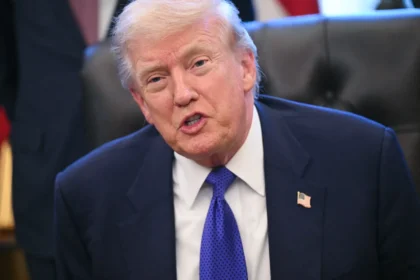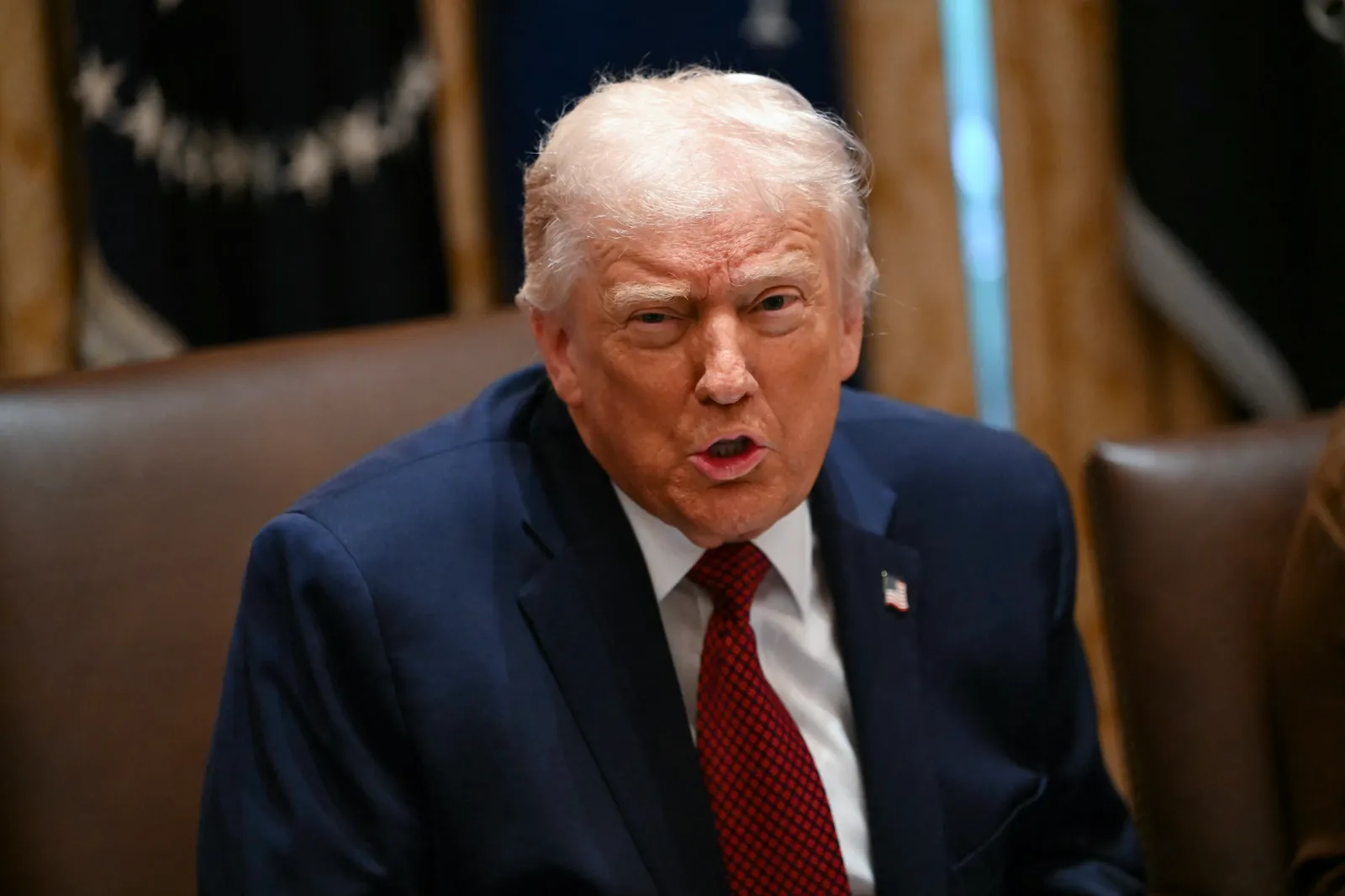

President Donald Trump has indicated he is willing to broaden U.S. military strikes against drug-related targets in countries such as Mexico and Colombia.
Since September, Trump has approved multiple operations in the Caribbean Sea and eastern Pacific Ocean, hitting small Venezuelan boats accused of smuggling narcotics and significantly increasing the U.S. naval presence in the region.
In a conversation with Politico’s Dasha Burns, Trump was asked whether he would consider extending similar strikes to other nations with major drug trade activity, including Mexico and Colombia.
“Sure, I would,” he replied.
Why It Matters
According to figures cited by the Trump administration, U.S. forces have killed at least 87 people in 22 acknowledged strikes in the Caribbean Sea and eastern Pacific Ocean since early September, The Associated Press reported. Trump has framed the operations as a necessary escalation in what he describes as an “armed conflict” between the United States and drug cartels.
Expanding those strikes to targets inside other countries could strain diplomatic relations, trigger political backlash at home and abroad, and move U.S. drug policy toward far more aggressive military action.
What To Know
The expanded U.S. military footprint near Venezuela has fueled questions about how far these operations might go.
Venezuelan President Nicolás Maduro has argued that the real purpose of the U.S. buildup is to remove him from power.
In his interview with Burns, Trump declined to rule out deploying American ground troops in Venezuela to end Maduro’s rule.
“I don’t want to rule in or out. I don’t talk about it,” he said, adding that he did not want to discuss military strategy with the outlet. Trump also stopped short of explicitly saying he wants Maduro ousted but remarked that the Venezuelan leader’s “days are numbered.”
Asked about his broader goal in Venezuela, Trump said he wants Venezuelans “to be treated well,” adding: “I want the people of Venezuela, many of whom live in the United States, to be respected.”
Trump recently warned that any country producing illegal drugs could face U.S. military strikes, prompting a response from Colombia’s President Gustavo Petro. Petro invited Trump to visit Colombia and take part “in the destruction of the 9 laboratories we do daily to prevent cocaine from reaching the US.”
On Capitol Hill, both Republicans and Democrats have urged Trump to seek formal war powers authorization from Congress for operations targeting alleged drug traffickers.
Last week, Democrats Tim Kaine of Virginia, Chuck Schumer of New York and Adam Schiff of California, along with Republican Rand Paul of Kentucky, introduced a resolution that would force a congressional vote if the administration carries out a strike within Venezuela. The move followed Trump’s comment that strikes on land would be happening “very soon.”
What People Are Saying
Trump told Politico: “Those boats come in largely from Venezuela… They send really, really bad people into our country and they’ve done it better than anybody else. They emptied their prisons into our country and these prisoners are seriously tough.”
Republican Senator Rand Paul of Kentucky said in a statement: “The American people do not want to be dragged into endless war with Venezuela without public debate or a vote. We ought to defend what the Constitution demands: deliberation before war.”
Costas Panagopoulos, a political science professor at Northeastern University, told Newsweek that Americans’ patience for foreign conflicts is limited.
“Americans have limited appetites for military conflicts. Extended conflicts could backfire on Trump, especially if there is domestic resistance, meaningful retaliation or if service members are killed.
“My sense is that Americans would rather see Trump focus on lowering prices and affordability. Anything short of this could be viewed as a disconnect or as a distraction and could cement the narrative that Trump is unable to deliver on the top issue voters elected him to address.
“Military conflicts often don’t go as planned, spiraling out of control in unanticipated or unintended ways, and could spell disaster for any administration that fails to manage them effectively. It’s a real risk for any president, let alone someone with historically low levels of public approval.”
Grant Davis Reeher, a political science professor at Syracuse University, drew a distinction between targeting boats at sea and putting troops on the ground.
“Firing on Venezuelan boats supposed to be captained by drug runners headed to the U.S. is one thing, but floating ideas about sending troops into Venezuela itself is entirely another. Such a move will cause real rifts within the party,” he said.
“I’d be surprised if we actually see troops in Venezuela, and if that happens, I’d expect you’d see a stiff reaction in Congress that would draw in some Republicans. Armed conflicts can often make presidents more popular—traditionally, there is a rally-round-the-flag reaction, which translates to rally-round-the-president, as commander-in-chief. George W. Bush’s ratings shot up after 9/11, but again, this is no 9/11. And I don’t think that is where the country’s mood is at presently.”
What Happens Next
Trump has threatened to widen U.S. strikes to “any” country producing illegal drugs, but it remains unclear whether his administration will take that step or seek additional authorization from Congress before doing so.