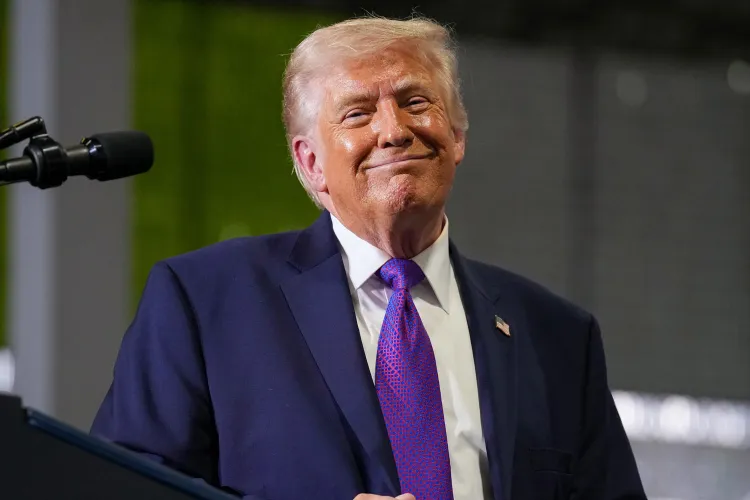

President Donald Trump signaled Friday that the United States is considering “winding down” its three-week-old military campaign against Iran, claiming the administration is nearing its primary objectives despite a week of severe energy market volatility and unprecedented military friction.
The President’s shift in rhetoric follows a series of escalatory “tit-for-tat” strikes on critical energy infrastructure that have sent global oil and gas prices to record highs. After an Israeli strike on Iran’s South Pars gas field earlier this week, Tehran retaliated by targeting the world’s largest LNG plant in Ras Laffan, Qatar. The resulting damage has threatened nearly 20% of global LNG exports, forcing a strategic recalibration in Washington.
Objectives and Timelines
In a post on Truth Social, Trump stated the U.S. is “getting very close” to fulfilling its mission to degrade what he termed the “terror regime of Iran.”
White House Press Secretary Karoline Leavitt reinforced this timeline, noting that while the Pentagon initially projected a four-to-six-week window for Operation Epic Fury, the military is ahead of schedule as it enters its third week.
“Day by day, the Iranian Regime is being crippled,” Leavitt said. “Their ability to threaten the United States and our allies is being significantly weakened.”
The “Ghost Armada” Strategy
To mitigate the economic fallout of the conflict, the U.S. Treasury has executed a radical tactical pivot. Treasury Secretary Scott Bessent announced a temporary 30-day waiver on sanctions for Iranian oil already loaded onto vessels.
- Market Impact: The move is expected to release approximately 140 million barrels of crude into global markets.
- Economic Warfare: Bessent characterized the move as “using Iranian barrels against Tehran” to crash soaring prices and stabilize the global economy through April 19.
Military Friction: The F-35 Incident
The transition toward a potential de-escalation comes as the U.S. military acknowledges a rare successful strike on its most advanced hardware. On Thursday, an F-35 Lightning II stealth fighter was forced to make an emergency landing after being struck by Iranian air defenses—an incident Tehran is touting as the “world’s first” combat hit on the fifth-generation jet.
U.S. Central Command confirmed the aircraft sustained damage during a mission over Iran but stated the pilot is in stable condition. This vulnerability, combined with the “doomsday” energy scenario in the Persian Gulf, appears to have accelerated the White House’s interest in a conclusion to hostilities.
What’s Next
While Trump has ordered Israel to cease further attacks on Iranian gas infrastructure, a formal ceasefire remains off the table. The administration’s focus has shifted to maintaining a “maximum pressure” posture while transitioning the responsibility of policing the Strait of Hormuz to international allies.