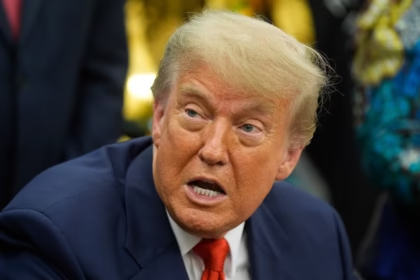
WASHINGTON (AP) — President Donald Trump on Thursday signed legislation rescinding roughly $9 billion in previously approved funding, targeting foreign aid and public broadcasting programs as part of a broader GOP push to rein in spending in line with the White House’s agenda.
The largest share of the cuts hit foreign assistance programs. Around $1.1 billion was originally allocated to the Corporation for Public Broadcasting, which funds NPR, PBS, and more than 1,500 local public radio and television stations nationwide.
The Trump administration framed the move as a test case for Congress, with officials promising more similar rescission packages in the near future.
Although some Republican lawmakers expressed discomfort with the steep cuts—especially to public broadcasting—they ultimately backed the measure, hesitant to challenge Trump’s priorities. Democrats unanimously opposed the cuts but lacked the numbers to block the bill.
The White House has repeatedly accused public media outlets of political bias, calling federal support for them unnecessary. Conservative lawmakers specifically singled out NPR and PBS as examples of taxpayer-funded media that they claim leans left.
However, lawmakers from rural states, where local stations often serve as critical sources of information, warned of serious consequences. Some said the cuts could force small public stations to shut down entirely.
“It’s not just your news — it’s your tsunami alert, your landslide alert, your volcano alert,” said Sen. Lisa Murkowski, R-Alaska, emphasizing the vital public safety role local stations play in remote regions.
The foreign aid cuts also sparked intense debate. The administration argued that reducing U.S. contributions would pressure other countries to take more responsibility for global humanitarian efforts and ensure better stewardship of American taxpayer dollars.
Democrats pushed back hard, warning that the cuts would damage the U.S.’s global leadership and create opportunities for adversaries like China to expand their influence.
“With these cuts, we will cause death, spread disease, and deepen starvation across the planet,” said Sen. Brian Schatz, D-Hawaii.
The move underscores the deep partisan divide over federal spending priorities and signals the administration’s intent to aggressively reshape U.S. commitments both at home and abroad.