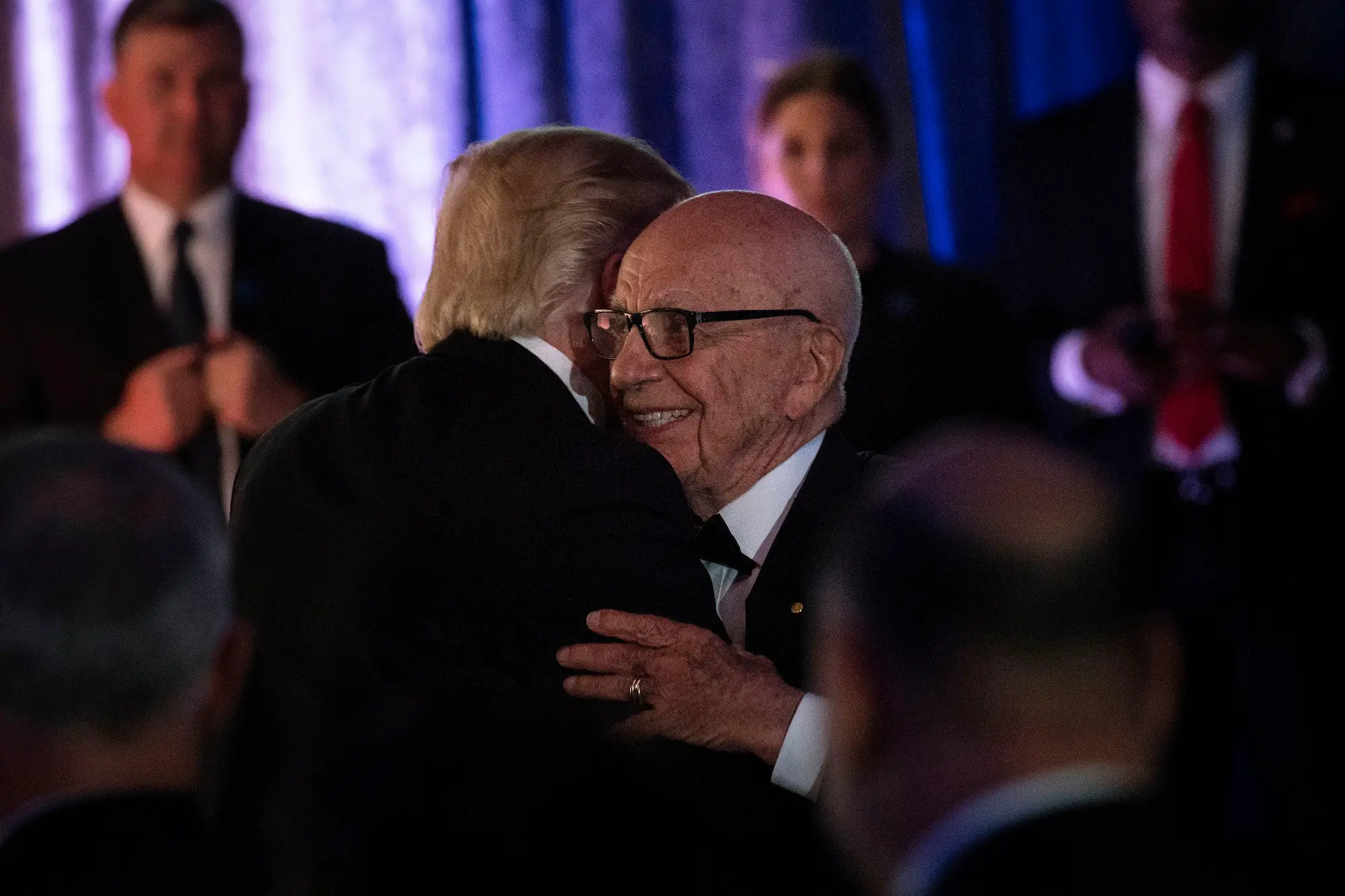

Donald Trump threatens to sue media outlets often — and occasionally follows through. But his latest libel lawsuit, filed last week against Rupert Murdoch, The Wall Street Journal, and two of its reporters, is striking for several reasons.
The suit stems from a Journal article alleging Trump sent a note to Jeffrey Epstein. Not only is it possibly the first time a sitting president has sued a media company, it also pits Trump directly against Murdoch — arguably his most powerful media ally, primarily through Fox News.
That doesn’t mean the case will go to trial. Several outlets — including ABC, CBS, Meta, and Twitter/X — have quietly settled with Trump since his reelection last fall, often to avoid messy legal battles.
Legally, Trump faces an uphill climb. U.S. libel law makes it tough for public figures to win defamation suits — they must prove the published claims were both false and made with “actual malice.” And The Journal is known for standing its ground when challenged, especially by those in power. Just this week, it published another Epstein-related story, reporting that Attorney General Pam Bondi informed Trump his name appears multiple times in sealed documents tied to the case.
Still, the media landscape has shifted since Trump’s return to office, and some institutions are showing more deference. Murdoch himself has backed down before — most notably when he agreed to a $787.5 million settlement with Dominion Voting Systems in a high-profile defamation case.
NPR media correspondent David Folkenflik, speaking on the Channels podcast this week, noted that Trump has already received millions for his future presidential library from recent settlements. He wouldn’t be shocked if this case is eventually dismissed — or quietly resolved.
“Trump may not care about winning,” Folkenflik said. “He’s already gotten the big headline attacking The Wall Street Journal’s reporting. That alone may serve his purpose.”
Despite Murdoch’s track record of occasionally folding to legal pressure, Folkenflik believes The Journal’s legal team will fight the case — at least until it becomes inconvenient.
For both sides, discovery is the key pressure point: Trump likely wants to avoid being questioned under oath about his ties to Epstein, while Murdoch, now 94, may not want to face depositions or court appearances himself.
Yet the relationship between Trump and Murdoch has always been transactional. Fox News has backed Trump since 2015, and Murdoch has reaped rewards — from regulatory nods on major mergers to personal congratulations from Trump when Disney acquired most of Fox’s entertainment assets.
Would Murdoch pay to make this case disappear?
“Sixteen million dollars for Trump’s library? That’s nothing for Murdoch,” Folkenflik said. “These two billionaires know when to fight — and when to cut a deal.”
In the end, both men may find more value in preserving their alliance than continuing their feud — unless Trump sees political advantage in keeping the Epstein story in the spotlight.