
WASHINGTON — President Donald Trump signaled a possible legal escalation, questioning whether the U.S. Supreme Court could “rehear” or “readjust” its recent landmark decision that dismantled his administration’s primary tariff framework.
In a series of posts on Truth Social, the President expressed sharp disapproval of the 6-3 ruling in Learning Resources Inc. v. Trump, which held that the executive branch lacked the constitutional authority to impose sweeping, open-ended tariffs under the International Emergency Economic Powers Act (IEEPA). The Court ruled that such revenue-raising measures are an exercise of the taxing power exclusively reserved for Congress under Article I.
A Quest for ‘Readjudication’
The President’s comments follow weeks of rising tension between the White House and the nation’s highest court. Trump argued that the ruling would result in a “windfall” for foreign countries and companies, claiming it would allow for “Hundreds of Billions of Dollars” to be returned to entities that have “ripped off” the United States.
“Is a Rehearing or Readjudication of this case possible???” Trump wrote, suggesting the Court may not have intended the economic consequences he predicts.
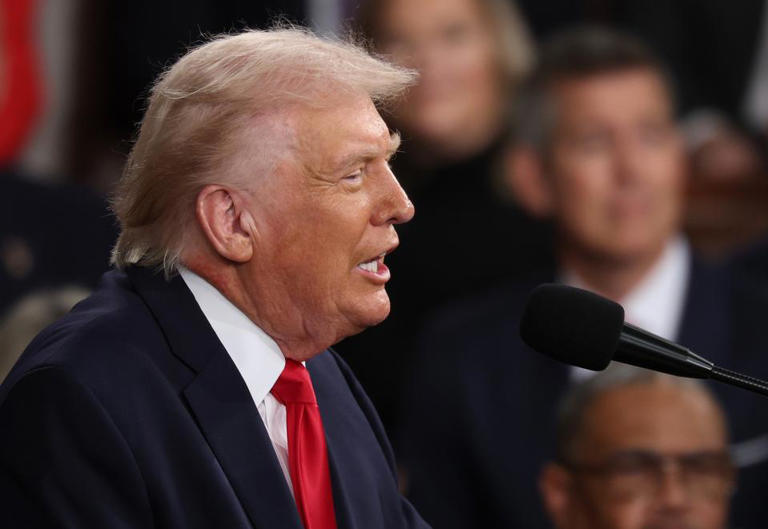
The President’s frustration was on full display earlier this week during his State of the Union address. After a formal greeting to the justices in attendance, Trump used his speech to criticize the ruling, marking a rare public rebuke of the judiciary during the annual address.
The Legal Reality: Rule 44
While the President’s query suggests a desire for a “do-over,” legal experts note that the path to a rehearing is narrow and rarely successful. Under Supreme Court Rule 44, a petition for rehearing must be filed within 25 days of a judgment. However, the Court’s internal standards for granting such a request are exceptionally high.
“You can’t just ask for a do-over because you dislike the outcome,” said former State Attorney Dave Aronberg. “The Supreme Court almost never grants rehearings. It requires substantial intervening circumstances or grounds not previously presented.”
To succeed, a petition for rehearing of a decision on the merits typically requires the support of a majority of the Court, including at least one justice who originally concurred in the judgment. Given the definitive 6-3 split in Learning Resources, legal analysts believe the likelihood of a reversal is near zero.
Political and Economic Fallout
The ruling has created a ripple effect across the globe and within domestic politics:
- Democratic Response: New York Governor Kathy Hochul praised the decision, stating her administration is working to ensure New Yorkers receive refunds for “illegal tariffs.”
- Administration Pivot: Despite the loss, the Trump administration has already moved to implement a 15% global tariff under Section 122 of the Trade Act of 1974, a different statutory authority that carries a 150-day limit.
- Market Volatility: The legal uncertainty has sent shockwaves through commodities markets. Gold futures surged past $5,200 as investors sought safe-haven assets amid the shifting trade landscape.
What Lies Ahead
The White House has not yet confirmed if the Department of Justice will formally file a petition for rehearing. If they choose to do so, the deadline is rapidly approaching. Meanwhile, the administration is expected to continue testing the limits of other trade statutes, such as Section 232 of the Trade Expansion Act, to maintain its protectionist agenda.
For now, the focus shifts to Congress, where House Speaker Mike Johnson faces a divided chamber. While some Republicans support the President’s trade goals, others have expressed reluctance to pass new legislation that would codify the broad tariff powers the Supreme Court just struck down.