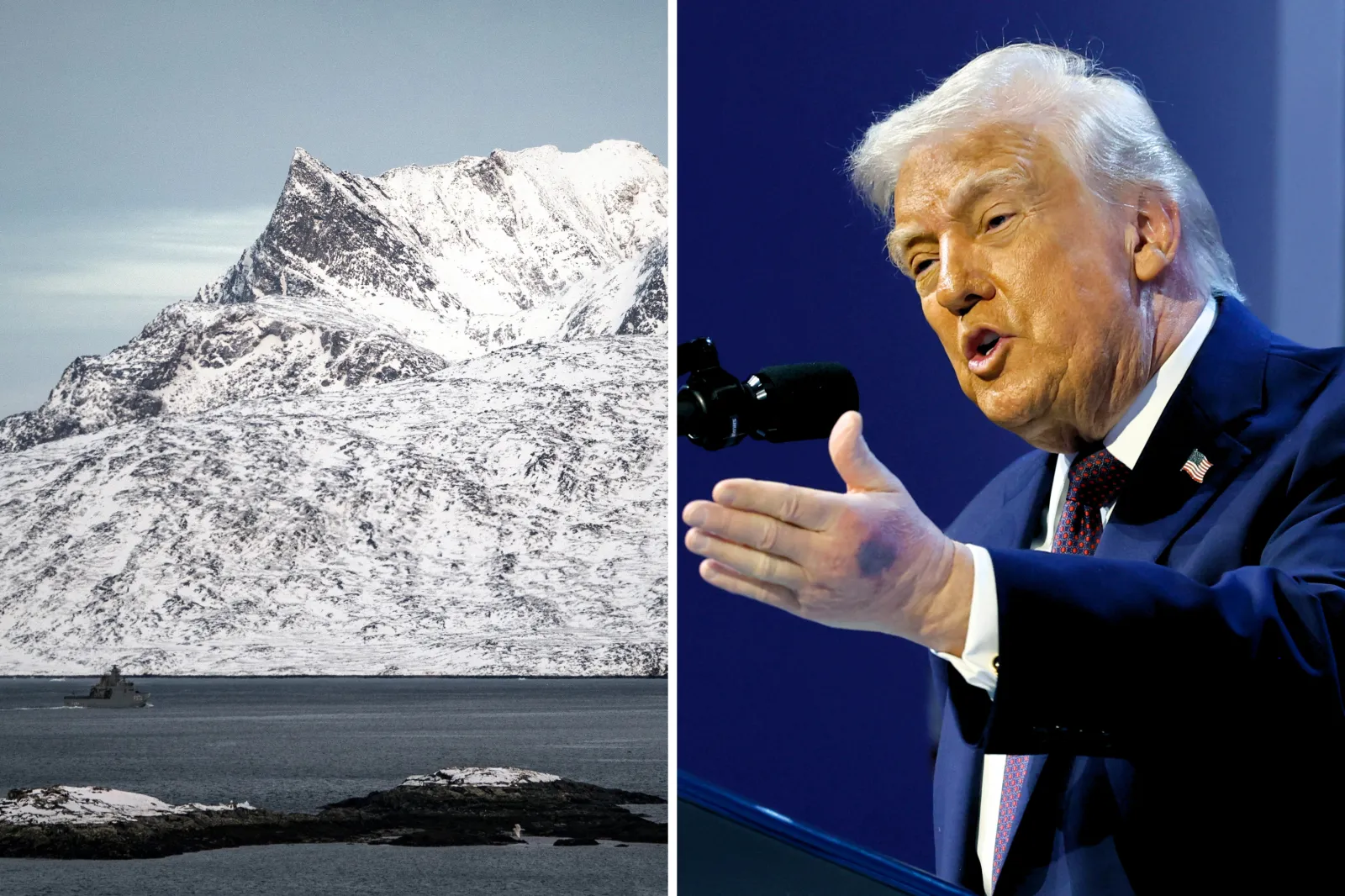

President Donald Trump could be barred from deploying U.S. troops to Greenland under new legislation introduced in Congress, as lawmakers ramp up efforts to curb what they describe as increasingly aggressive U.S. ambitions in the Arctic.
Newsweek contacted the White House via email to ask whether the president believes the United States should wait for instruction from Denmark before deploying military personnel to Greenland.
White House spokeswoman Anna Kelly previously told Newsweek that “NATO becomes far more formidable and effective with Greenland in the hands of the United States, and Greenlanders would be better served if protected by the United States from modern threats in the Arctic region.”

Why It Matters
Greenland is a self-governing territory within the Kingdom of Denmark, a NATO member, and it hosts strategic Arctic infrastructure tied to U.S. missile defense and broader competition with Russia and China. Any U.S. move to alter Greenland’s status could quickly become a major flashpoint within the alliance.
The legislative push also highlights a widening gap between Trump’s rhetoric about Greenland and the firm sovereignty lines drawn by Denmark and Greenlandic leaders, even as both sides signal interest in cooperation on Arctic security within existing legal frameworks.
What To Know
A new Democratic proposal would block Trump from unilaterally sending U.S. troops to Greenland—one of the most direct congressional attempts so far to restrain the administration’s Greenland posture.
The measure, H.R. 7192, introduced Wednesday by California Representative Brad Sherman, would prohibit the United States from deploying or assigning troops to Greenland unless the deployment is invited by the Kingdom of Denmark. According to Congress.gov, the bill has been referred to the House Foreign Affairs and Armed Services Committees.
The proposal lands amid rising transatlantic friction fueled by Trump’s renewed public push for “total access” in Greenland—an effort the administration has portrayed as central to U.S. security interests in the Arctic, particularly against Russia and China. It also follows weeks of debate around a White House “framework” Trump has repeatedly said would appear “in about two weeks,” a timeline he has used when pressed about multiple high-profile policy initiatives.
In recent days, Trump has floated expanding U.S. military access on the island, threatened European allies with tariffs, and suggested the United States may “do whatever we want” in Greenland under an eventual framework agreement.
Public opinion, however, appears sharply against any use of force. National polling from YouGov and The Economist found 72 percent of respondents opposed taking Greenland by force, compared with 9 percent in favor. Even among Trump’s 2024 voters, a majority—54 percent—opposed the use of force, while 22 percent supported it.

Respondents were more open to the idea of a purchase, though sentiment still leaned negative overall: 51 percent opposed buying Greenland, while 29 percent supported it. Support was strongest among Trump voters, 61 percent of whom said they favored acquiring Greenland through a sale. The survey polled 1,722 U.S. adults between January 16 and 19 and reported a margin of error of plus or minus 3.2 percentage points.
H.R. 7192 is part of a broader wave of Democratic resistance. Earlier this month, Representative Jimmy Gomez of California introduced the Greenland Sovereignty Protection Act, a short bill aimed at blocking the use of federal funds to advance Trump’s Greenland plans—including efforts to purchase, annex, or invade the territory. That push has emerged alongside a separate GOP bill that would authorize the president to “take such steps as may be necessary” to acquire Greenland.
In the Senate, a bipartisan pair—Jeanne Shaheen of New Hampshire and Lisa Murkowski of Alaska—has introduced the NATO Unity Protection Act, which would bar the Pentagon or the State Department from using funds to “blockade, occupy, annex or otherwise assert control” over territory belonging to a NATO member state, a move widely viewed as targeting any attempt to seize Greenland.
Trump, returning from the World Economic Forum in Davos, described a prospective Greenland arrangement as a “forever” deal, without offering details or confirming Danish approval. Danish and Greenlandic officials have reiterated that sovereignty is not negotiable, even as they’ve indicated willingness to discuss security coordination through established legal channels.
On Trump’s push to acquire Greenland, Kelly said: “If this deal goes through, and President Trump is very hopeful it will, the United States will be achieving all of its strategic goals with respect to Greenland, at very little cost, forever.”
What People Are Saying
Trump told reporters aboard Air Force One on Friday: “There was a, really a negotiation, but it’s infinity. The time limit is infinity, meaning there is no time limit. It’s forever. It’s, you know you hear about 99 years and 50 years, it’s forever, that was discussed. We can do anything we want. We can do military. We can do anything we want, and it’s being negotiated and let’s see what happens. I think it’ll be good.”
Anna Kelly told Newsweek on Wednesday: “President Trump was not elected to preserve the status quo–he is a visionary leader who is always generating creative ideas to bolster US national security. Many of this President’s predecessors recognized the strategic logic of acquiring Greenland, but only President Trump has had the courage to pursue this seriously. As the President said, NATO becomes far more formidable and effective with Greenland in the hands of the United States, and Greenlanders would be better served if protected by the United States from modern threats in the Arctic region.”
Senator Murkowski said: “The mere notion that America would use our vast resources against our allies is deeply troubling and must be wholly rejected by Congress in statute.”
Aaja Chemnitz Larsen, a Danish lawmaker representing Greenland, said: “What we are witnessing these days from Trump is insane.”
What Happens Next
House leadership will decide whether to move H.R. 7192 through committee hearings or markups—steps that would determine whether it advances to a floor vote.
In the Senate, sponsors of the NATO Unity Protection Act are looking to build support and potentially attach the measure to major appropriations or authorization bills that govern funding for the Pentagon and State Department.
Trump has said he will provide an update on his Greenland “framework” in early February. Denmark and Greenland, meanwhile, have stressed that any arrangement must respect their sovereignty, and there has been no announcement confirming an agreed framework.