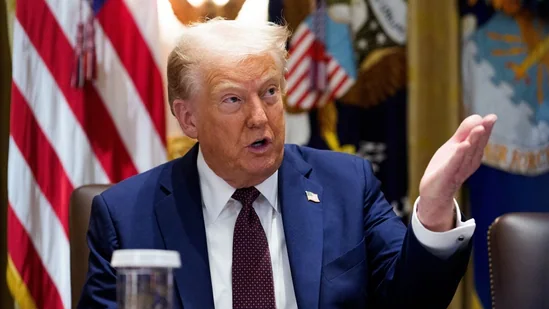

Aug. 31 (UPI) — President Donald Trump announced late Saturday that he plans to sign an executive order requiring voters to show identification when casting ballots.
“Voter ID must be part of every single vote. No exceptions!” Trump wrote on his Truth Social platform. “I will be doing an executive order to that end! Also, no mail-in voting, except for those that are very ill, and the far away military. Use paper ballots only!”
Trump did not give more details about the planned executive order. The announcement comes as he continues to push for changes in how elections are run in the United States. Trump has repeatedly claimed, without evidence, that voter fraud cost him the 2020 presidential election.
This is not Trump’s first attempt at implementing voter ID through an executive order. In March, he signed a similar order requiring proof of citizenship—like passports or government-issued IDs—for voter registration in federal elections.
At that time, a White House fact sheet said the executive order aimed “to protect the integrity of American elections.”
“There are other steps that we will be taking in the coming weeks, and we think we’ll be able to end up getting fair elections,” Trump said in March. “This country is so sick because of the elections, the fake elections and the bad elections, and we’re going to straighten it out one way or the other.”
That earlier order faced immediate criticism. Opponents called it a modern-day poll tax, arguing that many Americans don’t have the required documents, and warned it could prevent low-income, elderly, and marginalized people from voting.
A federal court later blocked the proof-of-citizenship requirement for federal voter registration forms, saying it went beyond constitutional limits.
Similarly, California Secretary of State Shirley Weber and others have spoken out against nationwide voter ID rules, saying they could undermine state-level voting reforms and make it harder for people to vote.
Experts expect the new executive order will also face legal challenges, especially ahead of the midterm elections in November 2026.