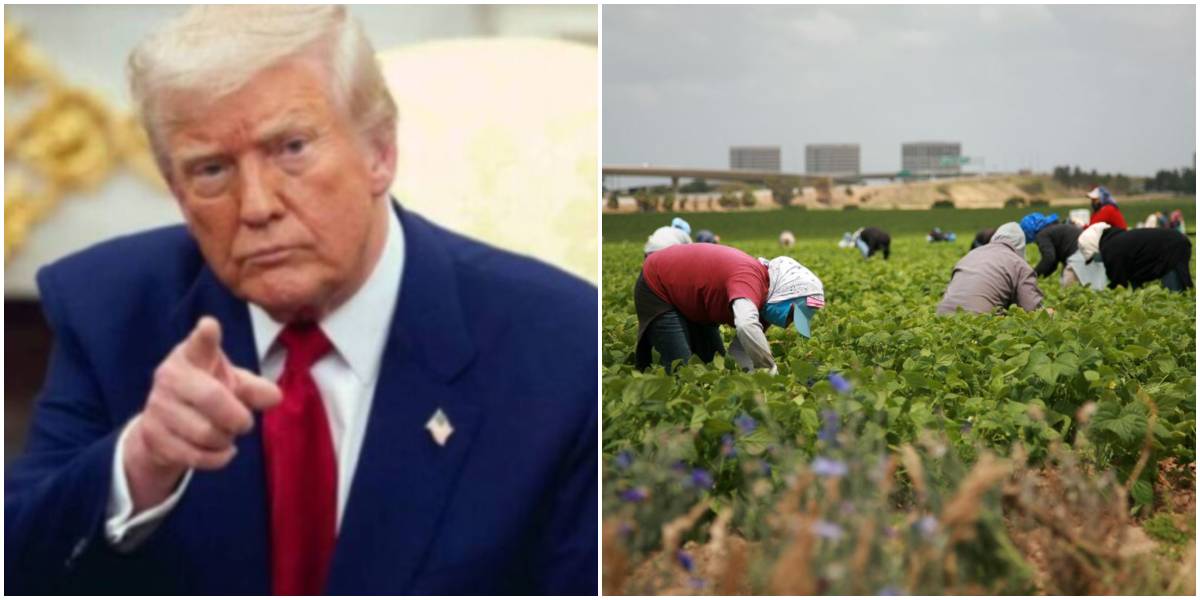

In a recent interview on CNBC’s “Squawk Box,” President Donald Trump made contentious remarks regarding undocumented immigrants working in U.S. agriculture. He stated, “These people are naturally fit for farm labor,” suggesting that individuals from inner-city communities are unwilling to perform such work. Trump further claimed that migrant workers don’t suffer back injuries because “if they get a bad back, they die,” a statement that has drawn widespread criticism for its dehumanizing tone.
The president’s comments have reignited debates over immigration policies and labor practices in the agricultural sector. Approximately 40% of the nearly 1.2 million hired farmworkers in the U.S. are undocumented, with that number surpassing 75% in California—the nation’s largest agricultural state.
In response to labor shortages exacerbated by recent Immigration and Customs Enforcement (ICE) raids, Trump has proposed a “touchback” policy. This would require undocumented farmworkers to leave the country and re-enter legally, a plan that has faced criticism from immigration hardliners. Additionally, discussions are underway to expand the H-2A visa program to support non-seasonal agricultural sectors, such as dairy. However, these measures may not be sufficient to replace the estimated 320,000 undocumented farmworkers currently in the U.S.
Critics argue that Trump’s rhetoric reinforces harmful stereotypes and undermines the contributions of immigrant workers. The president’s emphasis on deportation and legal reentry, without offering full amnesty, has left many questioning the administration’s commitment to comprehensive immigration reform.
As the debate continues, the agricultural industry faces the challenge of balancing labor needs with evolving immigration policies. The outcome of this discourse will have lasting implications for both the economy and the lives of those who rely on farm labor.