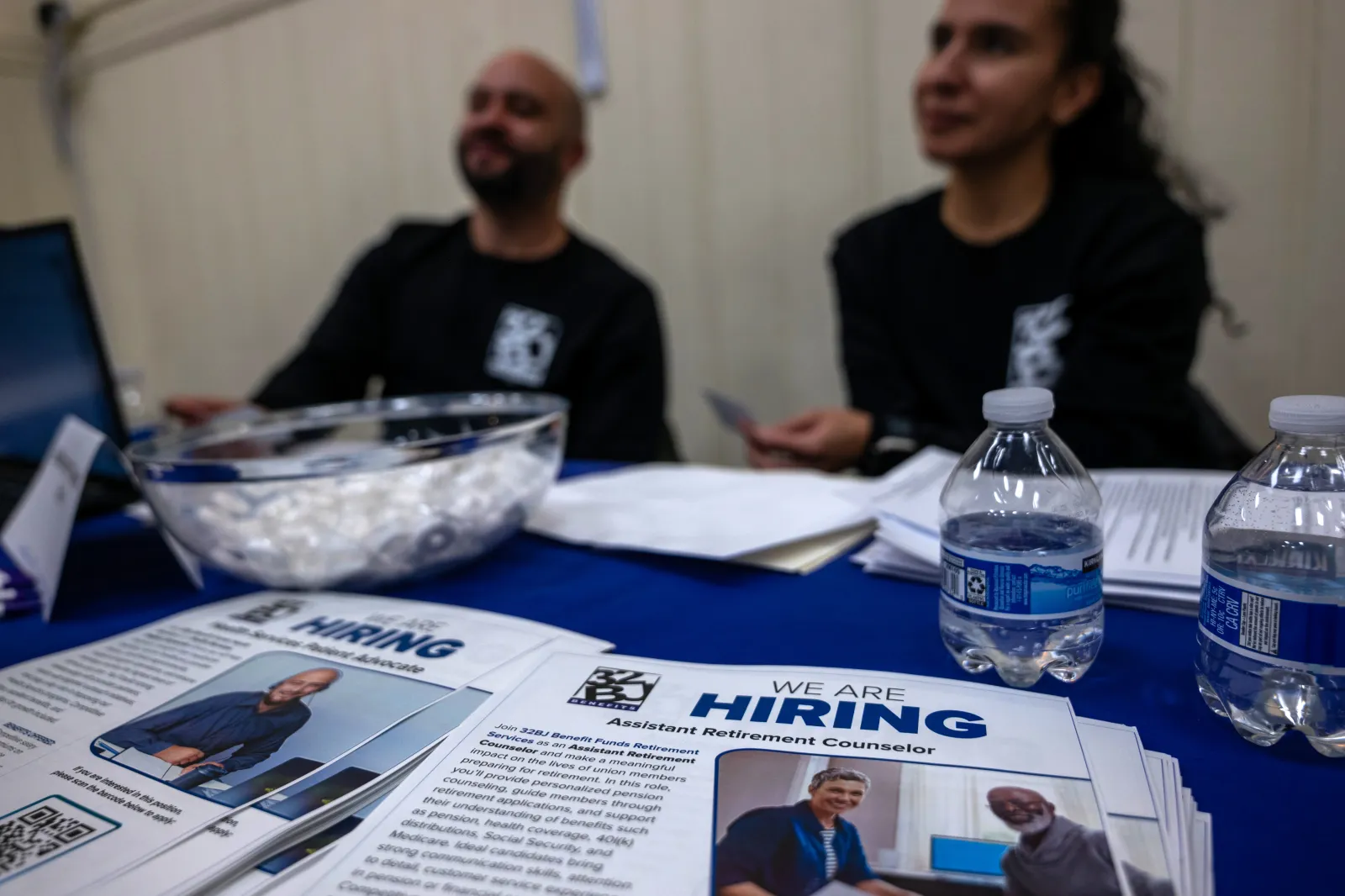

U.S. job openings fell to 6.5 million in December, the lowest level in more than five years, according to new data from the U.S. Bureau of Labor Statistics released Thursday.
The decline adds to evidence that the labor market remains stubbornly soft—even as President Donald Trump has pointed to stronger headline economic growth since returning to the White House.
A cooler hiring environment can slow wage gains, weigh on consumer confidence, and influence how voters judge the economy ahead of the 2026 midterm elections, where Republicans are working to defend their House and Senate majorities.
“The hiring recession isn’t going to end anytime soon,” Heather Long, chief economist at Navy Federal Credit Union, wrote in a commentary.
“Job openings in December just fell to their lowest level since September 2020. It’s yet another sign of how little hiring–or interest in hiring–is happening in this economy.”
The BLS said job openings dropped by 386,000 from November and were down by 966,000 compared with a year earlier. The December figure also came in below economists’ expectations.
Other measures showed less movement: layoffs held steady at 1.8 million, and the number of workers who quit—often seen as a sign of confidence in the job market—was essentially unchanged at 3.2 million.
Exactly why hiring has weakened while overall economic growth looks stronger remains an open question for economists. Some point to a combination of potential pressures, including tariff uncertainty, lower immigration, and employers rethinking staffing needs as AI adoption accelerates.
Recent reports from private-sector trackers have echoed the same theme. On Wednesday, payroll processor ADP said private employers added just 22,000 jobs last month—well short of forecasts.
Employers have averaged only 28,000 jobs added per month since March, a sharp contrast to the post-lockdown surge from 2021 to 2023, when hiring ran closer to 400,000 jobs per month.
Meanwhile, outplacement firm Challenger, Gray & Christmas reported Thursday that companies cut more than 108,000 jobs last month—the most since October and the highest January total since 2009.
A separate analysis from the Ludwig Institute for Shared Economic Prosperity (LISEP) found that 25.2% of the U.S. workforce could be considered “functionally unemployed”—including people who are jobless, searching but unable to find full-time work, or earning what it described as “poverty-level wages.”
With economic anxiety still high, the political stakes are rising. Polling suggests labor market concerns are among the issues weighing on voters, and a prolonged hiring slowdown could become a liability for Trump heading into November.
If Republicans lose unified control of government, Democrats could constrain the final two years of Trump’s term and complicate efforts to advance an ambitious—and divisive—agenda.
Multiple independent surveys have also shown slipping confidence in Trump’s handling of key domestic issues, with many voters saying they want more focus on the economy than on foreign policy—conditions that often align with midterm setbacks for the president’s party.
Recent national polls likewise show voters growing more pessimistic about the economy, worried about health care costs, and saying Trump is placing too much emphasis on foreign policy as his approval rating hits a second-term low.