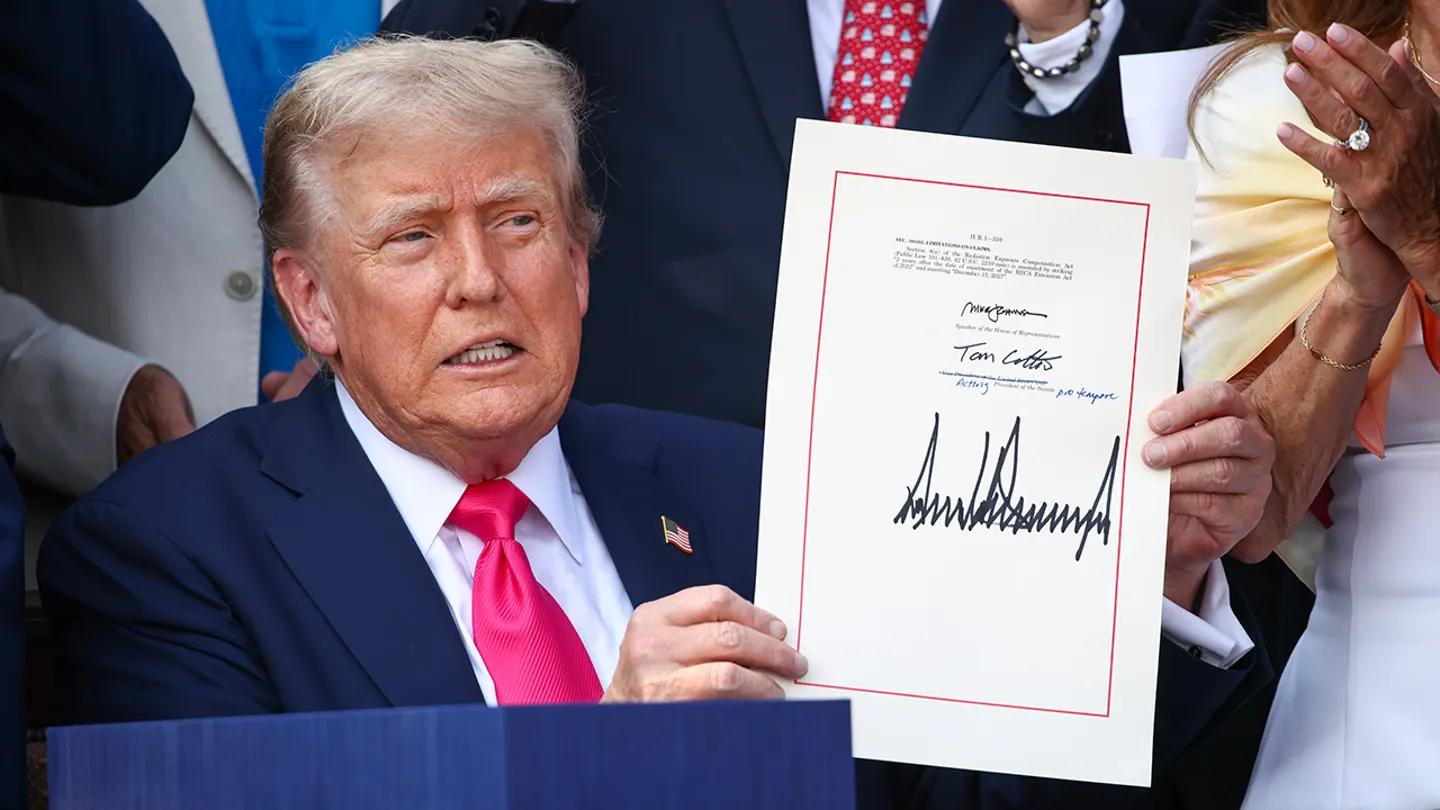

President Donald Trump’s newly signed tax and spending law is projected to leave 10 million more people without health insurance by 2034, according to a Congressional Budget Office (CBO) analysis released Monday.
The estimate reflects changes made to the final version of the Senate’s “big, beautiful bill,” which Trump signed into law on July 4. Earlier projections suggested 11.8 million people would lose coverage, but last-minute revisions reduced that number slightly.
One key change was the Senate’s removal of a provision that would have slashed federal Medicaid funding for states that use their own money to cover undocumented immigrants and others through Medicaid-like programs. That provision alone would have impacted roughly 1.4 million people.
Separately, the CBO also warned that an additional 5.1 million Americans could lose insurance by 2034 due to the expiration of enhanced Affordable Care Act (ACA) subsidies, as well as enrollment rule changes from the Centers for Medicare and Medicaid Services. Although that rule has since been finalized in a different form, the CBO has not yet updated its projection accordingly.
While the latest CBO report did not provide a detailed breakdown of each provision’s impact, earlier reviews of the House version of the bill—similar in many respects to the final law—point to Medicaid reforms as the primary driver of coverage losses.
Among the most significant changes: the introduction of work requirements for certain low-income adults who received coverage through Medicaid expansion. The CBO estimated that 7.8 million people would lose insurance due to Medicaid provisions alone, including 4.8 million affected specifically by the new work rules.
The final law mandates that Medicaid recipients—including parents of children 14 and older—must work, volunteer, attend school, or participate in job training for at least 80 hours per month to remain eligible. The earlier House bill had exempted parents of dependent children from this requirement.
Other changes likely to reduce coverage include more frequent eligibility checks for Medicaid recipients, delays in implementing two Biden-era enrollment rules, and limits on states’ ability to raise provider taxes to fund Medicaid. The final law also lowers the cap on provider taxes in states that expanded Medicaid under the ACA.
In addition to its impact on health insurance coverage, the CBO reaffirmed that the legislation is expected to increase the federal deficit by $3.4 trillion over the next decade, compared to current law. That includes the cost of permanently extending individual tax cuts from Trump’s 2017 tax reform, which were previously set to expire at the end of this year.