
U.S. shoppers trying to order smaller items from other countries are seeing many cancellations ahead of a major trade rule change from the Trump administration.
Starting Friday, the United States will end the nearly 100-year-old de minimis exemption, which let items worth less than $800 be shipped into the country without paying tariffs.
Before the exemption officially ends, many countries—including Australia, India, Japan, South Korea, Taiwan, Thailand, and New Zealand—have announced temporary pauses on shipments to the U.S.
Online stores and e-commerce platforms are warning customers about delivery problems. Last week, Etsy said it would stop processing purchases sent through Australia Post, Canada Post, and the United Kingdom’s Evri and Royal Mail services because these postal services may stop shipping to the U.S.
“Given the complexities, legal requirements, and poor experience, many postal providers will be suspending” delivery options to the U.S., Etsy said.
eBay also warned that sellers relying on foreign postal services will need to find other shipping options to get products to U.S. buyers.
However, private shipping companies that can handle tariffs already may charge up to four times more than regular postal services, said Alison Layfield, vice president of product development at ePost Global, a California logistics company.
“Customers are going to be very shocked,” she said.
Some Trump administration officials have suggested affected buyers should switch to U.S.-based suppliers. But that isn’t always possible.
Take Ben Jay, a record collector from New York City. He recently found a German online music store selling a rare modern recording of traditional Japanese music that wasn’t available anywhere else.
After buying it, he got an email from American Express saying the order would be refunded. The online store explained why.
“They just said they were nervous about following the law,” Jay said about the site, recordsale.de. “It’s annoying but understandable. The way all this is being implemented — there’s so much uncertainty.”
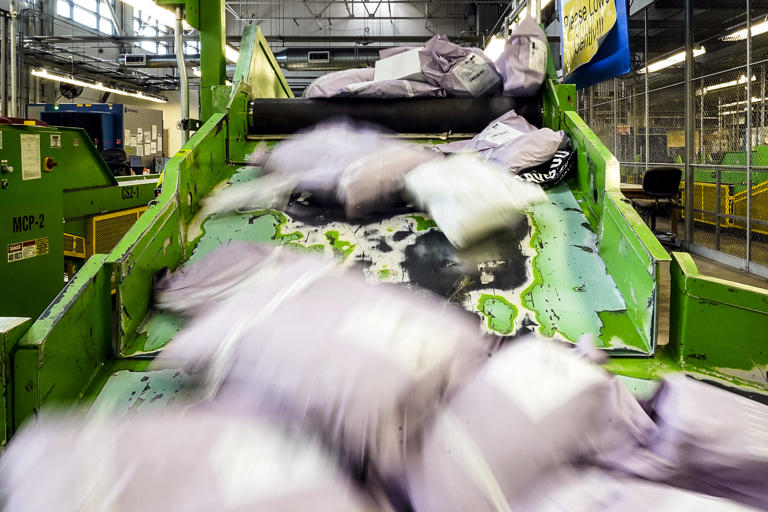
Foreign postal systems can deliver items to the U.S., but they don’t have a way to collect tariffs and send the money to U.S. Customs and Border Protection, Layfield explained.
Basically, the Trump administration is asking foreign mail carriers to act as tax collectors for U.S. imports—something they aren’t set up to do and may refuse to do.
“Why would a foreign post collect from a local business for a foreign country’s customs?” Layfield said. “It’s not something anyone has done before.”
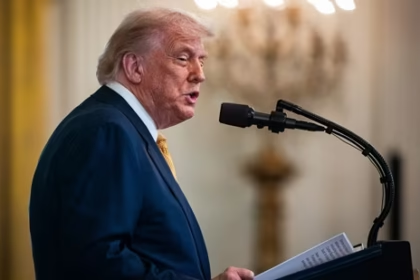
The White House did not respond to a request for comment. Trump has argued that ending the de minimis rule is needed to stop international drug trafficking, especially fentanyl. Studies show shipments under the exemption increased after Trump first imposed tariffs on China during his first term. Chinese suppliers began using it as a workaround.
“In warehouses in Northern Mexico, goods imported from China are repackaged into smaller parcels, each valued at less than $800, allowing them to enter the US tariff-free under the de minimis rule—a practice known as the ‘Tijuana two-step,’” trade economist Anne O. Krueger wrote in a 2024 column.
China accounted for more than half of all packages using the de minimis exemption, with over 30% coming from low-cost platforms like Temu and Shein. The exemption for Chinese goods ended in May, causing U.S. shoppers on Temu and Shein to drop sharply. But U.S. Customs data shows little effect on the amount of drugs seized at the border so far.
Other countries have also relied on de minimis when shipping to U.S. buyers. The Canadian Federation of Independent Business estimates that one in three small and medium Canadian businesses will be affected.
U.S. small businesses that order products from abroad are also impacted, said Matthew Hertz, founder of Third Person.co logistics group. Firms relying on low-cost shipping from countries like Mexico, Portugal, or Turkey now face tough choices.
“For small businesses that relied on cheaper shipping, the decisions involved with these new changes are really difficult to make,” he said.