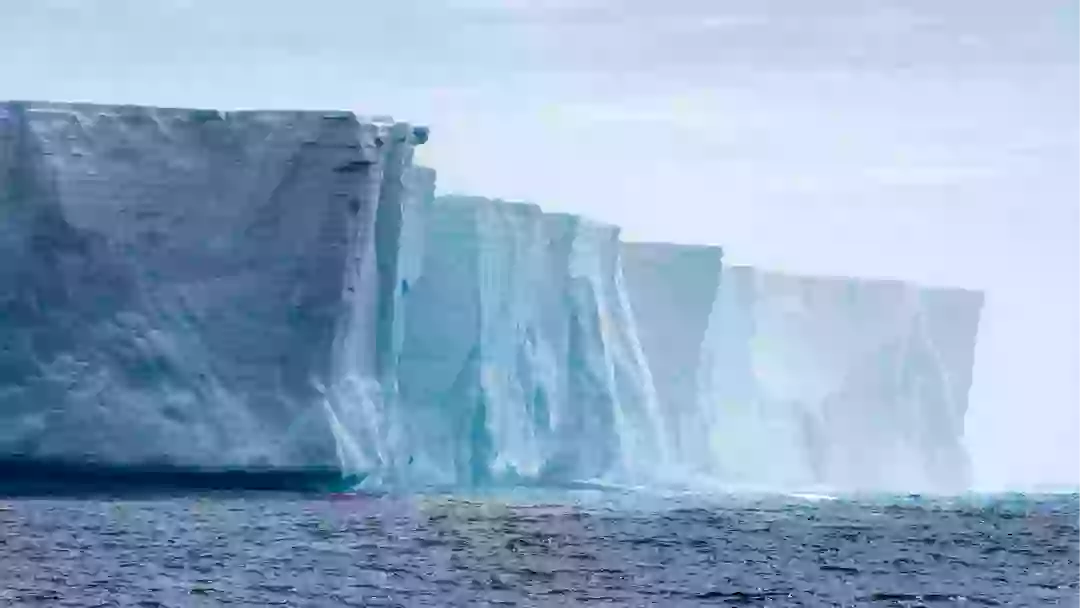

An urgent new warning has been issued over Antarctica’s Thwaites Glacier—often called the “Doomsday Glacier”—as scientists say its accelerated melting could lead to devastating sea level rise across the globe.
Roughly the size of Great Britain or Florida, the Thwaites Glacier plays a critical role in stabilizing the West Antarctic Ice Sheet. If it collapses entirely, scientists estimate it could raise global sea levels by 65 centimeters (more than two feet)—enough to submerge low-lying nations and flood major coastal cities like New York, London, and Bangladesh.
And that’s just the beginning.
If the larger West Antarctic Ice Sheet were to melt—of which Thwaites is a part—sea levels could ultimately rise by as much as 3.3 meters (over 10 feet), reshaping coastlines and displacing millions worldwide.
Glacier Retreat Accelerating Faster Than Expected
Dr. Rob Larter, a British geophysicist and member of the International Thwaites Glacier Collaboration (ITGC), says the glacier has been retreating for over 80 years, with the pace accelerating significantly over the past 30.
“Our findings indicate [Thwaites] is set to retreat further and faster,” Larter said.
“There’s consensus that this acceleration could occur sometime within the next century—but recent discoveries suggest it might happen even sooner.”
According to researchers, new processes—such as deep warm ocean currents undercutting the ice—are not yet fully understood or accounted for in existing models, leaving room for earlier-than-expected collapse.
Threat to the Planet—and Time Is Running Out
Dr. Ted Scambos, the U.S. science coordinator for the ITGC and a glaciologist at the University of Colorado, warned that the broader West Antarctic Ice Sheet is also under threat, with the worst projections pointing toward widespread collapse by the 23rd century.
“The latest models show ice loss accelerating throughout the 22nd century,” Scambos said.
“Immediate and sustained climate action will help—but the delay in response time, especially in reducing warm ocean currents reaching the glacier, is concerning.”
Why It Matters Now
While a full collapse may not happen tomorrow, scientists stress that what happens to Thwaites Glacier will shape the planet’s future for generations to come. Entire countries like the Netherlands—where a third of the land lies below sea level—and small island nations in the Pacific are particularly vulnerable.
In short, the Doomsday Glacier is not just a distant worry—it’s an urgent global threat.
As glacial melt continues, scientists are urging governments and industries worldwide to act faster and more decisively on climate change.
Because once Thwaites lets go—there may be no holding the line.