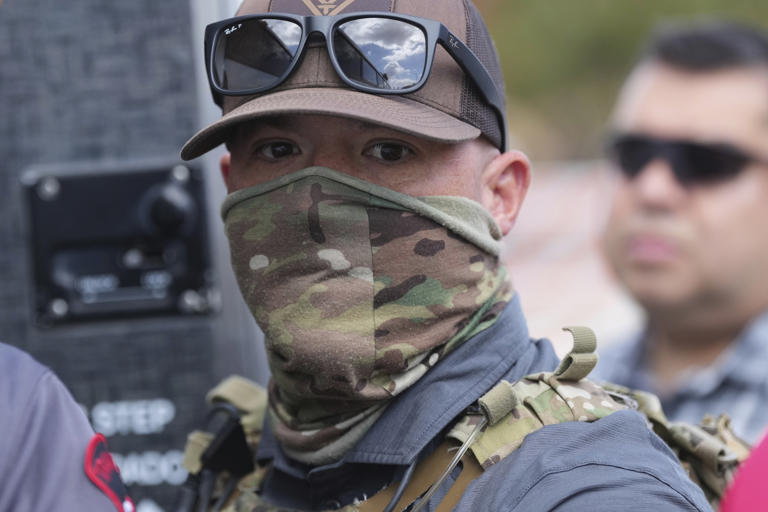

A Texas-born U.S. citizen says he was left shaken, humiliated, and angry after immigration agents allegedly detained him in a case of mistaken identity—then suggested he shave his beard so he wouldn’t be confused with a criminal suspect again.
“I’ll never shave my beard—that was disrespectful. The audacity,” Miguel Angel Ponce Jr. told Newsweek after the incident.
Ponce, who was born in College Station and lives in Navasota, was driving to work in Houston when U.S. Immigration and Customs Enforcement (ICE) agents pulled him over. He says he presented his ID and repeatedly told officers he was a U.S. citizen, but was still removed from his vehicle, handcuffed, and held for roughly 90 minutes.
ICE agents allegedly told Ponce he resembled a wanted violent offender and even showed him a photograph of the man. During the detainment, Ponce says agents claimed multiple people were using his Social Security number. But when he asked for proof, “they just changed the subject.”
“They acted like it was a joke,” he recalled. “I kept telling them they had the wrong person, and they just said, ‘Just because you keep saying it doesn’t make it true.’”
It wasn’t until Ponce convinced agents to compare his tattoos with those of the suspect in their photo that they admitted their mistake and released him. The agents then drove him home—where, according to Ponce, they offered an unusual suggestion.
“They told me I should shave my beard so I don’t get confused for the guy again,” Ponce said. “That was insulting. Like I’m supposed to change the way I look because they messed up?”
ICE has confirmed the incident and acknowledged the mistaken identity. In a statement to KBTX, an agency spokesperson said: “The individual with the same first, middle, and last name bears a striking resemblance to the individual temporarily taken into custody by mistake.”
President Donald Trump’s administration has ramped up immigration enforcement in recent months as part of a sweeping deportation effort. The incident has sparked concerns about racial profiling, civil rights, and how U.S. citizens—particularly Latinos—are treated in high-pressure law enforcement encounters.
“As the days passed, it got harder to shake off the anger and embarrassment,” Ponce told Newsweek. “I feel violated. It felt like I was getting kidnapped. I couldn’t call anyone. It’s not easy to get over something like this.”
The case raises broader questions about ICE’s identification protocols—and what safeguards, if any, exist to prevent such mistakes from happening again.