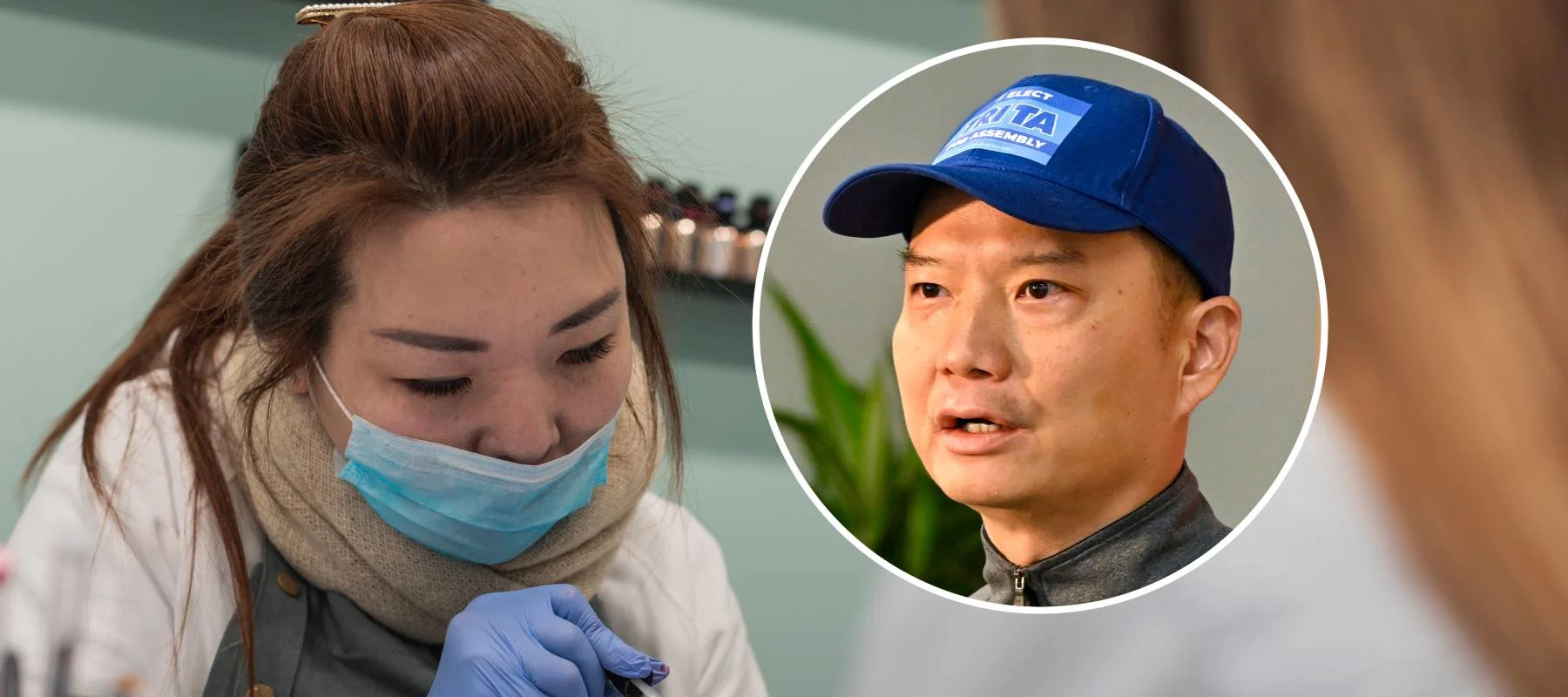

A new federal lawsuit is challenging California’s controversial labor law, Assembly Bill 5 (AB5), with Vietnamese-American nail technicians at the heart of the legal battle. Filed in the U.S. District Court in Santa Ana, the suit argues that AB5 unfairly strips nail techs of their ability to work as independent contractors—violating their constitutional right to equal protection under the 14th Amendment.
AB5, passed in 2019 and enacted in 2020, redefined the criteria for independent contracting across the state. Designed to crack down on worker misclassification, the law mandates that workers meet a strict three-part test to remain contractors. If not, employers must classify them as employees—entitling them to benefits like minimum wage, overtime, unemployment insurance, and workers’ compensation.
But many in the nail salon industry—where Vietnamese immigrants make up over 80% of California technicians—say the law has upended their lives.
“Their lives have turned upside down overnight,” said California Assemblyman Tri Ta (R-Westminster), who represents Little Saigon. “It’s not just unfair—it’s discrimination.”
Salon owners argue that the law imposes unmanageable costs, forcing them to cover downtime wages, insurance, and benefits for workers they previously contracted as needed. An Tran, a salon franchise owner involved in the lawsuit, says the change has put immense strain on small businesses like hers.
“We don’t have customers all the time,” Tran told the Los Angeles Times. “Paying employees when there’s no work coming in is going to cost us a lot more.”
The industry, largely made up of immigrants and women, generates an estimated $3 billion a year in California. Many of these workers turned to nail salons in the 1970s and 1980s to rebuild their lives after fleeing Vietnam. Today, their children and grandchildren carry on that legacy—now under threat.
“Vietnamese American manicurists have faced blatant discrimination under California’s labor laws,” said attorney Scott Wellman, who filed the suit on behalf of several workers and salon owners. “If the state refuses to fix this injustice, we are prepared to hold them accountable in federal court.”
AB5 was born out of a 2018 California Supreme Court ruling in Dynamex Operations West v. Superior Court, which found that gig workers were being misclassified by employers. But while the law aimed to curb abuse in sectors like delivery and ridesharing, critics argue that it has unintentionally hurt immigrant communities who depend on flexible, independent work.
Worker advocates disagree, insisting the law is a step toward fairer labor protections for low-wage earners who have historically been underpaid and overlooked. A report by UCLA’s Labor Center found nearly 80% of nail salon workers earn below two-thirds of the state’s median wage. Many also face serious health risks from prolonged exposure to salon chemicals.
Former nail tech Pabitra Dash told NBC News that she experienced multiple miscarriages while working in a salon—something she believes may have been linked to chemical exposure. After she left the industry, she was finally able to carry a pregnancy to term. While there was no formal medical link, her doctor supported the decision to quit.
“(My doctor) said, ‘It’s really good for your health and your baby,’” Dash recalled.
Fear of retaliation keeps many workers silent. Some worry that speaking out could lead to lost hours—or losing their job altogether.
The lawsuit now throws California’s broader fight over gig work and labor rights into the spotlight. While proponents of AB5 say it protects vulnerable workers, opponents argue it robs them of flexibility and livelihoods—especially in industries powered by immigrant labor.
As the legal battle unfolds, nail salons have become the latest front in a statewide debate over how to balance fair labor protections with economic survival.