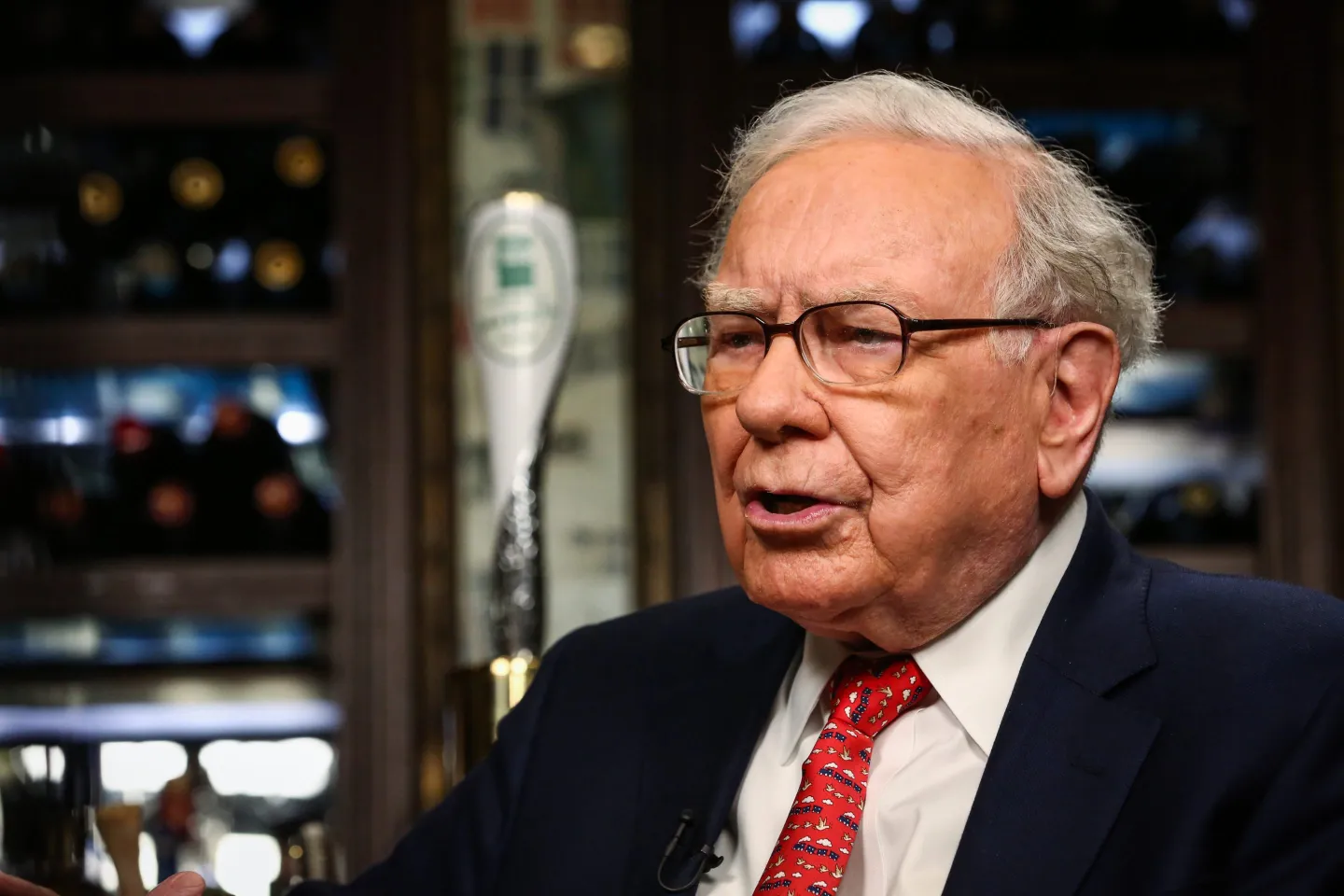

Warren Buffett — widely regarded as one of the most successful investors in history — is making a significant adjustment to how his fortune will be given away.
While he no longer tops the list of the world’s richest individuals, his net worth remains around $150 billion, per Bloomberg’s Billionaires Index. At 95, he is now openly reflecting on how some earlier ambitions for distributing his wealth didn’t unfold as he once imagined.
“Early on, I contemplated various grand philanthropic plans. Though I was stubborn, these did not prove feasible,” Buffett said in a letter to shareholders released Monday. He noted he has seen many wealth transfers go awry through “political hacks, dynastic choices and, yes, inept or quirky philanthropists.”
Rather than one overarching blueprint, he is now entrusting the bulk of his remaining fortune to his three children’s charitable foundations. Collectively, the organizations are expected to distribute roughly $500 million each year.
On Monday, he announced a new round of donations that includes:
- $750 million in Berkshire Hathaway stock to the Susan Thompson Buffett Foundation, which supports Nebraska students through scholarships.
- $250 million in stock to each of his children’s foundations:
- The Sherwood Foundation, chaired by his daughter Susie, which focuses on improving life in Nebraska.
- The Howard G. Buffett Foundation, committed to food security, reducing conflict, and fighting human trafficking.
- The NoVo Foundation, led by his son Peter, which supports historically marginalized communities.
Buffett said his children — now in their late 60s and early 70s — are “at their prime in respect to experience and wisdom,” and he believes this is the right moment to transfer responsibility while they remain fully active. At the same time, he acknowledged his own longevity has made the timeline more pressing: “That ‘honeymoon’ period will not last forever,” he wrote, explaining the acceleration of lifetime gifts.
Still, Buffett intends to hold onto a “significant amount” of his Berkshire Hathaway Class A shares until his successor, Greg Abel, is firmly established in leadership.
“All three children now have the maturity, brains, energy and instincts to disburse a large fortune…” he wrote. “Ruling from the grave does not have a great record, and I have never had an urge to do so.”
What Happens to The Giving Pledge?
Buffett’s step back from public-facing philanthropy raises questions about the future of The Giving Pledge — the commitment he launched with Bill Gates and Melinda French Gates in 2010, encouraging the world’s wealthiest individuals to donate at least half their fortunes to charity.
Buffett pledged more than 99% of his wealth to philanthropy, either during his lifetime or through his estate. However, according to a recent analysis from the Institute for Policy Studies, only nine of the 256 total pledge signatories have actually given away half their wealth so far. In many cases, fortunes have grown faster than they are being donated.
Over the years, Buffett has given more than $60 billion to charitable causes — much of it to the Gates Foundation, which works to combat poverty and global inequity. But in recent years, the distance between him and the Gates family has reportedly widened. A report from The New York Times noted Buffett’s concerns over bureaucratic expansion at the foundation. He stepped down from its board in 2021, shortly after Bill and Melinda French Gates announced their divorce.
Meanwhile, the Gates Foundation has accelerated its giving, aiming to wind down operations by 2045. Still, the broader direction of billionaire philanthropy remains uncertain without a central, unifying figure driving the movement.
Some wealthy donors — like MacKenzie Scott — have embraced rapid and substantial giving. Others, including Elon Musk, who may become the first trillionaire, have been far more reserved and less transparent about charitable efforts.