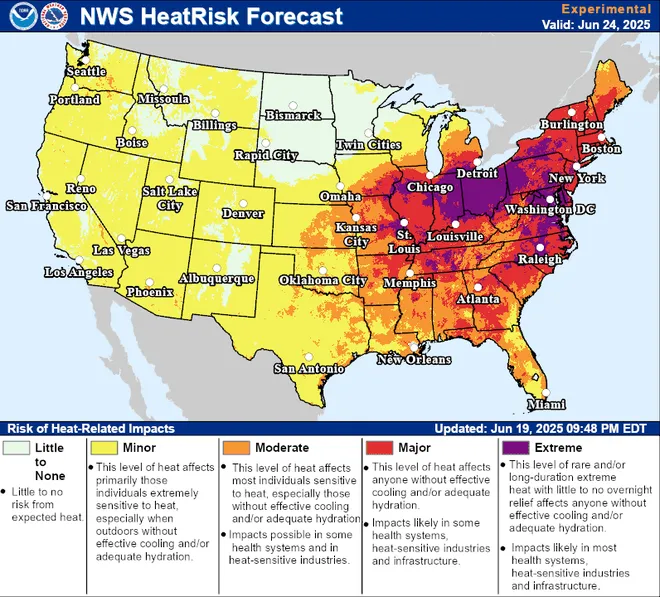
Summer is off to a sweltering start for much of the U.S., with millions of people dealing with dangerously hot and humid conditions.
On June 20, more than 40 million Americans across the Midwest and Northeast were under extreme heat alerts. Temperatures in some areas could climb into the triple digits, especially when combined with high humidity. Cities like New York and Washington, D.C., may see temperatures above 90°F for several days straight.
For those with air-conditioning, it means their units will likely be running non-stop — which can quickly lead to high energy bills. While staying safe is the top priority, it’s also important to keep cooling costs under control.
Here are practical tips to help cool your home efficiently as the heat wave sets in.
What’s the Best AC Temperature?
The U.S. Department of Energy recommends setting your thermostat at a temperature that feels comfortable but also reduces the gap between indoor and outdoor temperatures. This can help lower energy use and save money.
Energy Star, a federal program promoting energy efficiency, suggests setting your AC to 78°F when you’re home and awake — a temperature that balances comfort and cost savings. Several energy companies across states like Missouri, Florida, and Maryland support this recommendation.
However, most people don’t follow it. According to a 2021 Consumer Reports survey, the average setting for households with central air is 72°F, and none of the respondents reported setting it above 76°F.
What Temperature Should I Set at Night?
When it cools off a bit outside in the evening, try setting your thermostat 4 degrees warmer than your daytime setting. This can cut down on energy use while you sleep, especially if your home cools naturally overnight.
Programmable thermostats can help by automatically adjusting the temperature based on your schedule. To ensure accurate readings, avoid placing thermostats near windows or vents that may give false readings due to direct sunlight or airflow.
What If I’m Not Home?
If you’re heading out for the day or on vacation, you can raise the temperature even more. The Department of Energy suggests bumping your thermostat up by 7 to 10 degrees when you’re not home. Doing this for at least 8 hours a day can cut up to 10% off your yearly heating and cooling costs.
Other Ways to Stay Cool and Save Energy
- Use curtains or blinds: Sunlight pouring through windows can heat your home fast. Keep shades drawn during the hottest part of the day.
- Seal leaks: Use weather stripping or caulk around doors, windows, and baseboards to prevent cool air from escaping.
- Avoid heat-generating appliances: Limit use of ovens and stoves during the day. Try grilling or making no-cook meals.
- Use fans wisely: Ceiling or box fans help move air but don’t actually cool it. Use them to supplement AC, and turn them off when you leave the room.
AC Use and the Warming Climate
According to EPA data, more Americans are relying on air conditioning than ever before. This trend is tied to the rise in extremely hot days due to climate change, which continues to increase the demand for cooling.
Bottom Line
As heat waves become more common, learning to cool your home efficiently isn’t just smart — it’s necessary. Small adjustments to your thermostat and habits can help you stay comfortable, stay safe, and avoid a shock on your energy bill.