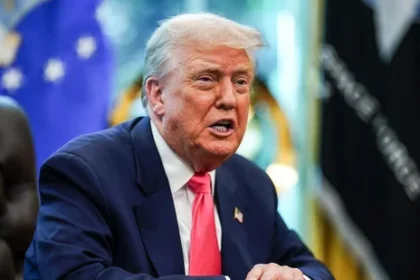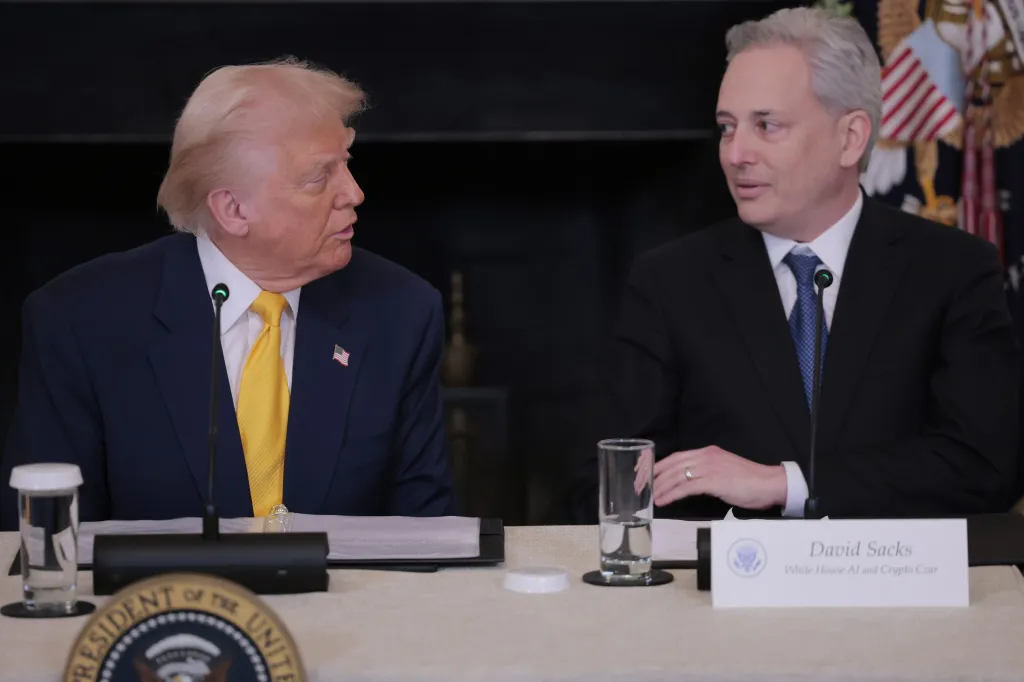

David Sacks, President Donald Trump’s newly appointed AI and crypto czar, issued a stark warning Friday regarding the escalating U.S.-Israel war against Iran, cautioning that Tehran possesses a “dead man’s switch” capable of rendering the Persian Gulf uninhabitable.
Speaking on the All-In podcast, Sacks—a key venture capitalist and influential voice within the administration—urged the White House to find an “off-ramp” to the two-week-old conflict. His comments signal a deepening rift within the Republican party as hawks push for regime change while economic advisers fear a global energy collapse.
The ‘Dead Man’s Switch’ Scenario
Sacks detailed a catastrophic “tit-for-tat” escalation where both sides target critical energy and civil infrastructure. He specifically highlighted the vulnerability of desalination plants, which provide the vast majority of fresh water for the Gulf states.
“If you see that type of destruction continue, you could literally render the Gulf almost uninhabitable,” Sacks warned. “You’re not going to have enough water for 100 million people… that would be a truly catastrophic scenario.”
According to Sacks, even if the Strait of Hormuz—currently effectively closed by Iranian threats—were to be reopened, it would be “irrelevant” if the underlying infrastructure to pump oil or process water is obliterated. He characterized this systemic vulnerability as Iran’s final leverage—a “dead man’s switch” over the economic and humanitarian fate of the region.
Internal White House Frictions
The warning comes as President Trump navigates conflicting advice from his inner circle. While the President initially alluded to “regime change” at the war’s onset, he has recently moderated his rhetoric. However, military actions suggest a potential for further escalation:
- Kharg Island Strikes: On Friday, U.S. forces bombed military targets on Kharg Island, Iran’s primary oil export hub. While the administration claimed to avoid hitting oil infrastructure, Trump warned that such restraint is conditional.
- Troop Surges: The Pentagon has ordered the USS Tripoli and 2,500 Marines from the Indo-Pacific to the Middle East, a move that analysts suggest could support a future ground operation or a seizure of Kharg Island.
Economic Fallout and Political Risk
The war has already sent global markets into a tailspin. Oil prices have surged from $71 to over $100 a barrel in just two weeks, with U.S. gasoline prices jumping 19% on average.
Sources familiar with the administration’s internal deliberations indicate that economic advisers have warned the President that sustained high energy prices could erode domestic support. “This is a good time to declare victory and get out,” Sacks argued, noting that markets are desperate for a de-escalation signal.
The Nuclear Shadow
Sacks also raised the specter of nuclear escalation. He noted that while Israel’s military is superior, a prolonged conflict that threatens the Jewish state’s existence could force “frightening scenarios,” including the contemplation of nuclear options to ensure national survival.
“There are a lot of really horrifying directions this could go,” Sacks said, calling for a negotiated settlement or ceasefire before the “escalation spiral” becomes irreversible.
The White House has not officially responded to Sacks’ comments, but the tension between the “off-ramp” advocates and the “maximum pressure” hawks remains the defining struggle of the current crisis.