
White House Chief of Staff Susie Wiles offered unusually blunt assessments of several senior figures in President Donald Trump’s orbit in interviews with Vanity Fair, including remarks about Elon Musk, Vice President JD Vance, and Attorney General Pam Bondi.
In the interviews, Wiles described Musk — the Tesla chief executive who previously worked with the administration on its Department of Government Efficiency push — as an “avowed” ketamine user. She also called Vance a “conspiracy theorist,” referred to budget chief Russ Vought as a “right-wing absolute zealot,” and criticized Bondi’s handling of records related to the late financier Jeffrey Epstein.
White House scrambles to contain fallout
The administration moved quickly to minimize the impact of the story after it was published Tuesday. In a social media post, Wiles said “significant context was disregarded,” characterizing the piece as “a disingenuously framed hit piece.”
Trump, speaking to the New York Post, defended Wiles and said he was not offended by her comment that he had “an alcoholic’s personality,” even while noting he does not drink. He said he has long joked that, if he did drink, he might be prone to alcoholism because he has an “addictive” type of personality. Trump also blamed what he called a “very misguided interviewer” and said Wiles remained “fantastic” when asked if he had full confidence in her.
Musk, microdosing remarks, and a reopened rift
Wiles’ comments risked reigniting questions about internal tensions — including the administration’s past conflict with Musk.
“He is a complete solo actor,” Wiles said of Musk in one of the interviews. “The challenge with Elon is keeping up with him.”
Pressed about Musk sharing a post on X that claimed public-sector workers were responsible for the mass killings under Adolf Hitler, Joseph Stalin and Mao Zedong, Wiles responded: “I think that’s when he’s microdosing.” She added, however, that she did not have first-hand knowledge of any drug use.
Musk and Tesla representatives did not immediately respond to a request for comment. The article noted Musk previously denied using ketamine after a New York Times report earlier this year alleged extensive substance use. Musk said at the time that he had tried ketamine years earlier under a prescription but had not taken it since.
Wiles said she was “initially aghast” when Musk moved to shutter programs as part of the administration’s cost-cutting push — including action involving the US Agency for International Development — and said she confronted him over changes that affected programs Trump wanted spared. She described Musk’s approach as speed-driven and disruptive but argued that “no rational person could think the USAID process was a good one.”
Musk later fell out publicly with Trump after leaving the administration and threatening to start a third party. The relationship appeared to be improving, with Musk attending a White House dinner last month for the Saudi crown prince. Axios reported Tuesday that Musk has begun funding Republican congressional campaigns ahead of the 2026 midterms and signaled he may contribute more, citing people familiar with the matter.
Allies publicly rally around Wiles
After publication, White House Press Secretary Karoline Leavitt publicly backed Wiles, saying on X that Trump “has no greater or more loyal advisor than Susie,” adding that the administration “united fully behind her.”
Vance, speaking at an event in Pennsylvania, said he had not read the article but defended Wiles and leaned into the label with a joke: “Sometimes I am a conspiracy theorist, but I only believe in the conspiracy theories that are true.” He said he and Wiles have joked about it for a long time and insisted he has never seen her be disloyal to the president.
Epstein files and criticism of Bondi
Wiles also took aim at Bondi over how the administration handled the Epstein-related material. She pointed to Bondi’s February move to hand out binders labeled “The Epstein Files: Phase 1” to conservative influencers — which, the article said, largely contained previously public information.
Wiles also criticized Bondi for later saying on Fox News that Epstein’s client list was “sitting on my desk” for review, before the Justice Department and FBI later said Epstein did not keep such a list and that no further documents would be released — fueling backlash among parts of Trump’s base.
“First she gave them binders full of nothingness. And then she said that the witness list, or the client list, was on her desk. There is no client list, and it sure as hell wasn’t on her desk,” Wiles said.
Wiles told the magazine she had read “the Epstein file,” adding that Trump was “in the file” but “not in the file doing anything awful,” according to the account.
Vance, Rubio, and political “conversion”
Wiles drew a contrast between Secretary of State Marco Rubio’s evolution into a Trump ally and Vance’s. She said Rubio was not the type to “violate his principles” and needed time to come around, while describing Vance’s shift as more overtly political, saying his “conversion” came during his Senate run.
Vance, speaking to Vanity Fair, explained his change in view by saying he came to like Trump and believed he was “fundamentally the right person to save the country.”
“Score settling” and tariffs
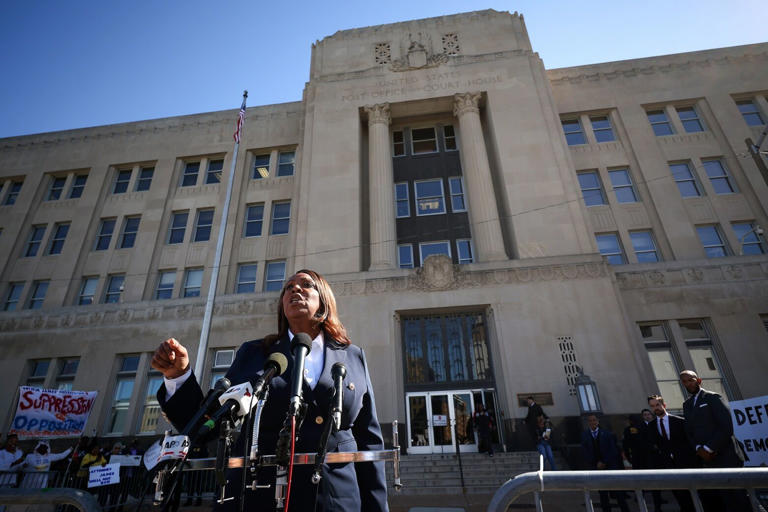
Wiles also addressed Justice Department actions involving two prominent Trump critics — New York Attorney General Letitia James and former FBI Director James Comey — describing them as political payback, or “score settling.” She said in a March interview there was a “loose agreement” that such retaliation would end within the first 90 days of the term, though she later said she did not believe Trump was on a “retribution tour.”
Separately, she criticized the administration’s chaotic rollout of reciprocal tariffs in April — a major economic initiative that triggered a sharp market reaction and was paused days later to allow more negotiations. Wiles described the process as “so much thinking out loud,” said advisers were deeply divided, and said she tried — unsuccessfully — to enlist Vance to delay Trump’s announcement. She nevertheless predicted at the time that Trump’s approach would ultimately succeed.
The article concluded by noting that recent polls have shown Trump’s approval slipping, alongside increased voter concerns about his economic policy.