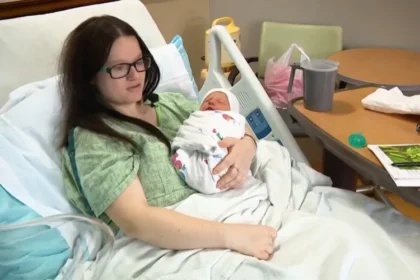

For twenty years, Melissa Diamond was told her debilitating pain was “normal,” a “hormonal phase,” or simply a condition to be masked by birth control. It took a life-threatening trip to the emergency room and the eventual surgical removal of 23 lesions to prove that what she had been experiencing since age 12 was a systemic medical failure.
Diamond’s journey, shared exclusively with PEOPLE, highlights a harrowing pattern of “medical gaslighting” that advocates say is endemic to women’s healthcare. Her story is not an outlier; it is a clinical case study in the diagnostic delays that plague the estimated 1 in 10 women living with endometriosis.
A Lifetime Masked by Medication
Diamond’s symptoms began at the onset of puberty. By age 12, severe menstrual pain forced her to miss school and social activities regularly. At 14, a gynecologist removed an ovarian cyst and immediately prescribed birth control—a move Diamond says “masked” her symptoms for the next 15 years.
“Doctors instilled in me that I needed to stay on birth control, otherwise the cysts would come back,” Diamond says. “There was this fear built in.”
When Diamond, now 33 and a sales director for Sierra AI, expressed interest in freezing her eggs in her late 20s, she met immediate resistance. Medical professionals warned her that stopping the pill could result in emergency room visits for ruptured cysts. When she finally transitioned off the medication to explore her fertility, her health plummeted.
:max_bytes(150000):strip_icc():focal(599x0:601x2):format(webp)/woman-20-years-endo-diagnosis-3-031226-a3a8f74b5d0145f6b3c6459c2cf09fd2.jpg)
The Diagnostic “Wild Goose Chase”
Upon stopping birth control, Diamond experienced:
- Debilitating cramps that interfered with her professional life.
- Severe gastrointestinal distress, later misdiagnosed as IBS.
- Chronic back pain and extreme bloating.
Despite presenting these symptoms to multiple gynecologists, Diamond was repeatedly dismissed. When she specifically raised the possibility of Polycystic Ovary Syndrome (PCOS) or endometriosis, her concerns were rebuffed. The universal clinical recommendation she received was to simply “go back on the pill.”
:max_bytes(150000):strip_icc():focal(999x0:1001x2):format(webp)/Doctor-Office-examination-room-table-031226-c1f948e025c640d9b147b43ba6847016.jpg)
The Breaking Point: From Gaslighting to Surgery
The situation reached a crisis point last summer when Diamond was rushed to the ER with pain so intense she believed she was dying. Even with high-dose opiates, the pain persisted. While one female ER doctor finally suggested endometriosis, she noted the hospital was unequipped to diagnose or treat it.
Diamond eventually sought out Dr. Tamer Seckin, a specialist and head of the Endometriosis Research Foundation. While endometriosis rarely appears on standard imaging, a pelvic MRI finally revealed the extent of the disease.
The subsequent surgery was a revelation of medical neglect:
- 23 lesions were identified and removed.
- The disease had spread to her pelvic wall, intestines, bladder, and rectum.
- Her appendix required removal due to endometriosis involvement.
- Some lesions were estimated to be 20 years old.
“I was unbelievably angry and scared,” Diamond says. “I was full of rage because all along, there really was something.”
:max_bytes(150000):strip_icc():focal(1344x0:1346x2):format(webp)/woman-20-years-endo-diagnosis-6-031226-f99a1227e21a4a7692b89f2380c66f7b.jpg)
A Crisis of Education and Access
Diamond’s case sheds light on two critical barriers in the U.S. healthcare system: medical education and insurance coverage.
- The Education Gap: Endometriosis is rarely taught in depth in medical schools. Many general practitioners and even some gynecologists lack the training to identify the disease outside of basic reproductive symptoms.
- The Insurance Hurdle: Complex excision surgery—often the “gold standard” for treatment—is frequently not covered by insurance in many states. This leaves millions of women facing a choice between chronic pain or crippling medical debt.
Today, Diamond reports living an “almost pain-free life,” a stark contrast to the two decades of anxiety and agony she endured. She has now joined the Endometriosis Foundation of America, pivoting from “victim of circumstance” to a vocal advocate for systemic change.
“In a world where we’re silenced,” Diamond says, “we need to be loud.”